Found a bat? We're here to help — call us NOW: 512-695-4116 or 512-799-8847
Bat-Friendly Gardens

Gardens That Work for Bats

Gardens help Austin’s bats by enriching the biodiversity of the constructed landscape – from urban green roofs to Hill Country ranches.

The Garden Vision

A Living Refuge for Bats and Moths

Bats are a vital part of a beautiful natural world. Gardens help Austin’s bats by enriching the biodiversity of the constructed landscape – and could extend to rooftop greenspace in the heart of downtown. Bat rescuers who transport to Austin Bat Refuge view rehabilitating bats in an organic garden with crops, flowering shrubs and trees, and water features. The lessons learned here translate well to any property, from green roofs in the urban core to Hill Country ranches.

Austin 2050 urban garden vision
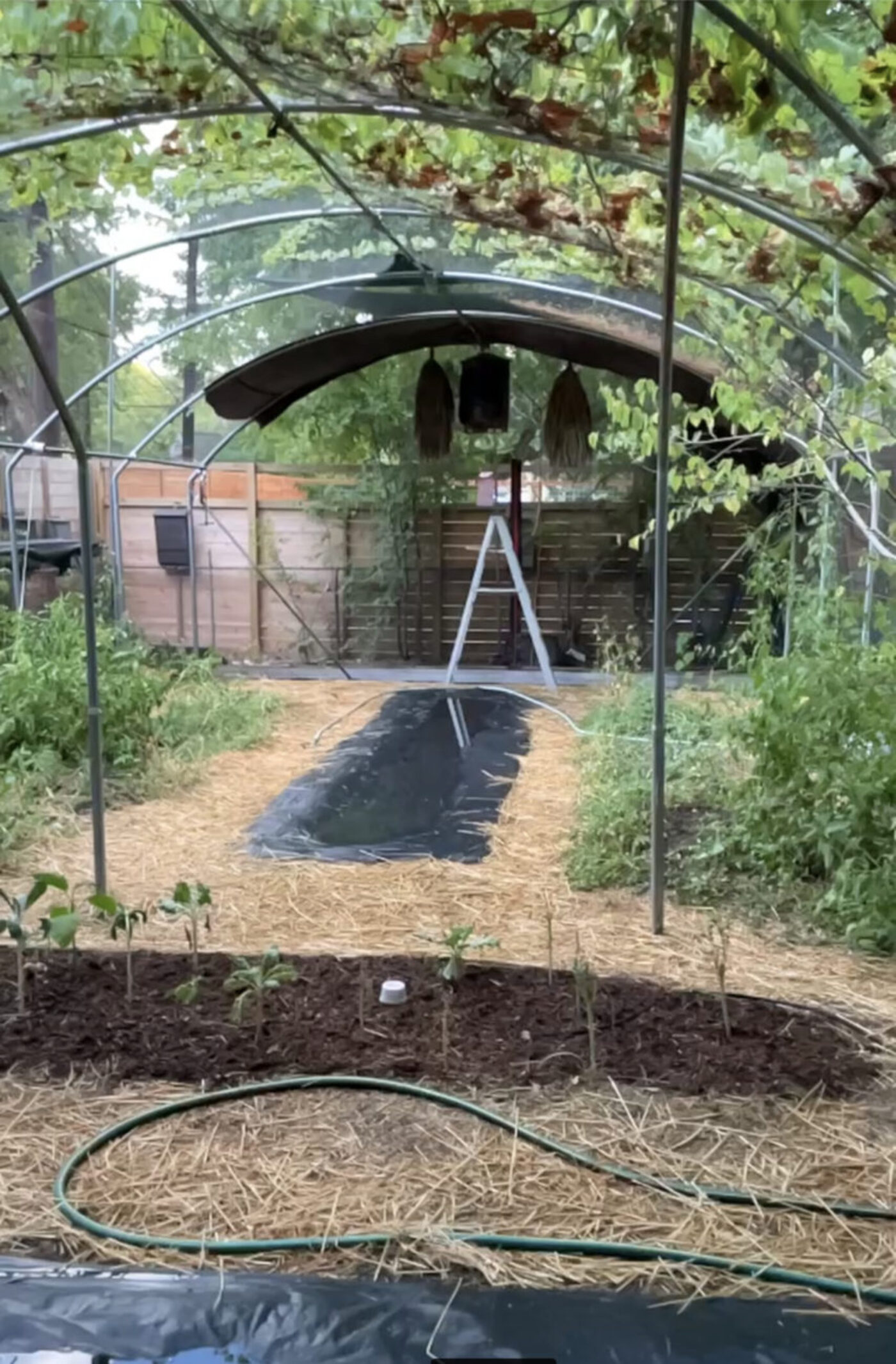
Bat-friendly garden at Austin Bat Refuge
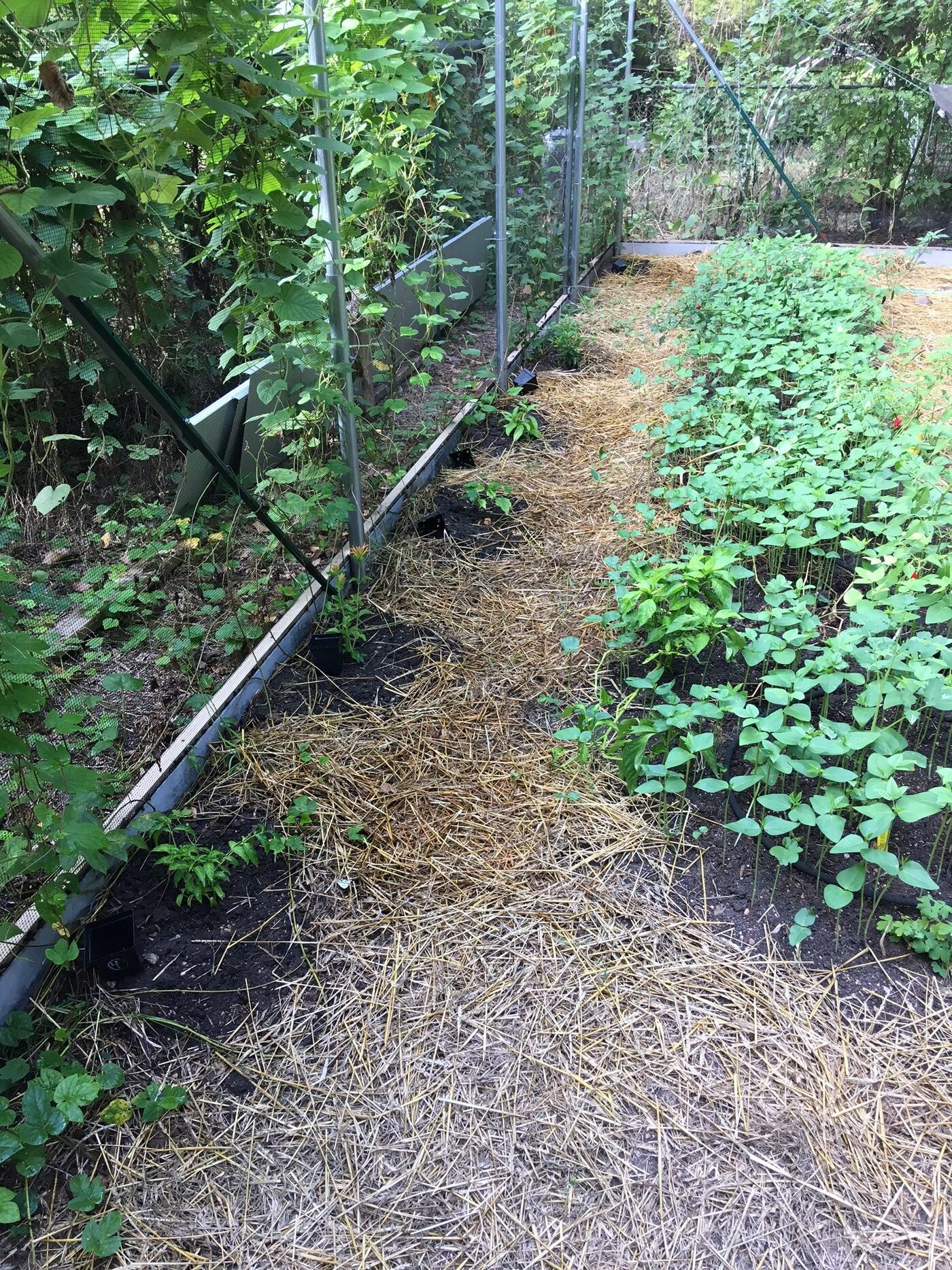
We planted climbing night-blooming plants to the outside, leaving a swoop zone for the water troughs even after they grew to bush size.
Garden beds with native plants
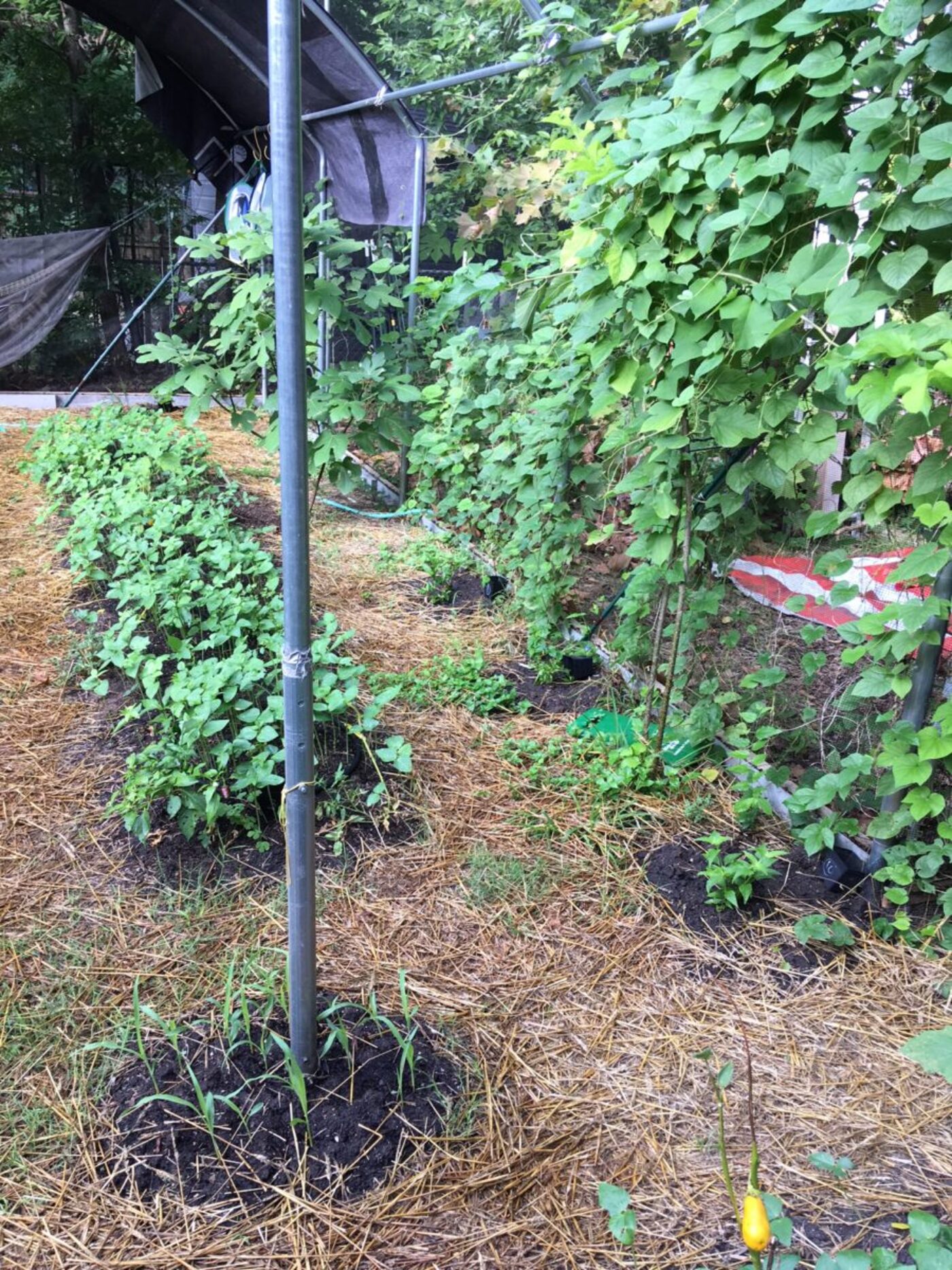
Crops & water troughs in the middle – Black-eyed peas are our cover crop once tomatoes play out.
Bat rescue garden with water feature
Shrubs/small trees on the other side – We have giant mistflower, boneset, and a mulberry.

Stay Organic

No pesticides. Pesticides kill bat food – moths, beetles, and the insects that bats depend on. Even targeted applications reduce the insect diversity that sustains local bat populations.

Leave the Leaves

Dead leaves, leaf clusters, and standing dead trees provide roost sites for foliage-dwelling bats. Half of Austin’s bat species don’t use bat boxes – they need natural leaf structure.

Moth Host Plants

Native plants attract moths. Plant for a year-round bloom cycle – snap peas and boneset in spring, tomatoes and peppers in summer, giant mistflower and Mexican honeysuckle in fall.

Water Feature

Include a water source with a minimum 7-foot open swoop zone. Bats drink on the wing and need clear approach space. Elevated water troughs work well in tight garden situations.

Don’t Prune Palms

The brown skirts of palm trees are critical roosting habitat for yellow bats. Leave them intact – they provide insulation and year-round shelter for up to five bat species.

Leave Dead Trees

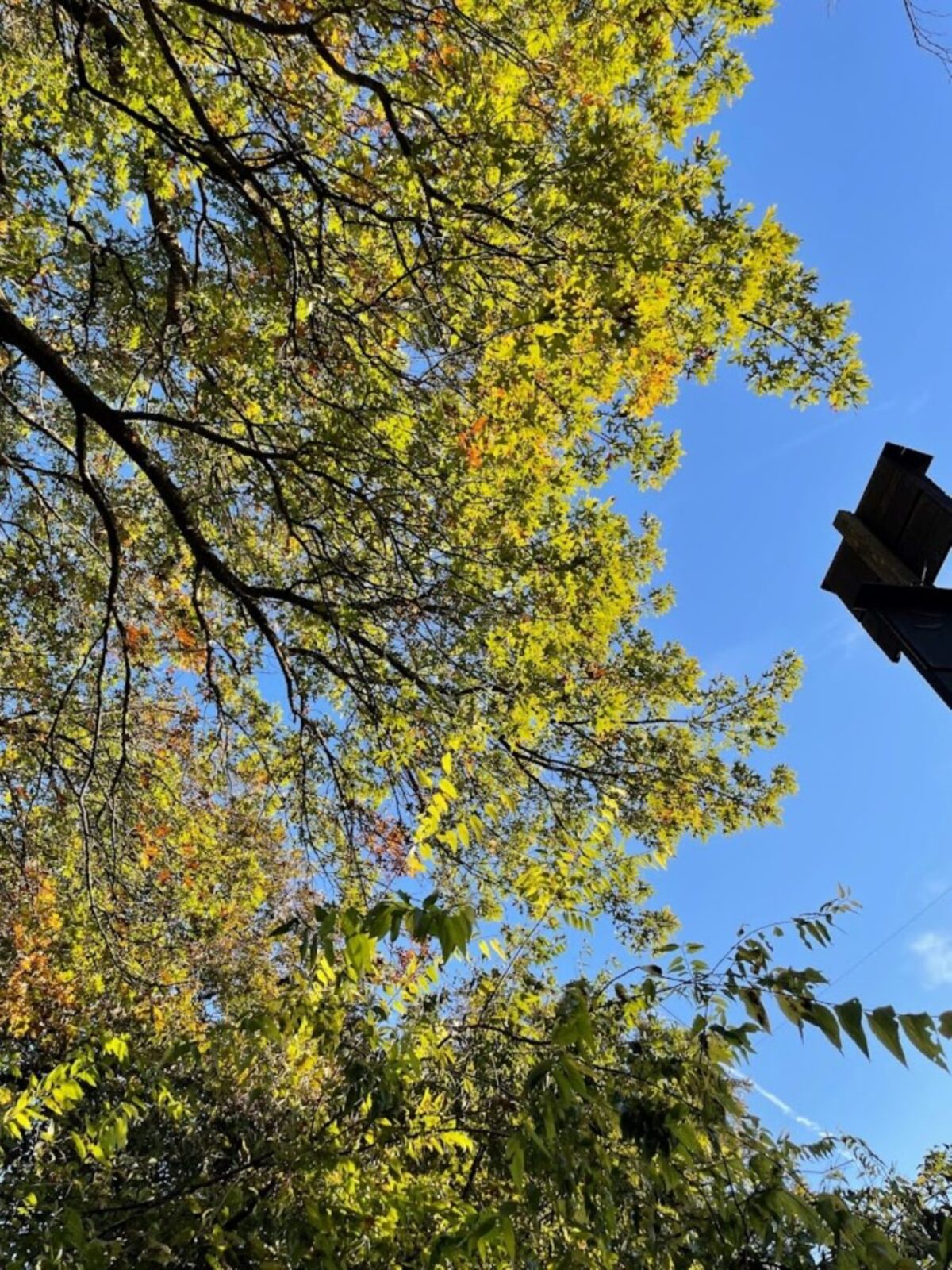
Standing dead trees provide more stable thermal conditions than live trees. A dead standing tree in a garden is a gift to a dozen different species – not an eyesore.
Water Features

Drinking on the Wing

Bats drink while flying – they skim the water’s surface and take a sip without landing. They need open, unobstructed approach space above any water source you provide. A minimum 7-foot swoop zone is essential.

An elevated water trough on a tomato cage, kept shallow and refreshed daily in summer, can serve multiple bats every night. When water needs changing, dip it from the shallow troughs and pour it directly on the plants before refilling.

“Water is life – bring some magic into your garden by providing a consistent source during summer droughts.”

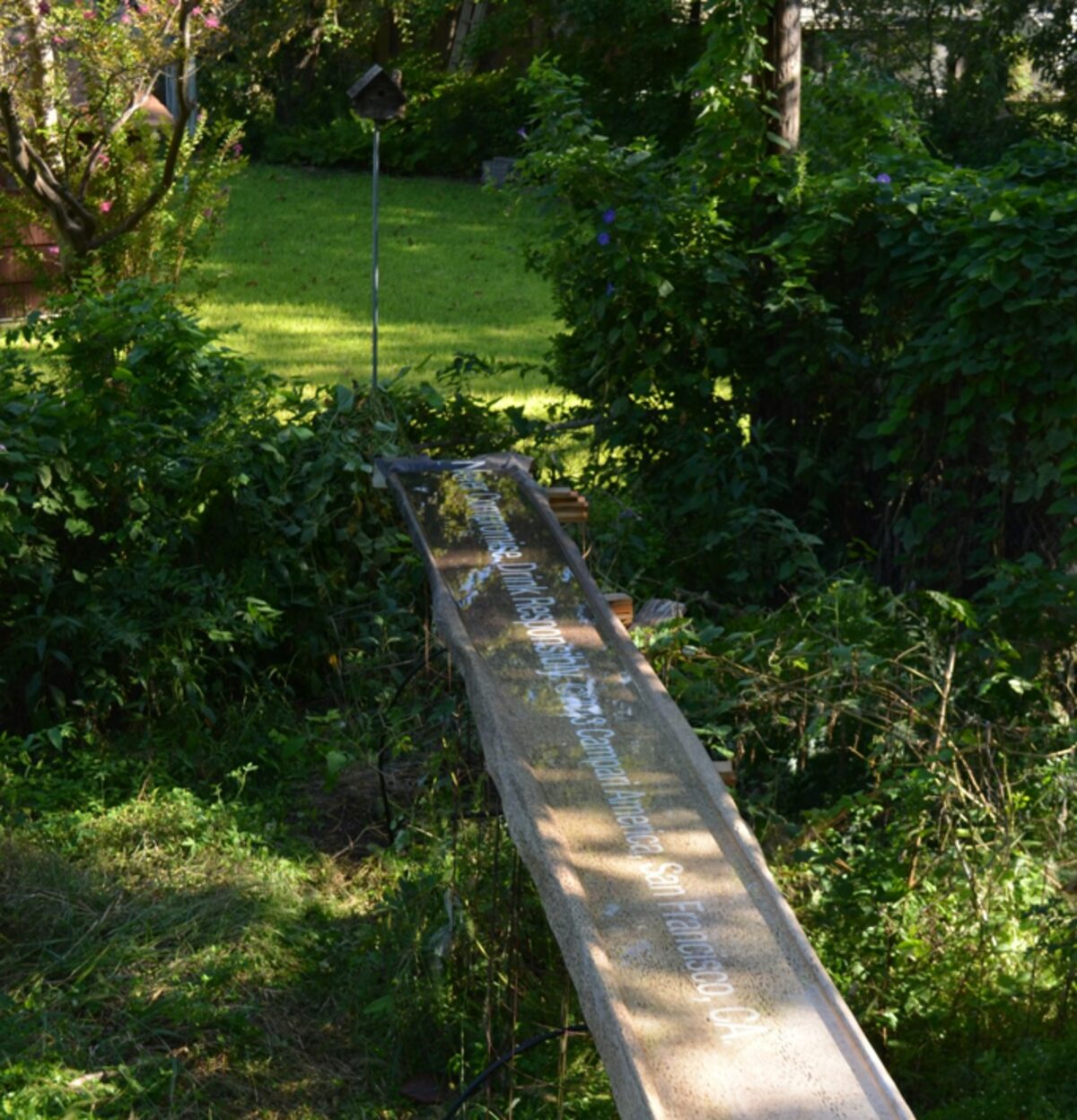
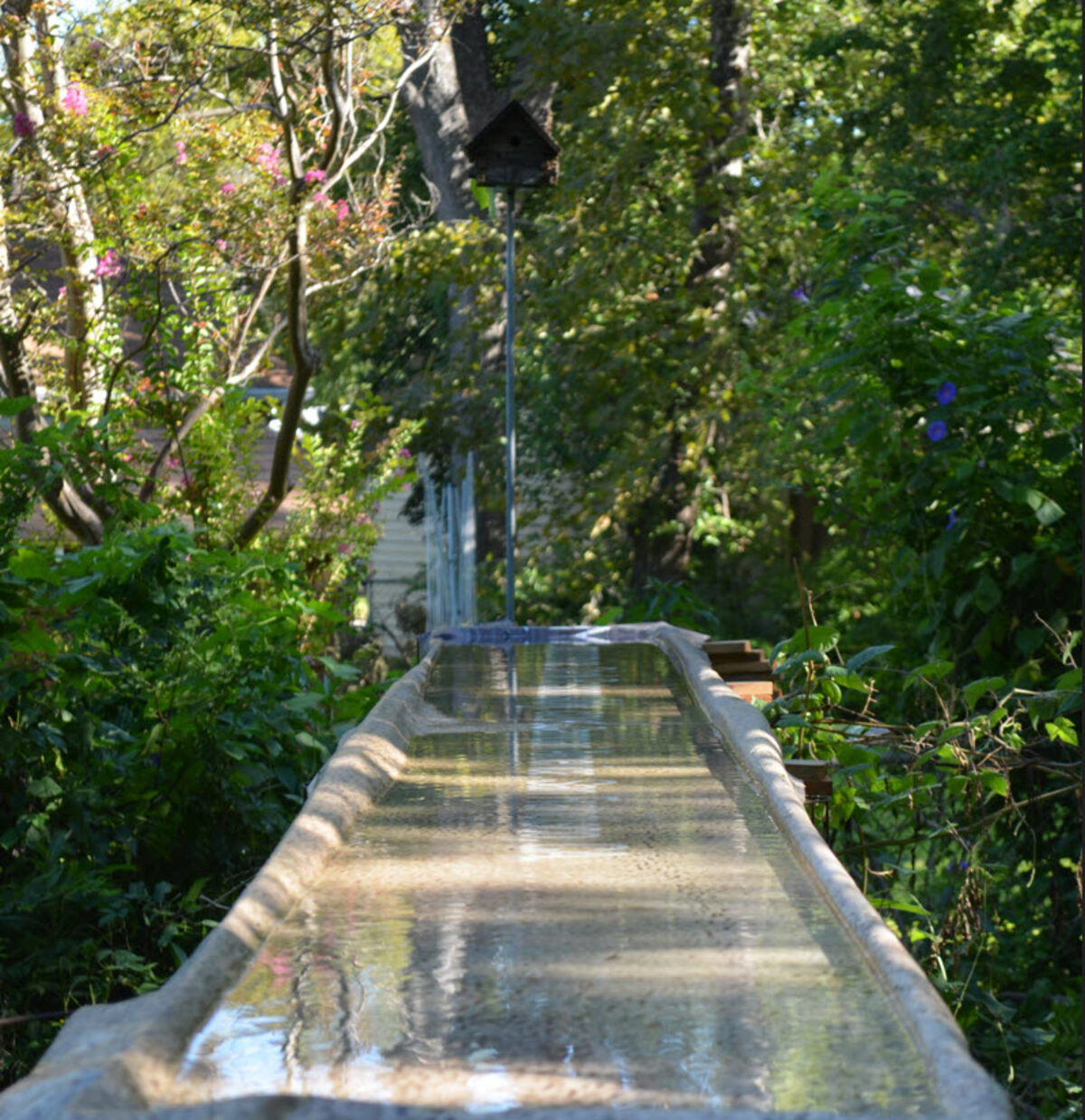
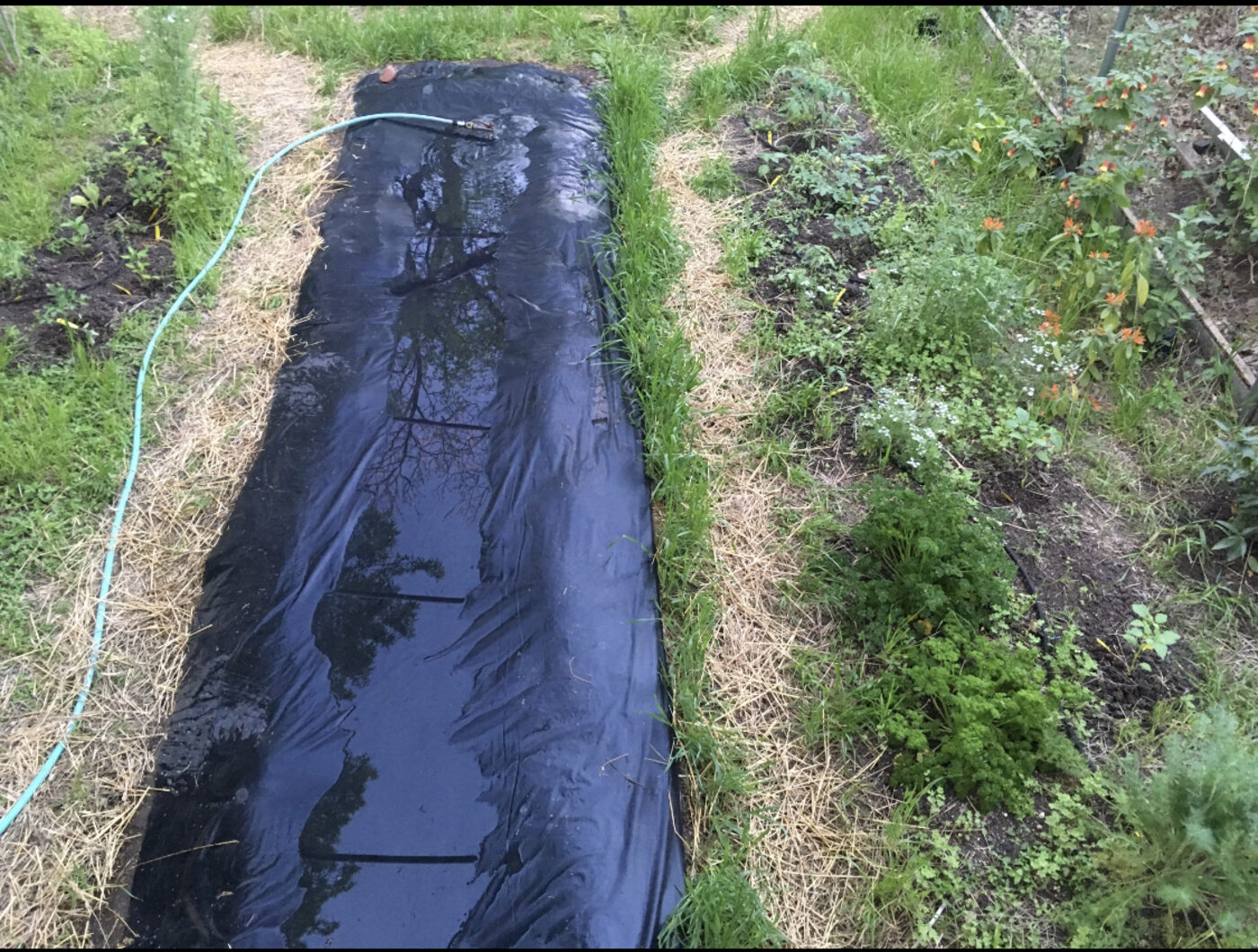
A bats-eye-view of the water trough shows perennial moth-attracting nectar plants set back to allow for growth and to provide an easy swoop zone. Annual crops like tomatoes are not caged, but allowed to “Loch Ness Monster” their way along the garden bed, dipping down to root before rising multiple times to bear fruit.

Garden Layout

Outer ring: Climbing night-blooming plants set back to leave a swoop zone for the water troughs even after they grow to bush size.

Middle: Crops and water troughs. Black-eyed peas as cover crop once tomatoes play out.

Shrub border: Giant mistflower, boneset, and mulberry. Shrimp plants, Abutilon, Mexican honeysuckle, night-blooming jasmine, and Berlandier’s trumpets fill in the color wall.

Bats-eye view of the water trough

Bats-eye view of the water trough with nectar plants set back for a clear swoop zone

Gabe supervising the planting of black-eyed peas

Gabe supervising the black-eyed pea planting

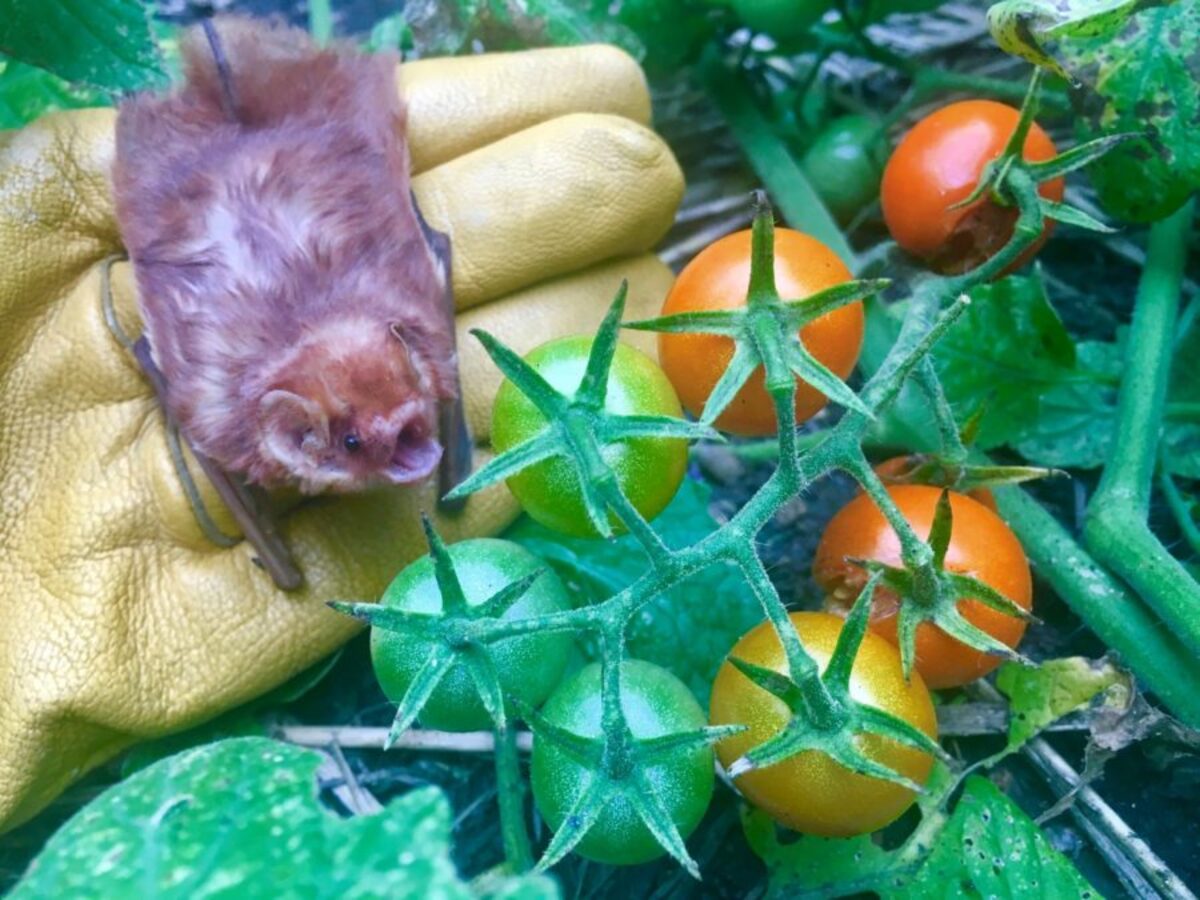
Gabe deciding which cherry tomatoes are ready

Gabe deciding which tomatoes are ready to harvest

Our rehabilitating bats seem to like watching us work the garden and not focusing all our attention on them – it feels like a team-building exercise, with everyone having their role.

Water Safety

Drink Responsibly – The Elevated Trough

If your yard has limited open areas to allow bats to swoop down to your water feature, you can elevate a drinking trough on top of Texas-style tomato cages (made from 6″ driveway mesh). Top the cages with metal roofing scraps lined with recycled billboard material. Keep it shallow and dump it every day during summer to water tomatoes growing beneath.

Drink Responsibly elevated water trough system

Elevated water trough on a tomato cage – gives bats a clear swoop zone even in tight gardens

Water trough setup for bat-friendly garden

Our billboard says “Please Drink Responsibly!” – stay shallow and dump daily to prevent mosquito breeding

Meet a Garden Bat

The Eastern Red Bat

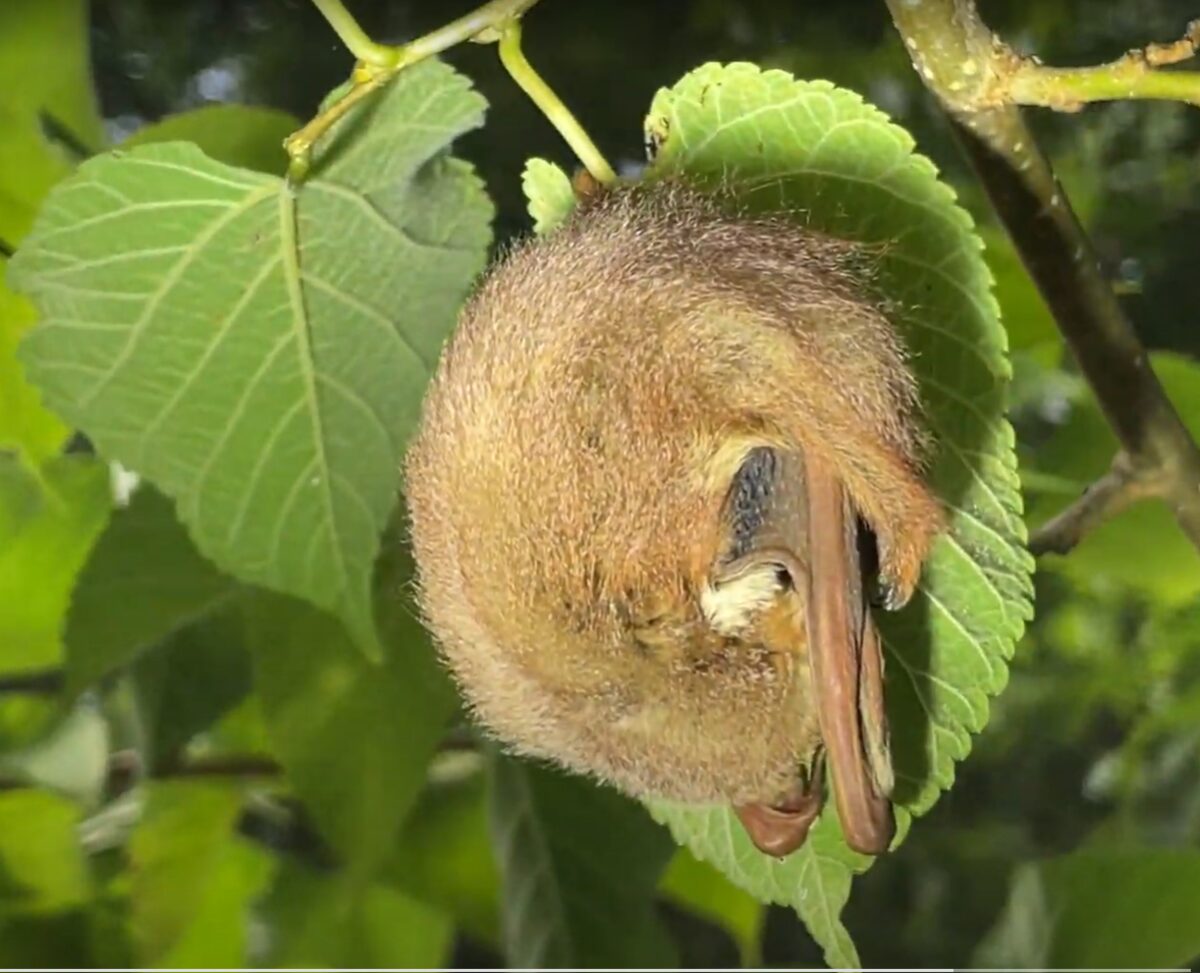
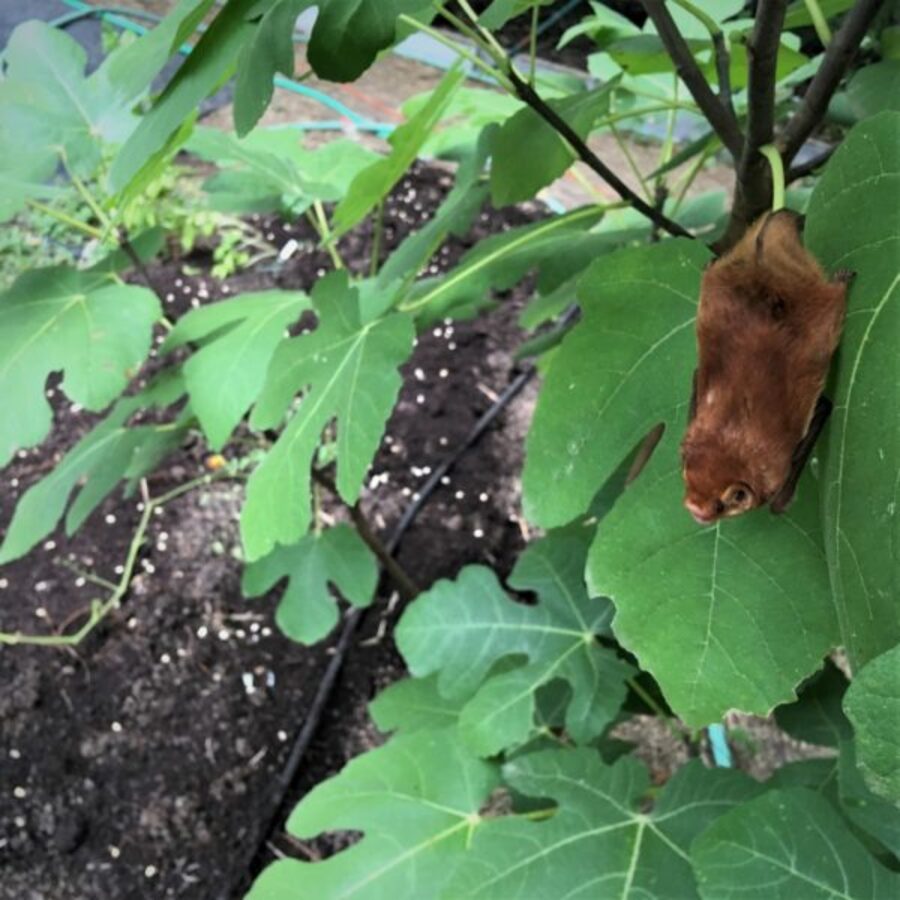
Eastern red bats sleep while hanging by one foot from the stem of a mulberry leaf. When she wakes up, the first thing she does is take a drink – then she goes on the hunt.

She catches moths with a dramatic tail grab – a backflip maneuver we call “SnackroBatics.” She flies off consuming the moth while shedding the wings mid-air. Those moth wings scattered in the garden every morning? Evidence that bats are protecting your crops all night.

Eastern red bats mimic dead leaves and roost in the foliage of trees through summer. In winter, they drop into deep piles of leaves on the ground to survive hard freezes – making leaf litter one of the most important winter habitats you can provide.

Eastern red bat roosting

Eastern red bat – hanging by one foot, disguised among the leaves

Eastern red bat in the garden

Slow motion – tail membrane catch

The Food Web

Plant for Moths, Feed the Bats

Moths are essential to many other species, including the plants they pollinate and the animals they nourish. In their larval form they provide a primary source of sustenance for birds, and as adults they feed everything from tiny bats to large mammals. Like butterflies, moths require native plant species they recognize in order to lay their eggs.

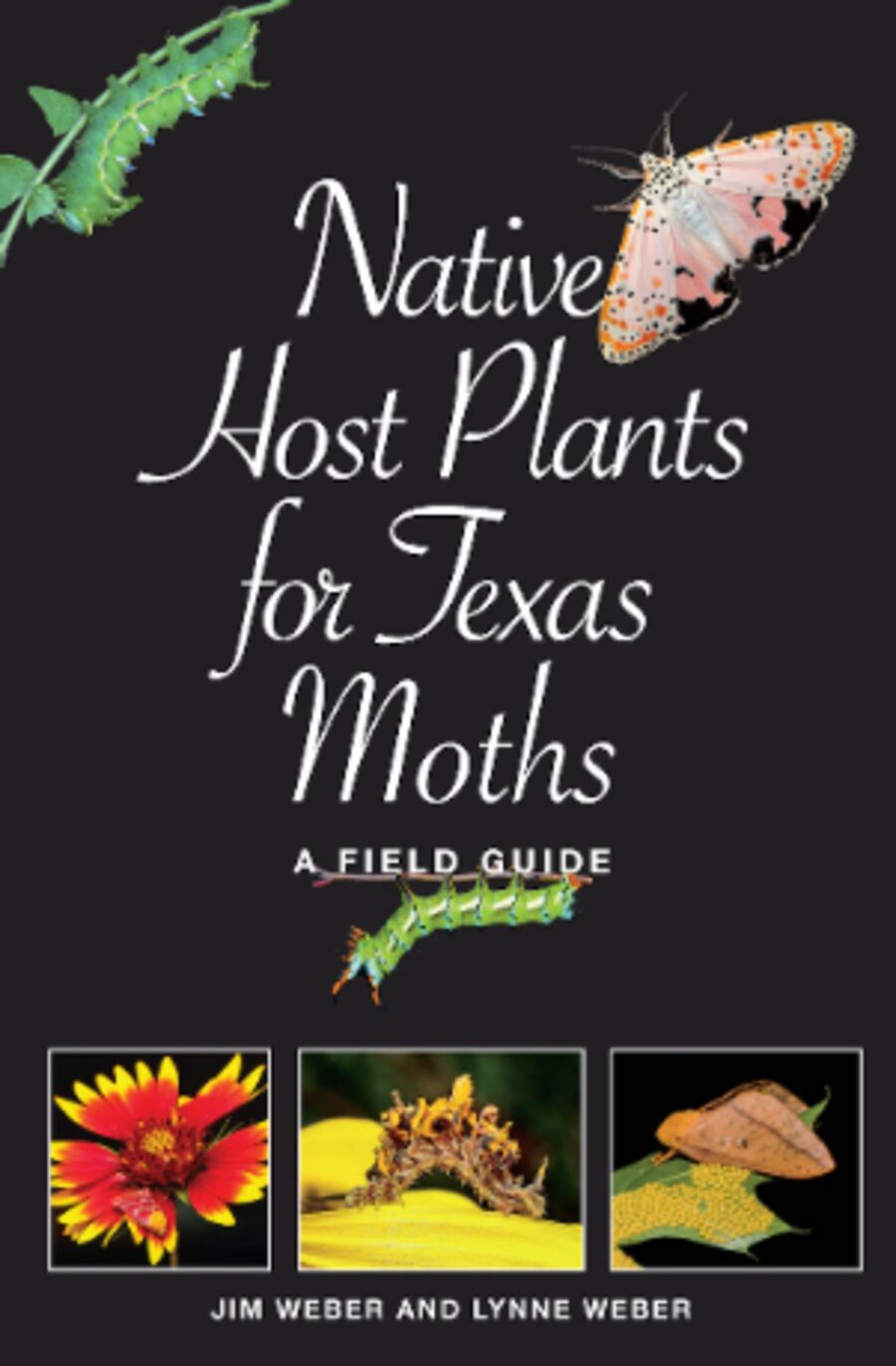
Native Host Plants for Texas Moths - Field Guide by Lynne M. Weber and Jim Weber, Texas A&M Press

Native Host Plants for Texas Moths
Lynne M. Weber & Jim Weber – Texas A&M Press

This wonderful resource lets you choose native plants that bloom at different times of year. Native plants are of utmost importance for moths, as they evolved alongside them and fit into well-established niches in our local food web.

The garden follows a seasonal rhythm: snap peas and boneset provide spring blooms, then tomatoes and peppers carry summer, before black-eyed peas cover the dog-days of summer – enriching the soil while preserving nutrients. Fall is when giant mistflower, night-blooming jasmine, and Mexican honeysuckle provide nectar for foraging moths.

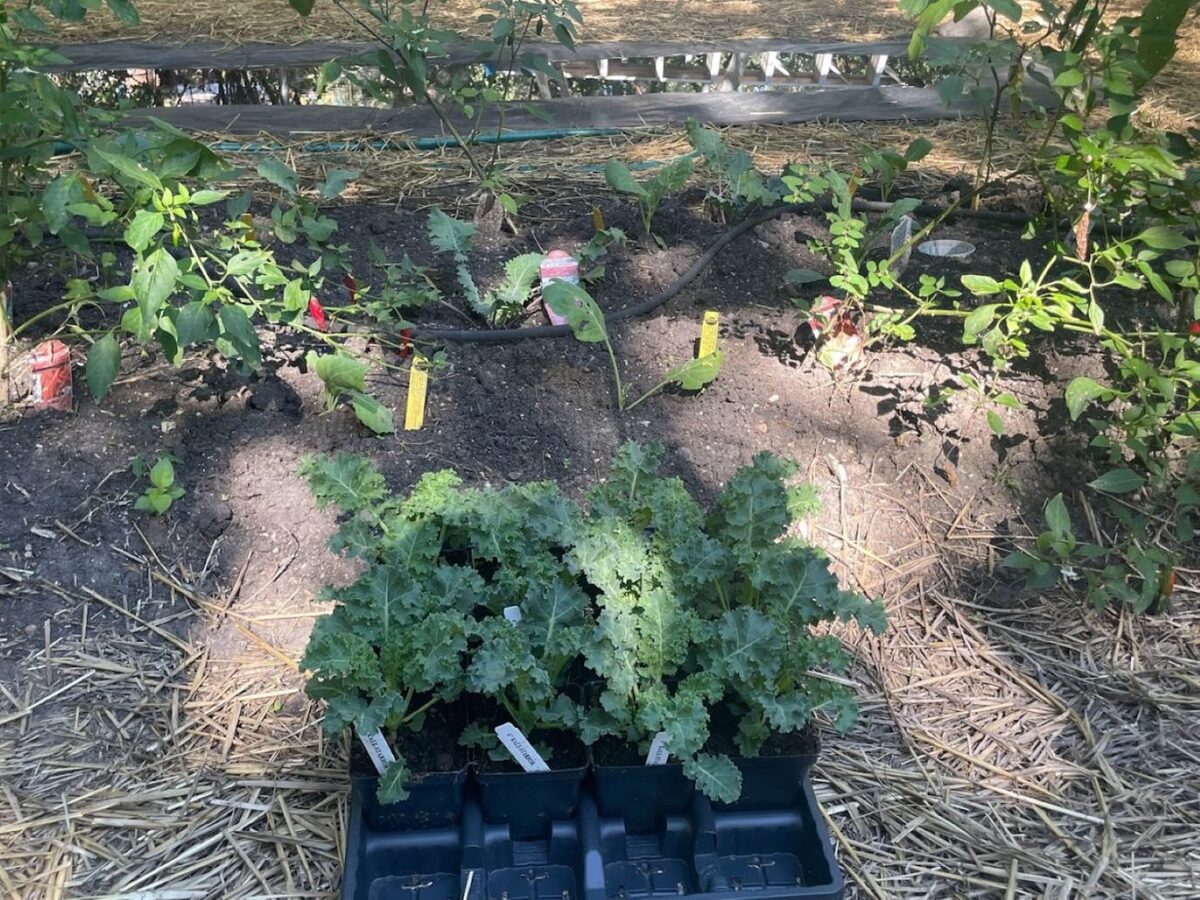
Curly kale in the bat garden - host plant for army worm moths

Time to plant the curly kale – a tasty crop and a host plant for army worm moths

Lady Bird Johnson Wildflower Center Plant Search

Choose native plants that bloom at different times of year. Filter by “attracts moths” for maximum bat food benefit.

Search Native Plants →
Nectar Plants

What’s Blooming in the Bat Garden

These native and adapted plants attract night-flying moths and provide nectar across all seasons. Choose species with staggered bloom times for year-round bat foraging habitat.

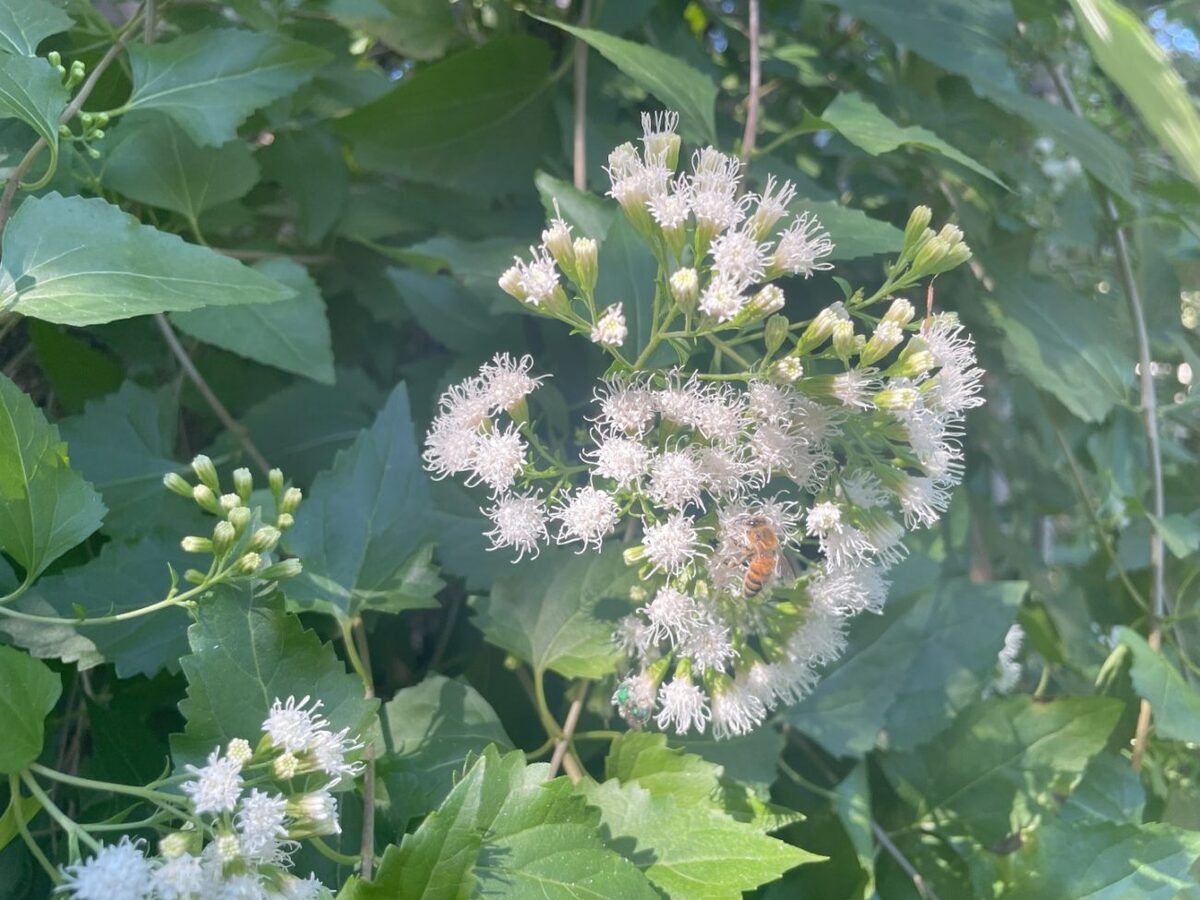
Boneset in the bat garden

Boneset

This native shrub is prolific along Barton Creek Greenbelt. Its woody stem allows it to bloom more quickly after a hard freeze – a resilient backbone for any bat garden.

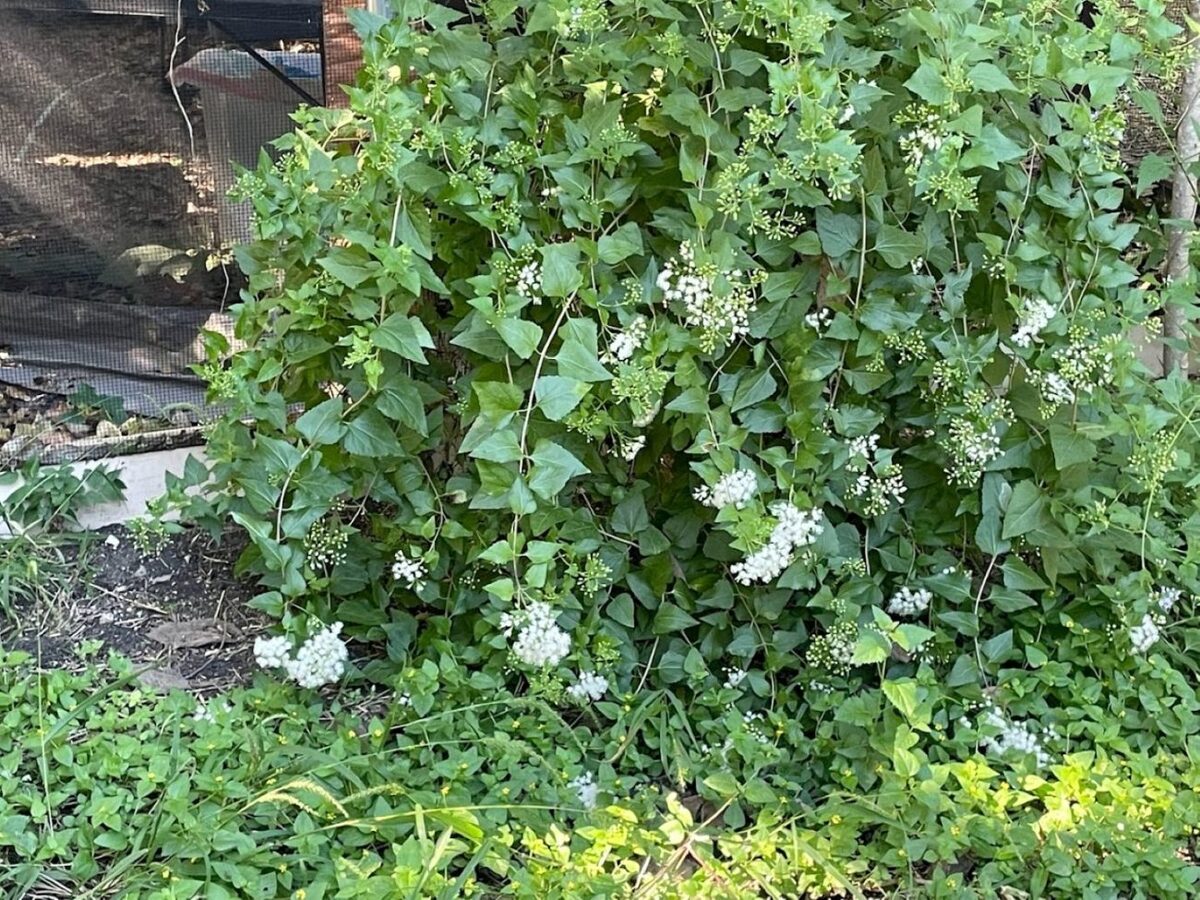
Boneset full bloom

Boneset in Full Bloom

Fall bloomer that attracts dozens of moth species. Pairs well with giant mistflower to extend the nectar season from late summer through the first freeze.

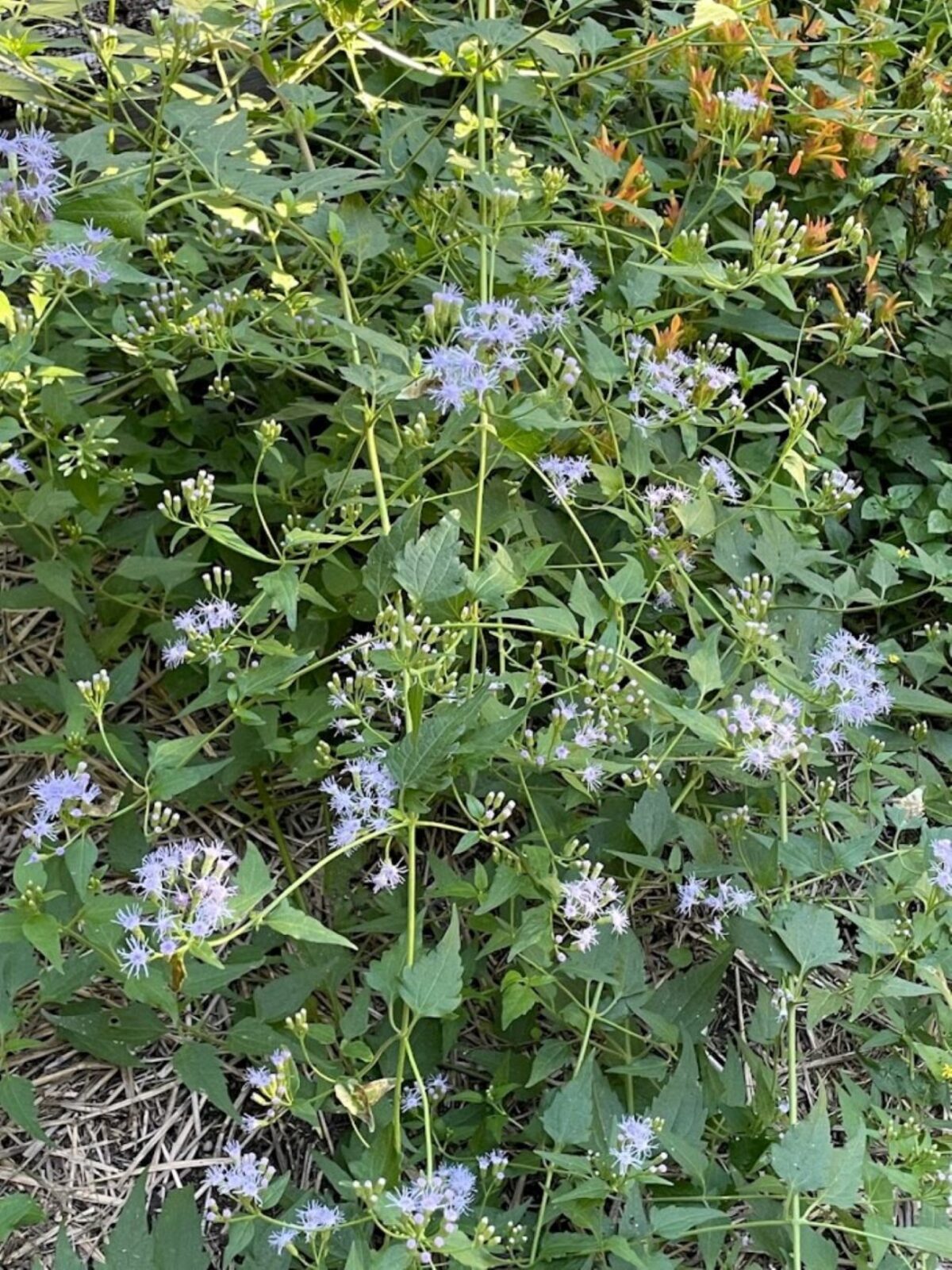
Giant mistflower

Giant Mistflower

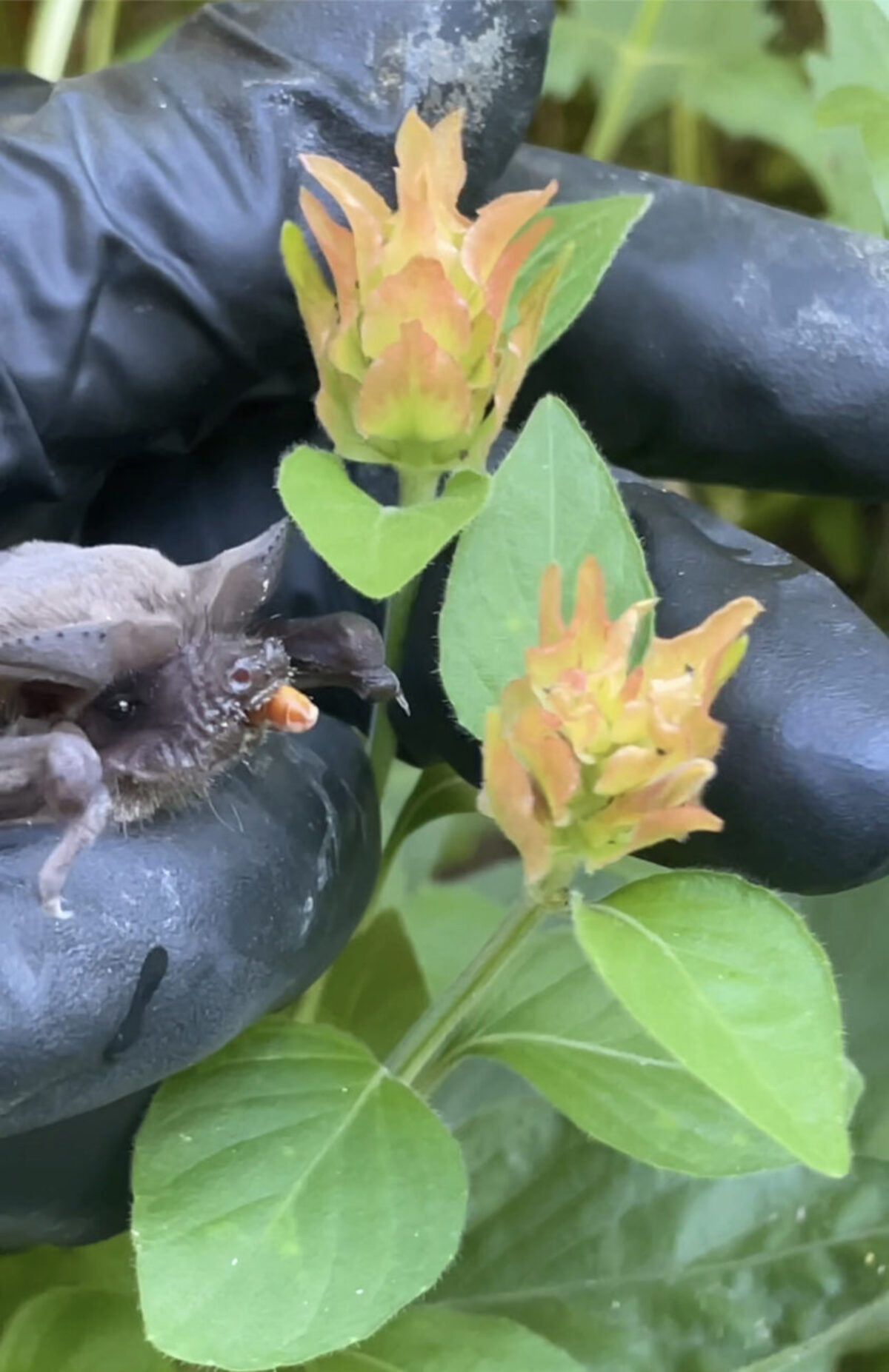
A bat favorite. Long blooming season provides consistent nectar through fall when other plants have gone dormant. Observed regularly by tri-colored bats on patrol.

Shrimp plant

Shrimp Plant

Year-round bloomer in Austin’s climate. Hummingbirds and bats both visit. Tolerates partial shade and heat – ideal for garden corners that don’t get full sun.

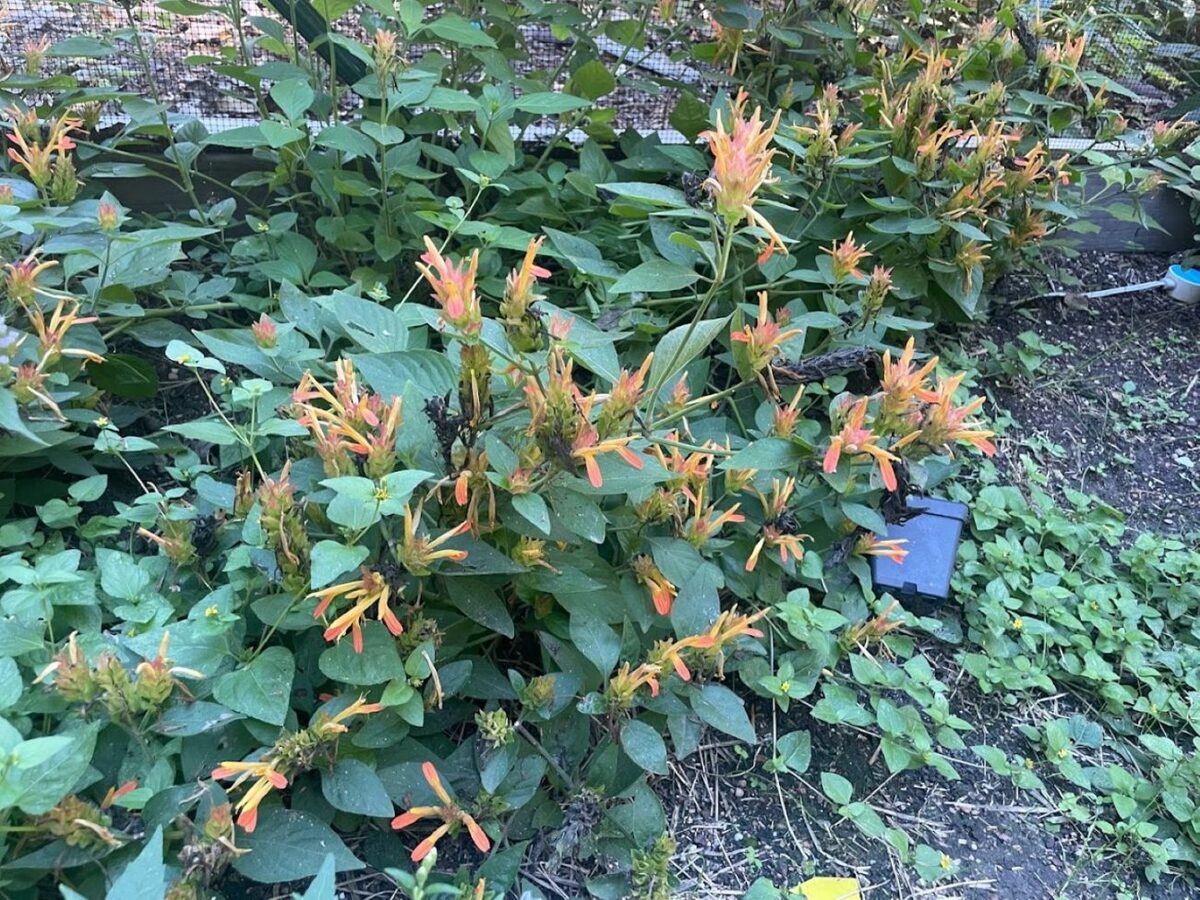
Mexican honeysuckle

Mexican Honeysuckle

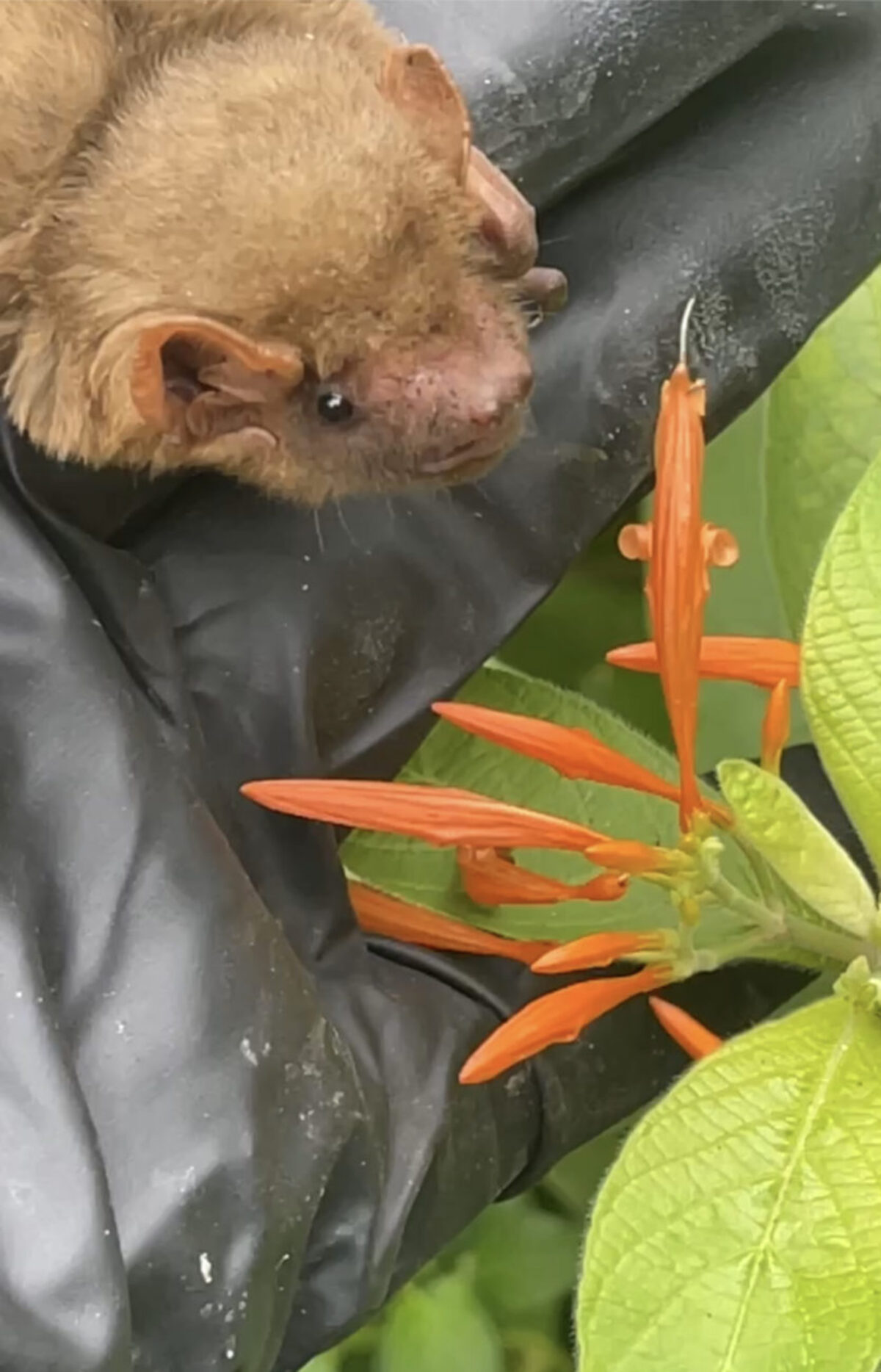
Checked by Northern yellow bats on regular patrol routes. Orange tubular flowers attract night pollinators through late fall. A reliable anchor plant for the bat garden.

Malawi peppers

Malawi Peppers

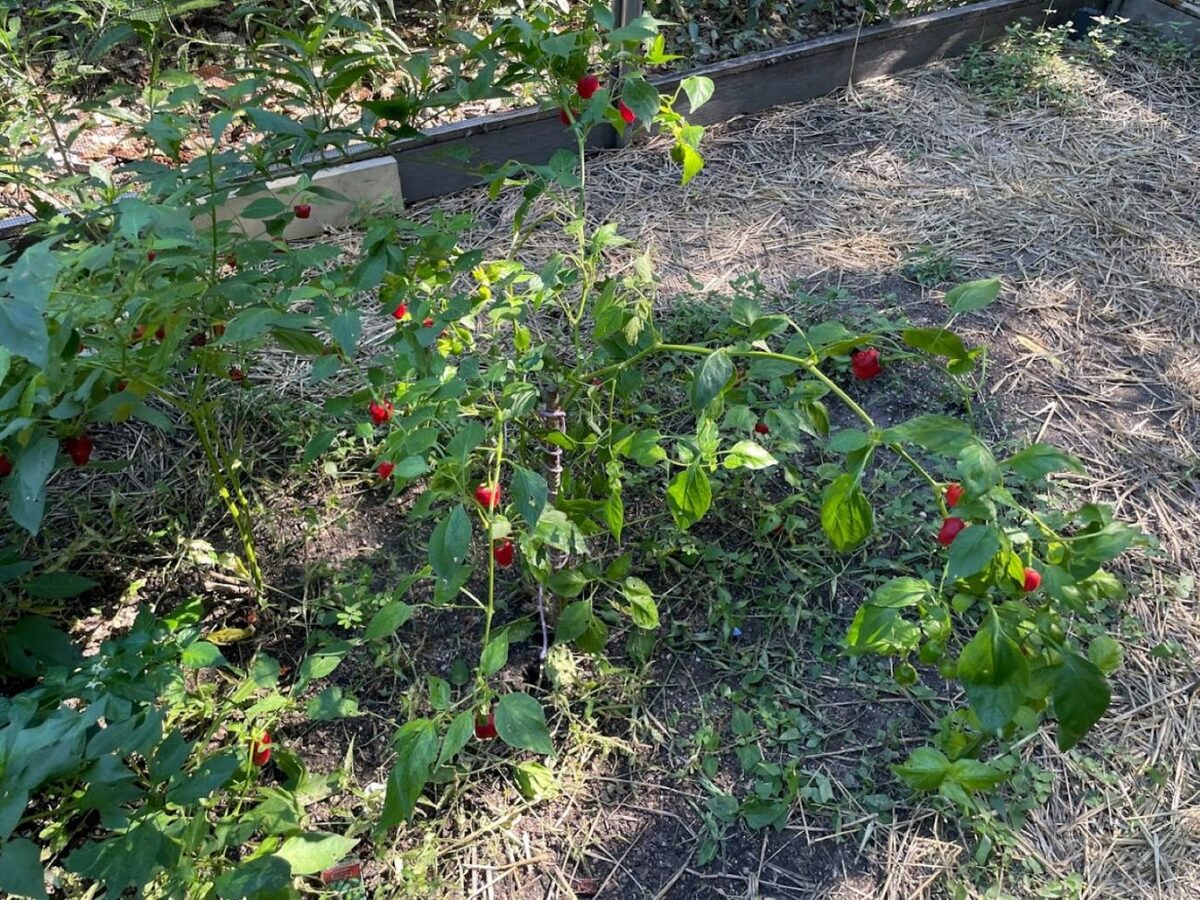
Perennial in Austin. Withstands droughts and hard freezes. Provides consistent insect habitat through challenging weather – a surprisingly tough performer in the bat garden.

Eastern red bats swoop to drink between the black-eyed peas

Eastern red bats swoop to drink between the black-eyed peas

Garden in full bloom for bats and moths

Moth garden in full bloom – walls of color that persist through late fall

Garden Habitat

Luna Moth & the Upside-Down Nest

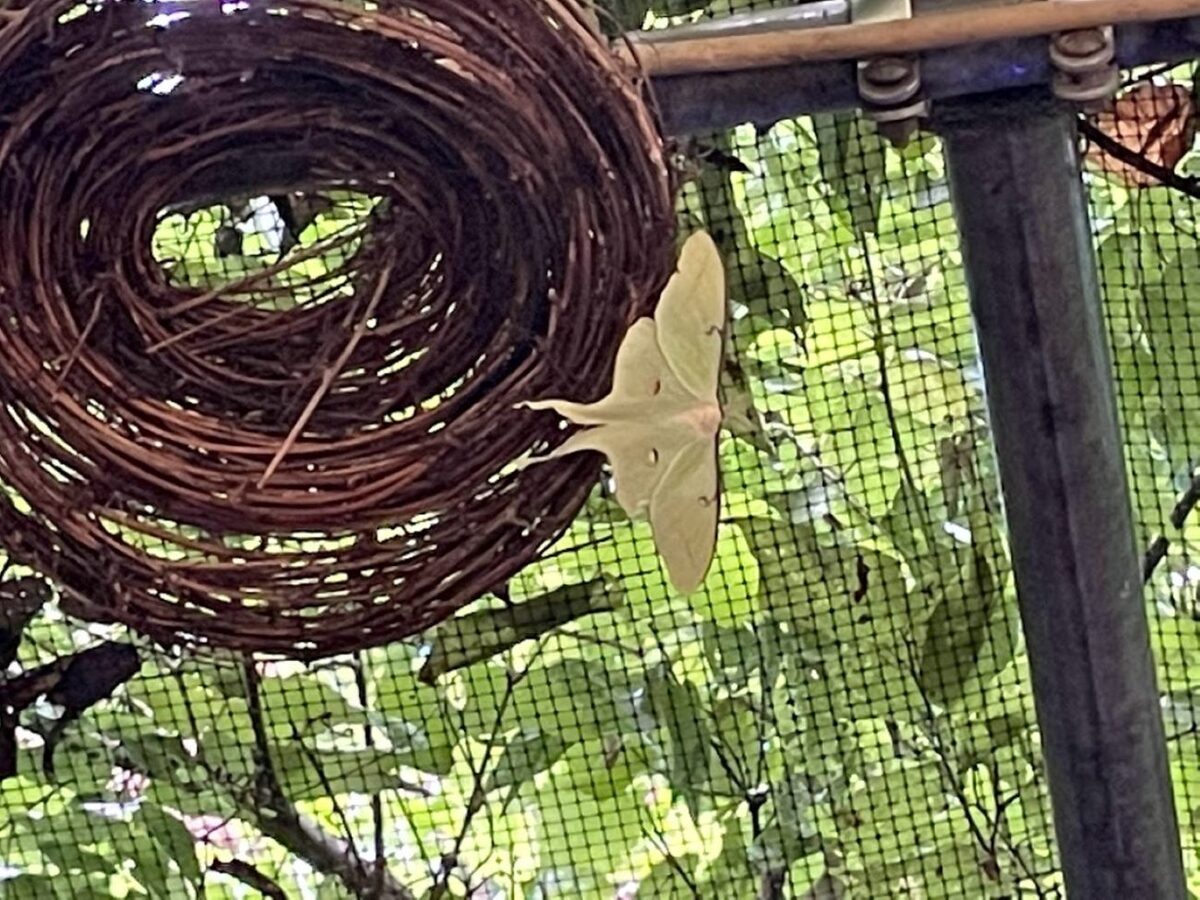
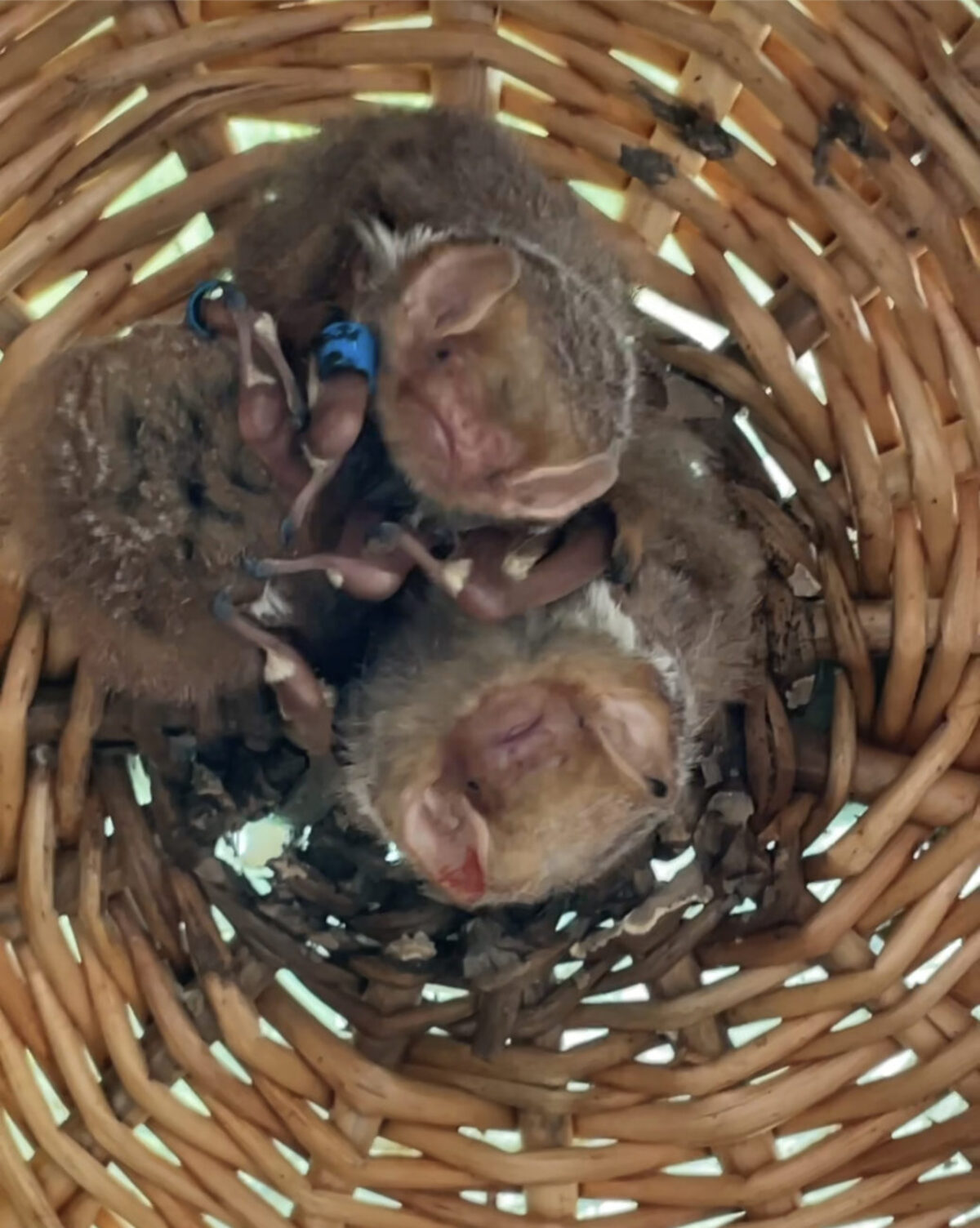
The luna moth pictured here was found on an upside-down grapevine birds’ nest – sometimes used by foliage-roosting bats as a hiding spot from bird predators. You could also hang an upside-down wicker basket high in a tree and see if a bat decides it is a good place to hide.

Bat boxes can be a wonderful addition to a home garden – but a nearby standing dead tree provides more stable thermal conditions. About half the bat species in Austin don’t use bat boxes at all. Many roost in the leaves of trees in summer, mimicking dead leaves, then drop into deep piles of leaf litter on the ground to survive winter freezes.

Don’t overwork your yard. Leave the leaves, clusters of dead leaves, and some standing dead trees. What’s more beautiful: a sterile manicured landscape, or one full of life?

Luna moth on upside-down grapevine birds nest

Luna moth on upside-down grapevine birds’ nest – also used by foliage-roosting bats

Bat-friendly garden habitat
The Nightly Show

SnackroBatics

Ever wonder about bats’ pest control services? The moth wings we find in the garden every morning are evidence that bats are protecting crops all night. They do backflips as they catch the moths – we call those maneuvers “SnackroBatics.” They fly off consuming the moth while shucking the wings mid-air.

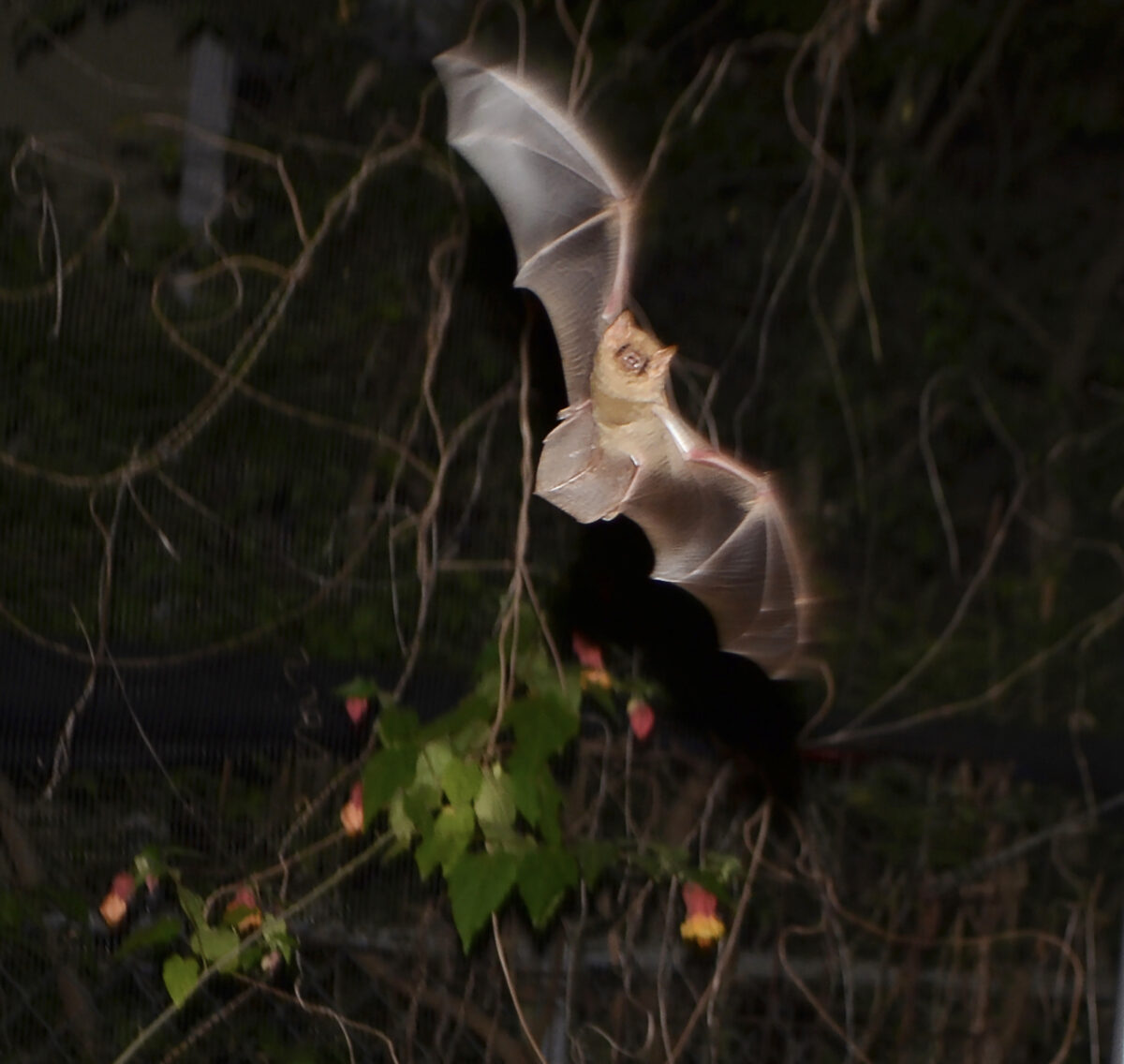
Eastern red bat doing a backflip to catch a wax worm moth in its tail membrane. Acrobatics? More like Snack-ro-Bat-ics.

Wax Worm Moths

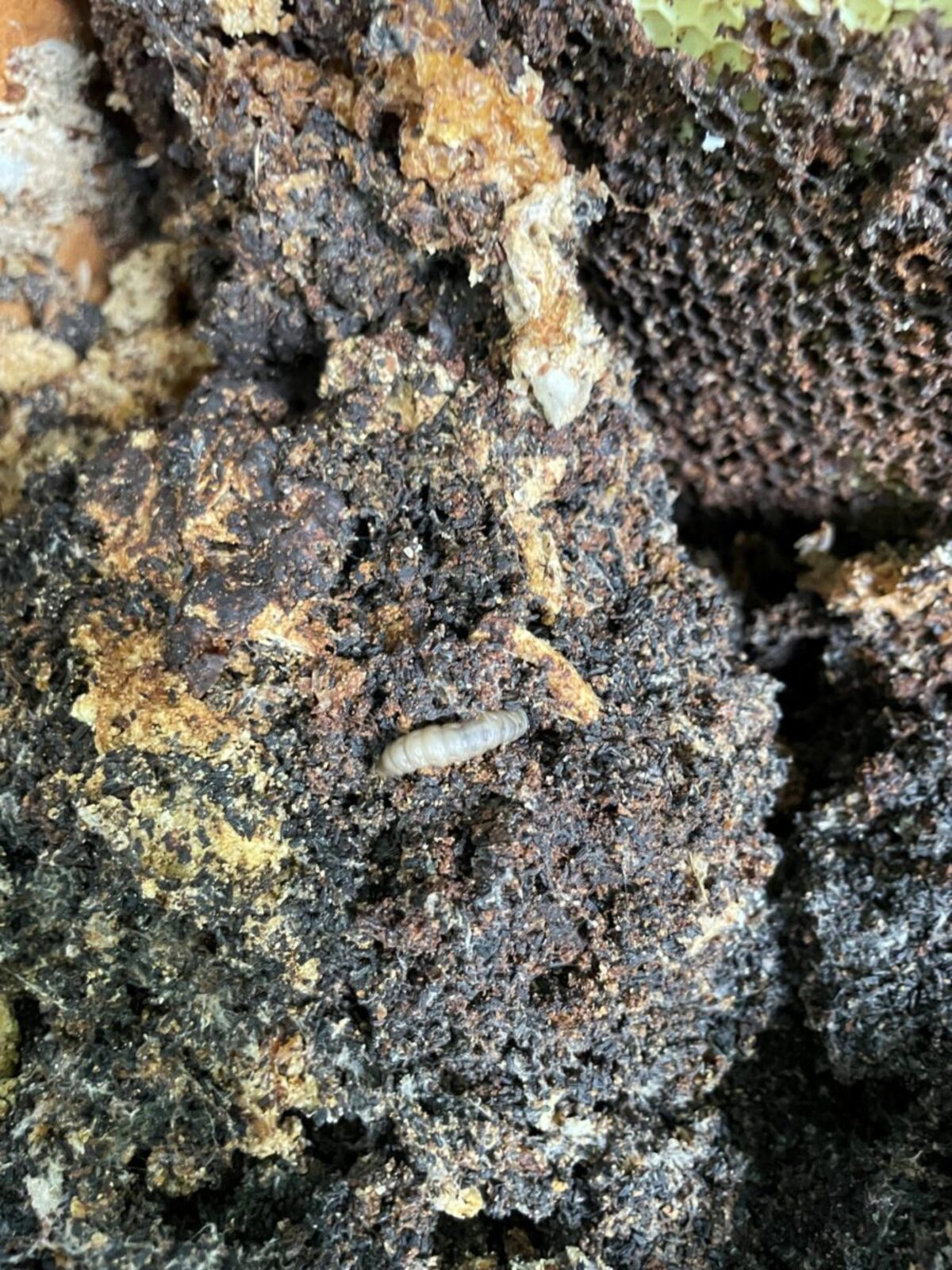
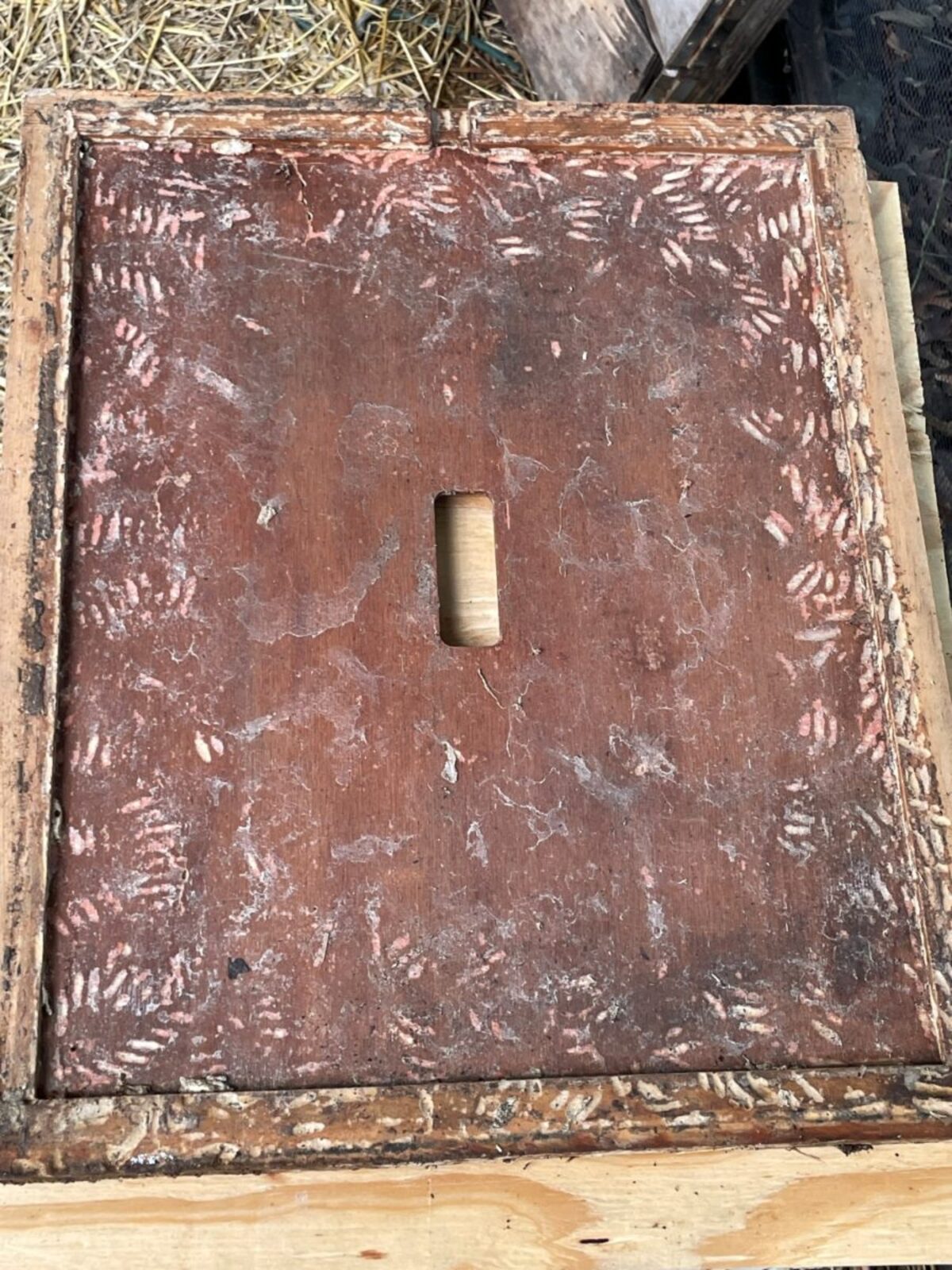
Wax worm moths evolved to clean up abandoned honeycombs in hollow trees. They lay their eggs there and their larvae feed on the impurities on the honeycomb. Bees move back in a year or two later, clean out the silk and cocoons, and re-use the now-clean honeycomb.

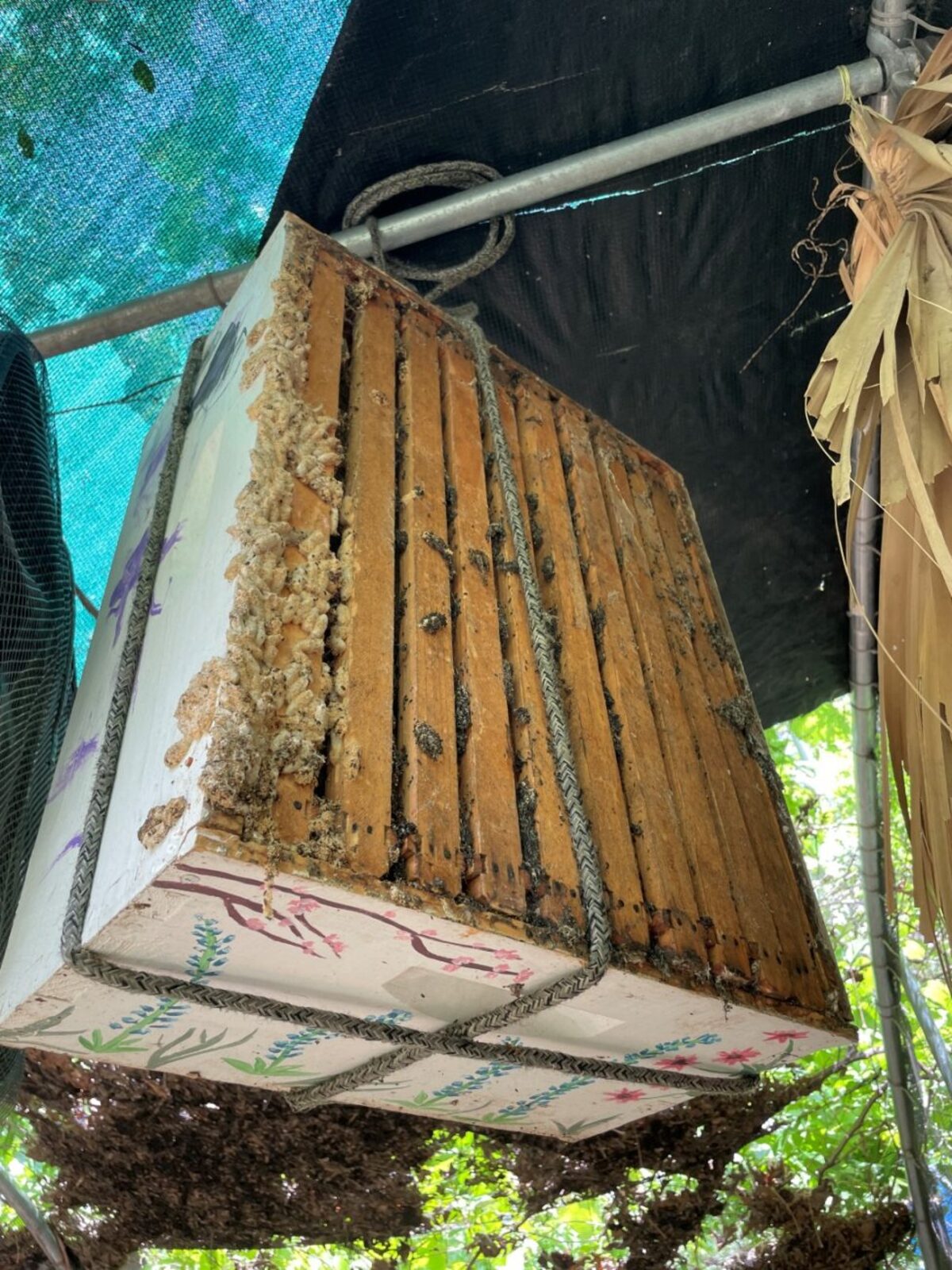
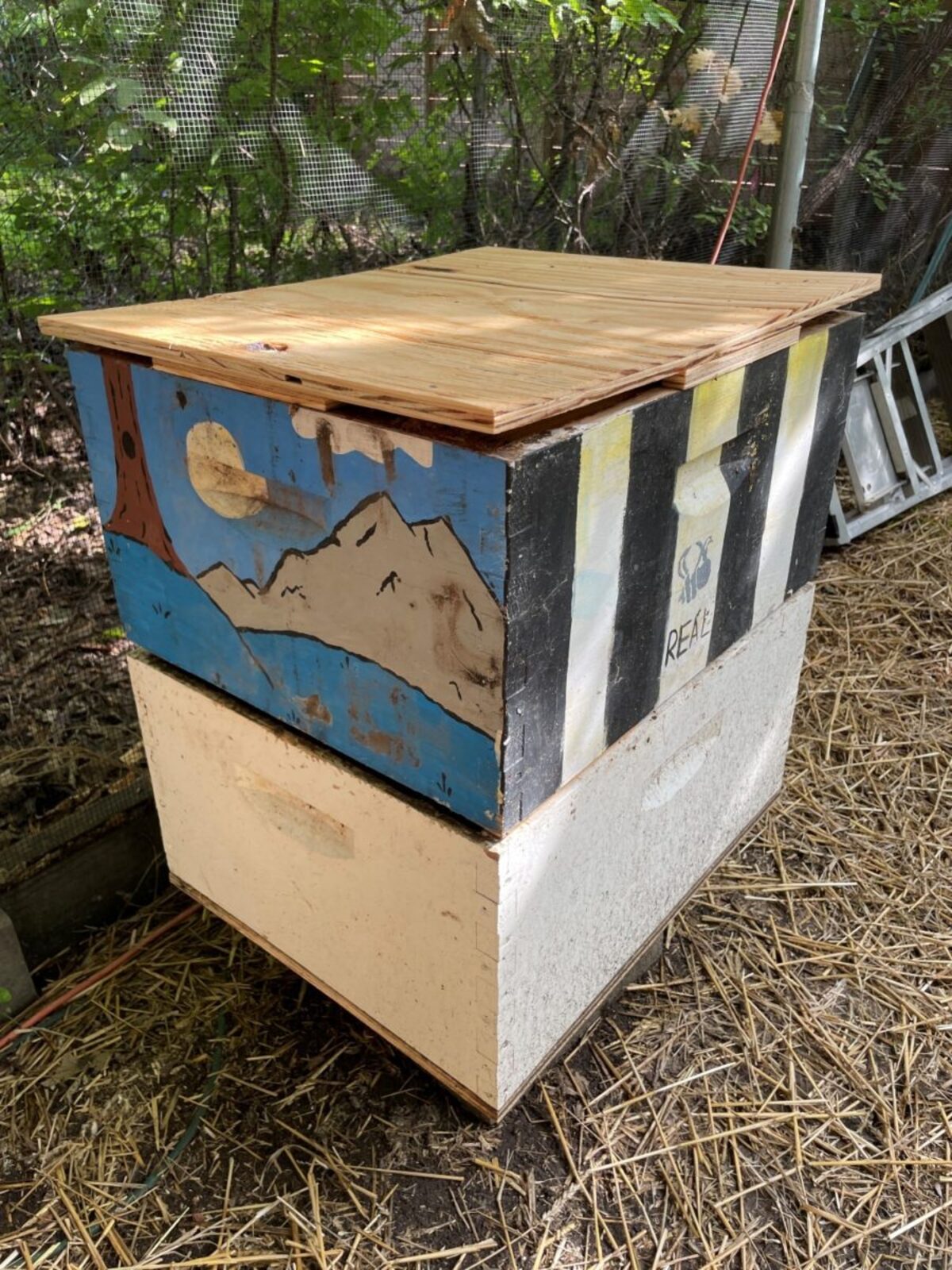
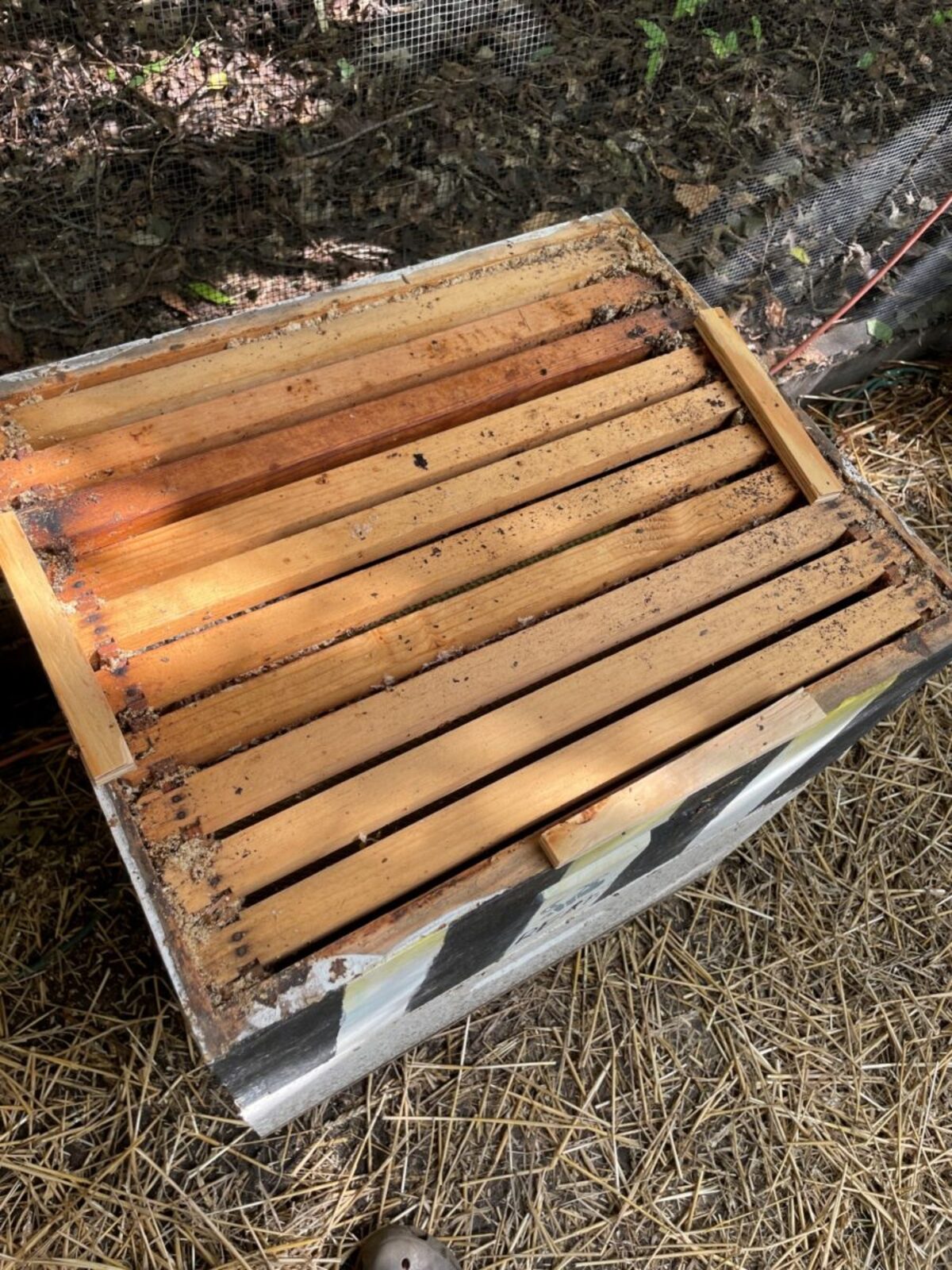
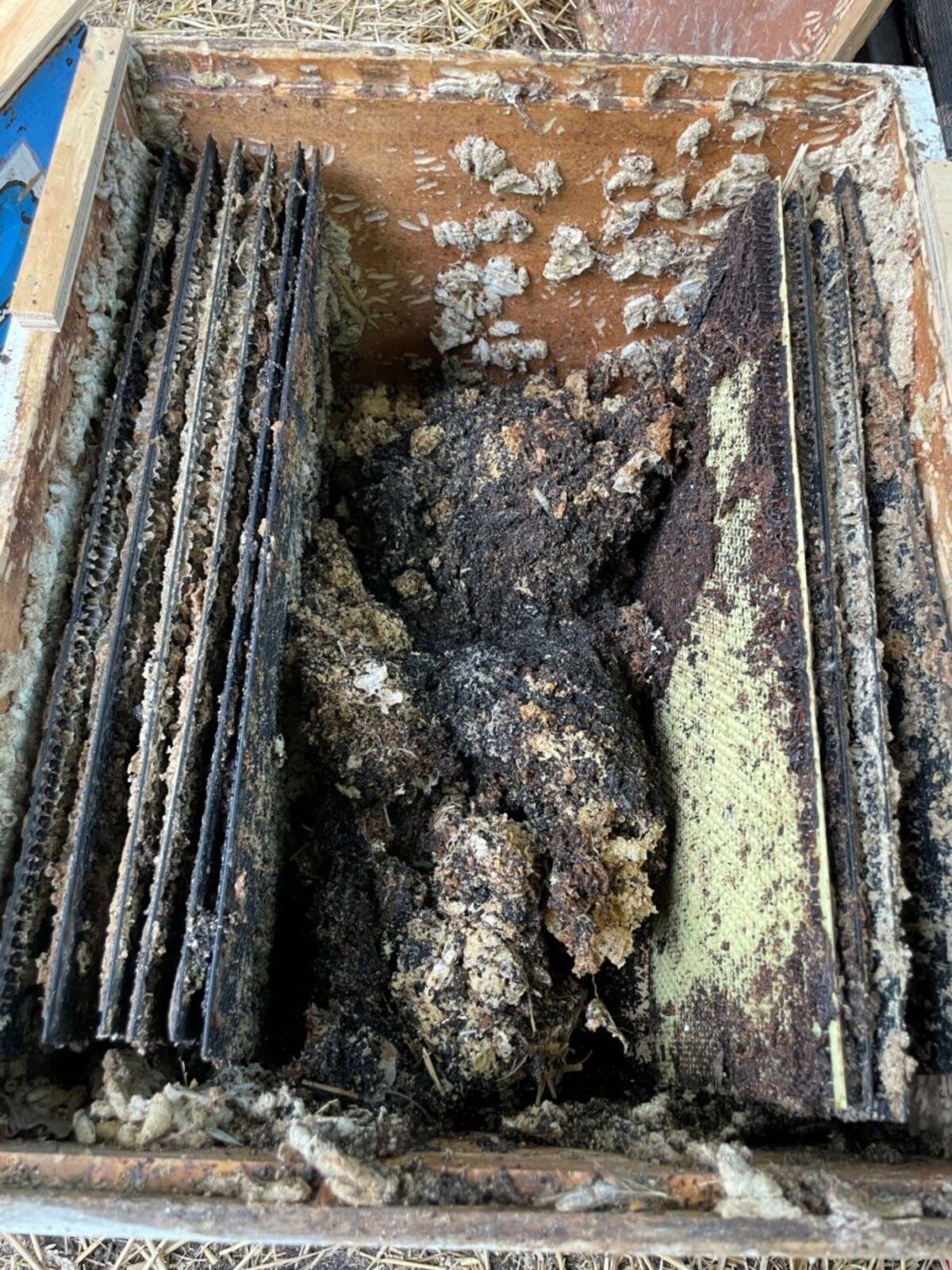
The bee boxes brought to Austin Bat Refuge allow the moths to hatch in the flight cage – providing hunting practice for rehabilitating bats. Once the moths have hatched, the beekeeper cleans them out and returns the boxes, possibly with some newly-trained bat protectors. The larvae pupate inside, etching the wood for their cocoons, then emerge as perfect hunting targets for bats learning to fly again.

Bee box with wax worm moths for bat rehabilitation

Bee boxes as perfect incubators for wax moth larvae – they stay dry and maintain the right temperature and humidity

Eastern red bat catching a wax worm moth – SnackroBatics in action

Bat Habitat

Leave the Leaves

Dead leaves, leaf clusters in trees, and standing dead wood are all critical habitat for Austin’s foliage-roosting bats. Many species – including Eastern red, Seminole, Northern yellow, and Hoary bats – do not use bat boxes. They mimic dead leaves while roosting in trees through summer, then drop into deep leaf piles on the ground to survive winter freezes.

Don’t overwork your yard. What’s more beautiful: a sterile manicured landscape, or one that is full of life?

Leave the Leaves - Xerces Society campaign

Xerces Society: Leave the Leaves – leaf litter is critical habitat for overwintering bats, insects, and pollinators

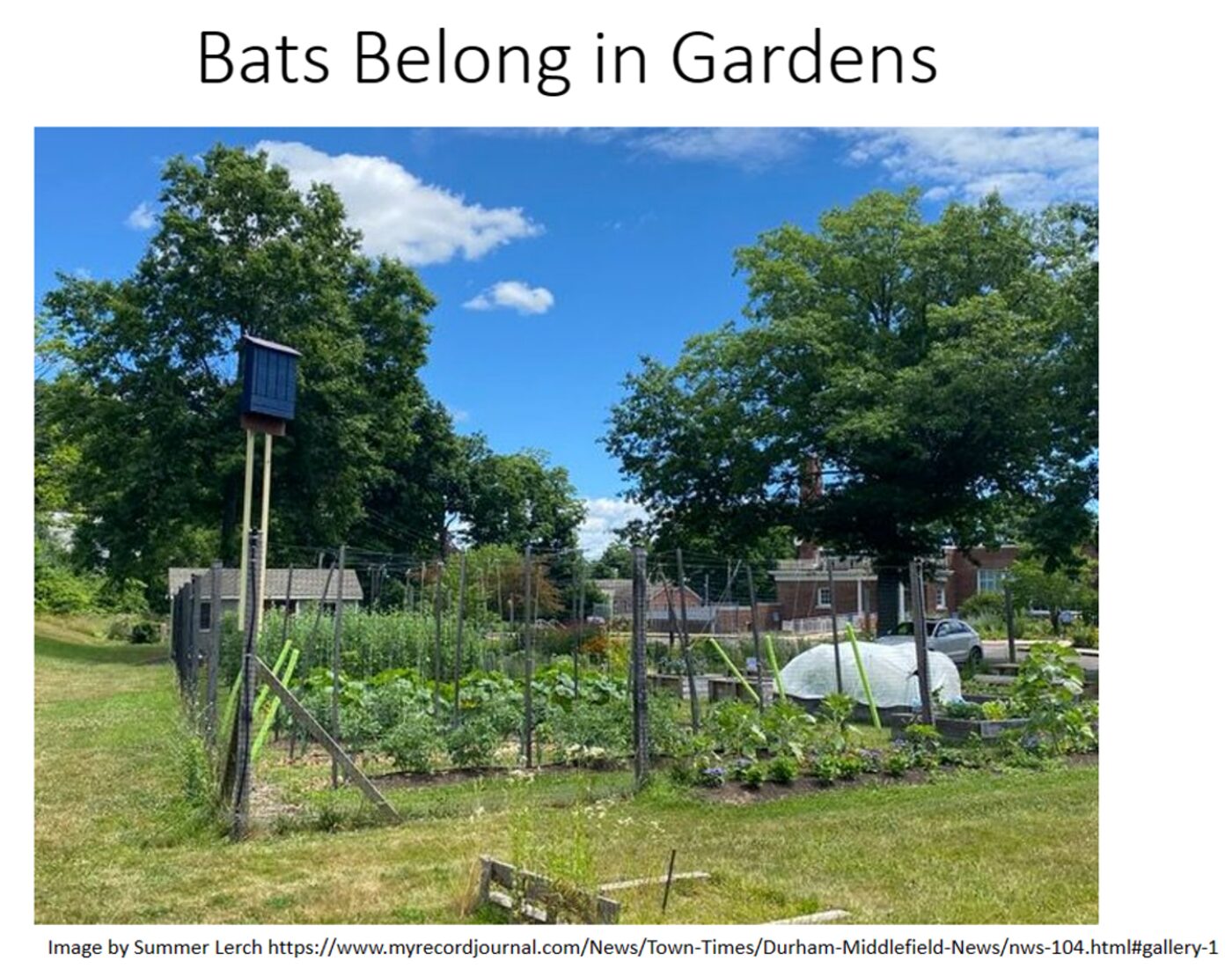
Bats Belong in Gardens community garden

Bats Belong in Gardens community garden – demonstrating bat-friendly practices at scale

Community gardens are ideal settings for demonstrating bat-friendly practices. A single water trough, a border of native nectar plants, and a hands-off approach to leaf litter can turn any shared green space into a nightly bat hunting ground.

Winter Habitat

Camouflage, Firewood, and a Rescued Bat

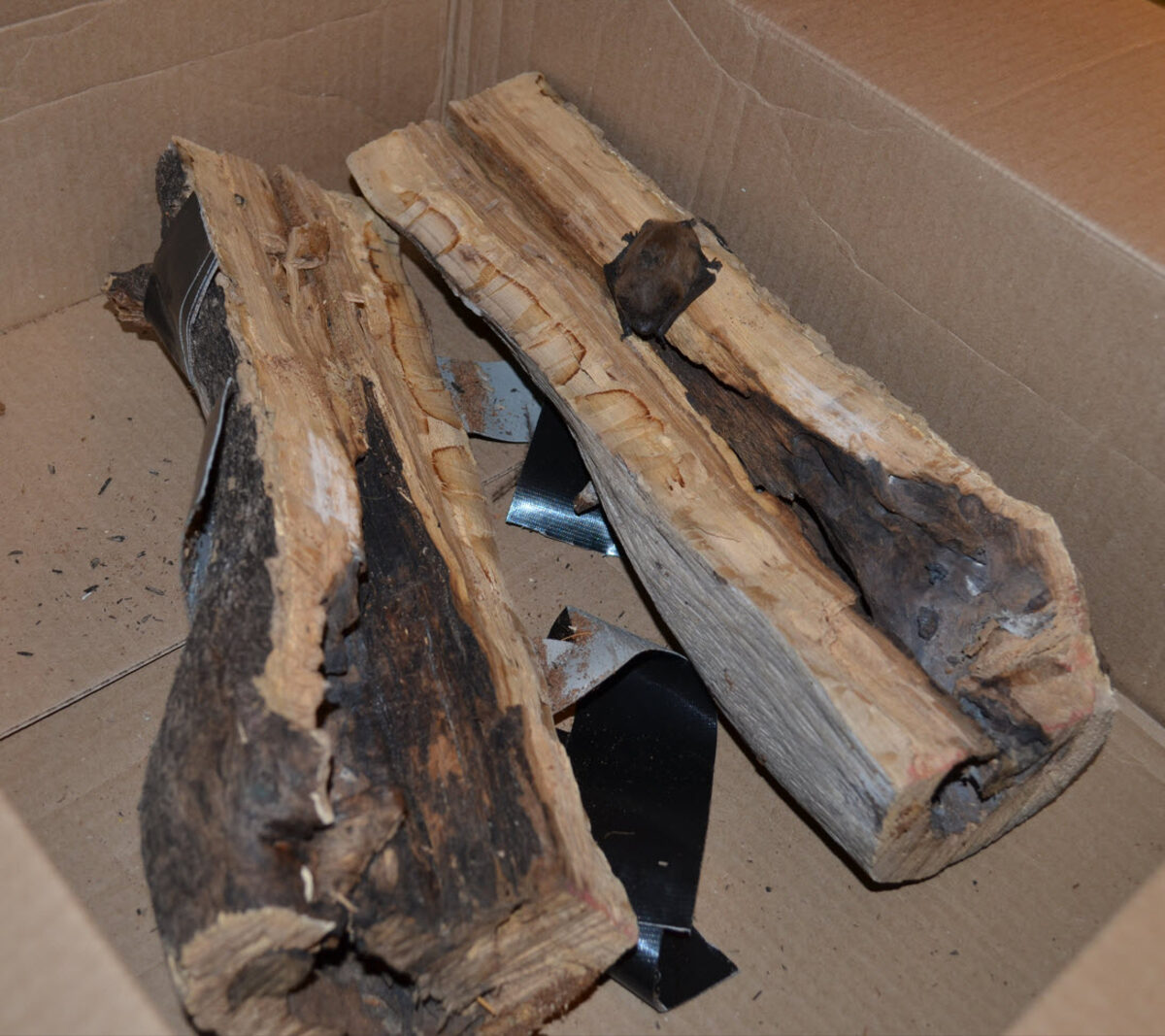
Eastern red bats are masters of camouflage – barely distinguishable from the brown leaves surrounding them. A standing dead tree cut for firewood tells a different story: limbed, cut in sections, and run through a log-splitter, it was only then that the evening bats roosting inside were discovered. The sections were taped back together, placed in a box with an injured survivor, and brought to Austin Bat Refuge. Eve gave birth to her pup Fury two months later. The log now hangs in the flight cage, fitted with hinges.

Eastern red bat camouflaged in brown leaves

Eastern red bat camouflaged in brown leaves – nearly invisible to predators and humans alike

Evening bat found in firewood log

Evening bat found roosting inside firewood – a reminder that dead trees are homes, not just fuel

Watching the Garden Come Alive

Bats at Work

When moths hear the echolocation of an approaching bat, millions of years of evolution kick in and they employ various defense mechanisms – flying erratically, dropping to the ground, or folding their wings mid-air. A flight cage full of moths is key for rehabilitating bats practicing to be successful in the wild.

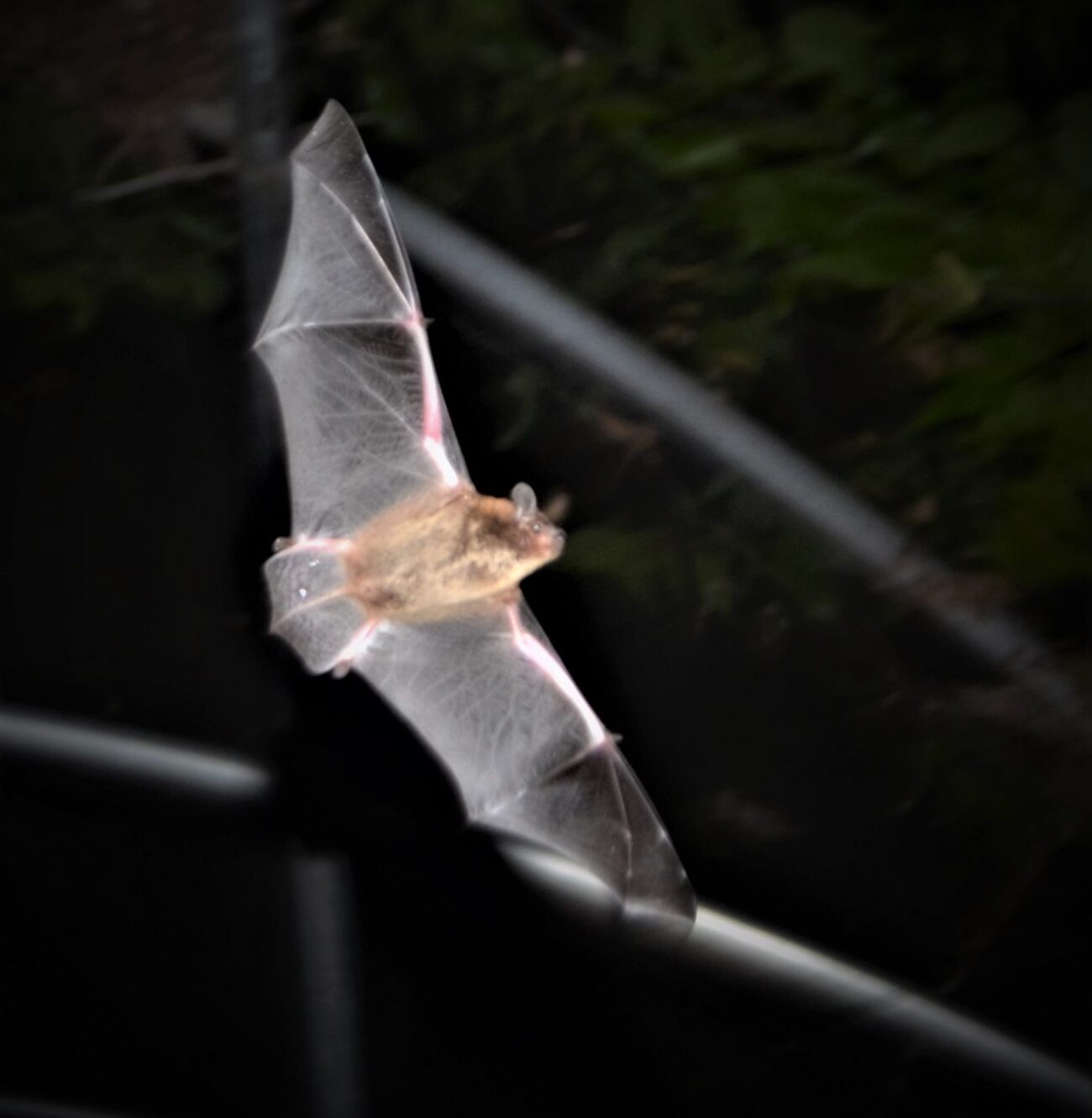
Slow motion – bat drinking on the wing over the garden trough

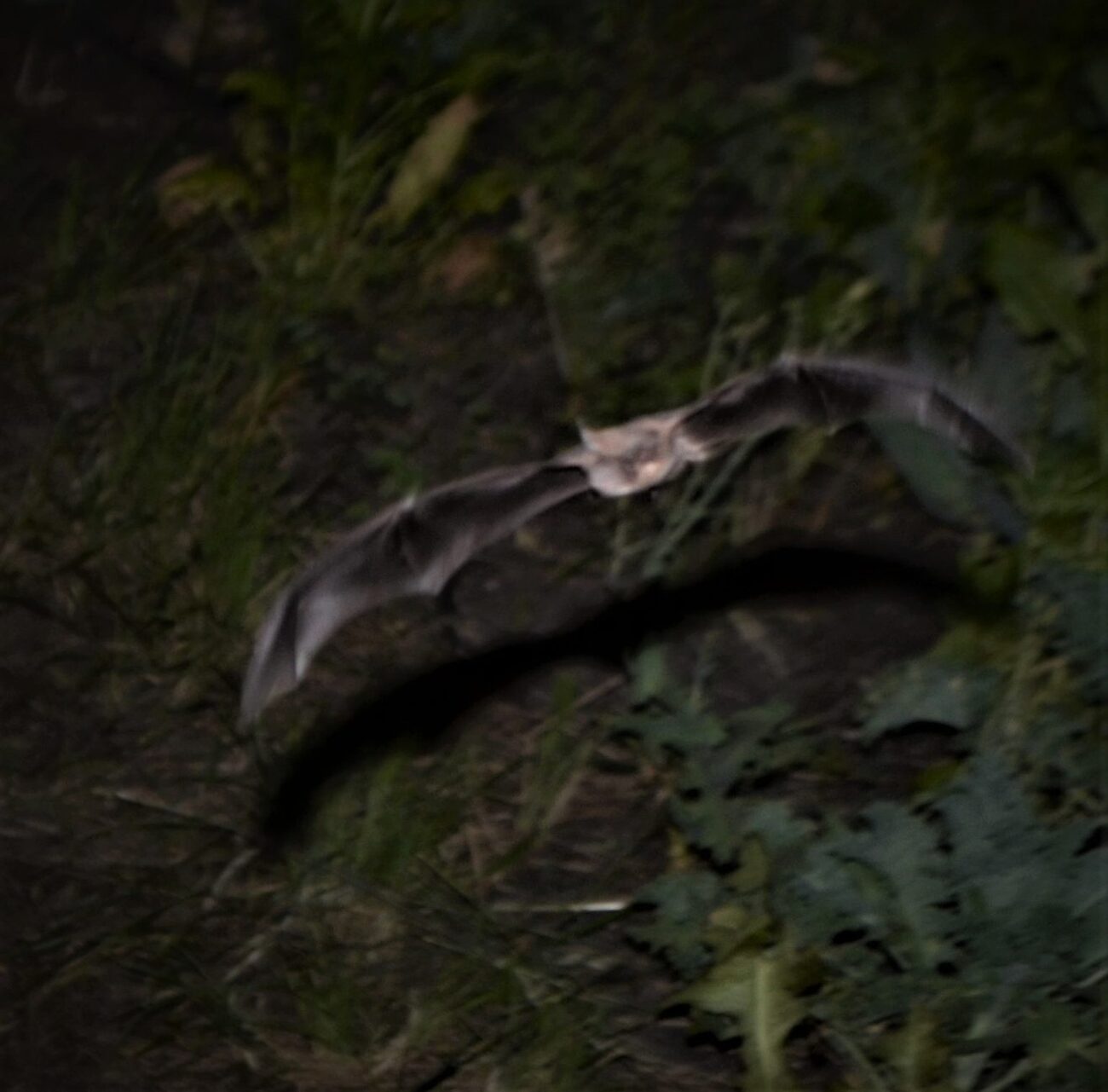
Female evening bat on the hunt
Young Mexican free-tailed bat skimming the crops
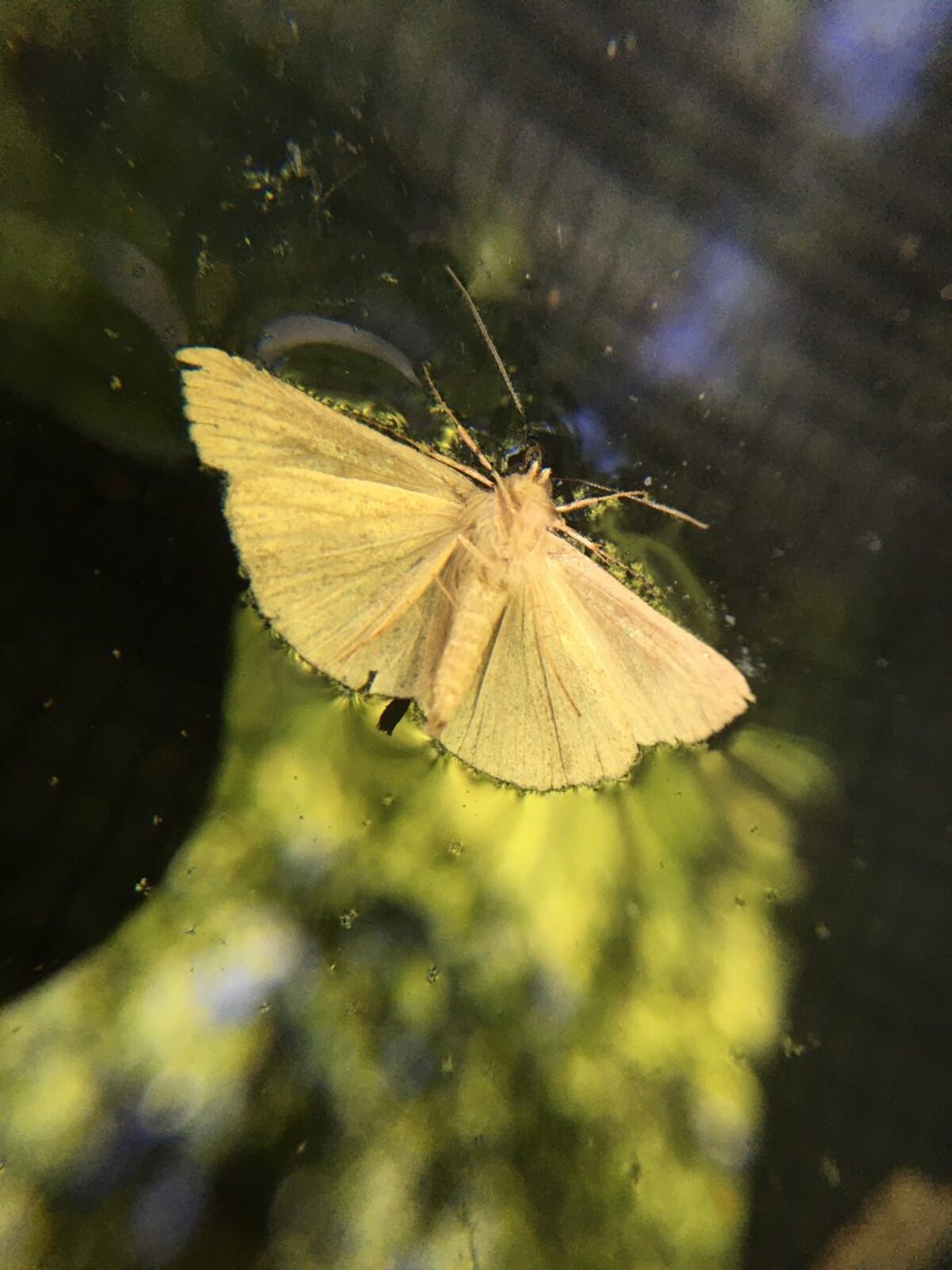
Live moths trapped by surface tension
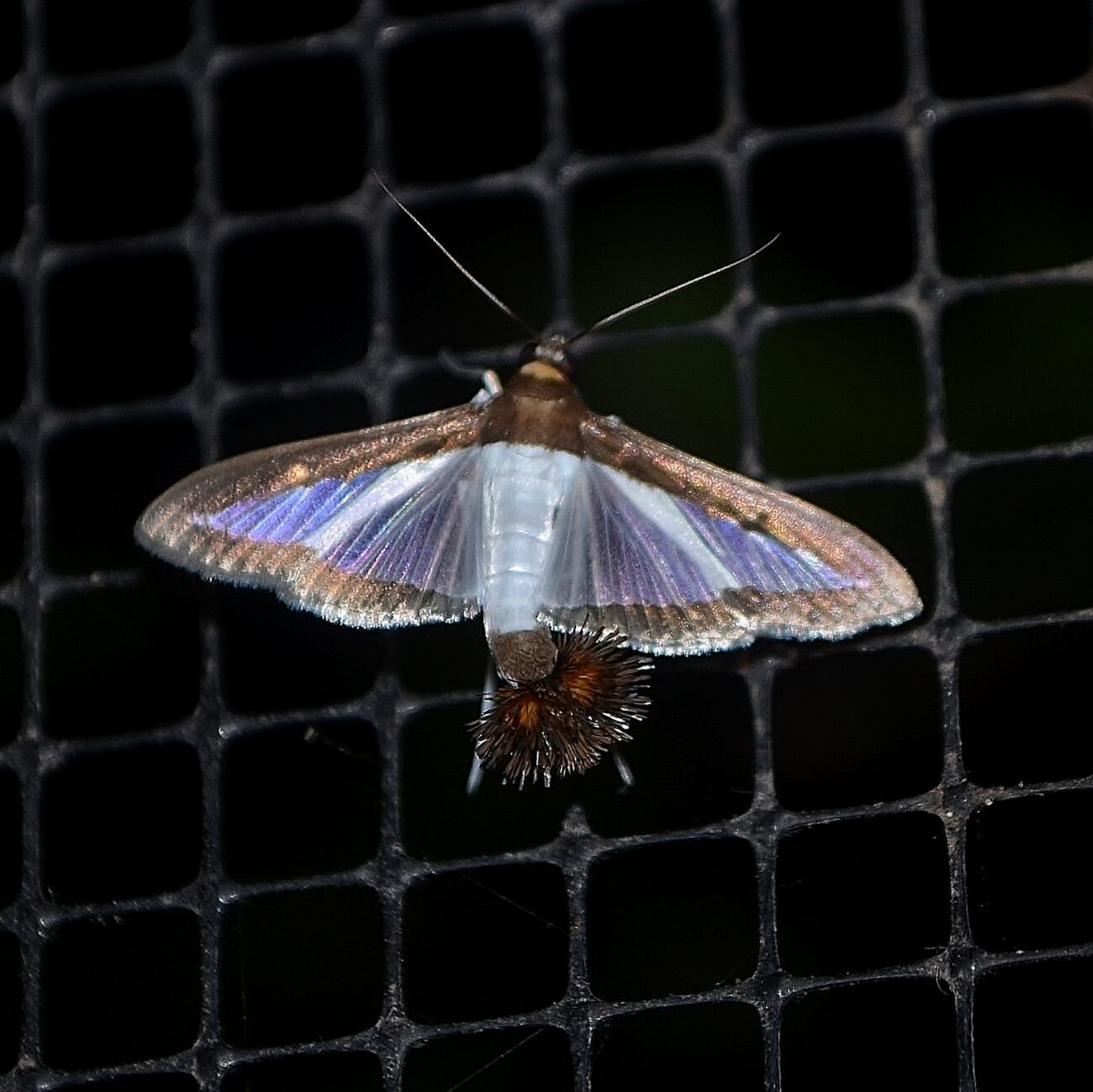
All moths are extraordinary - some are exquisite
All moths are extraordinary – some are exquisite
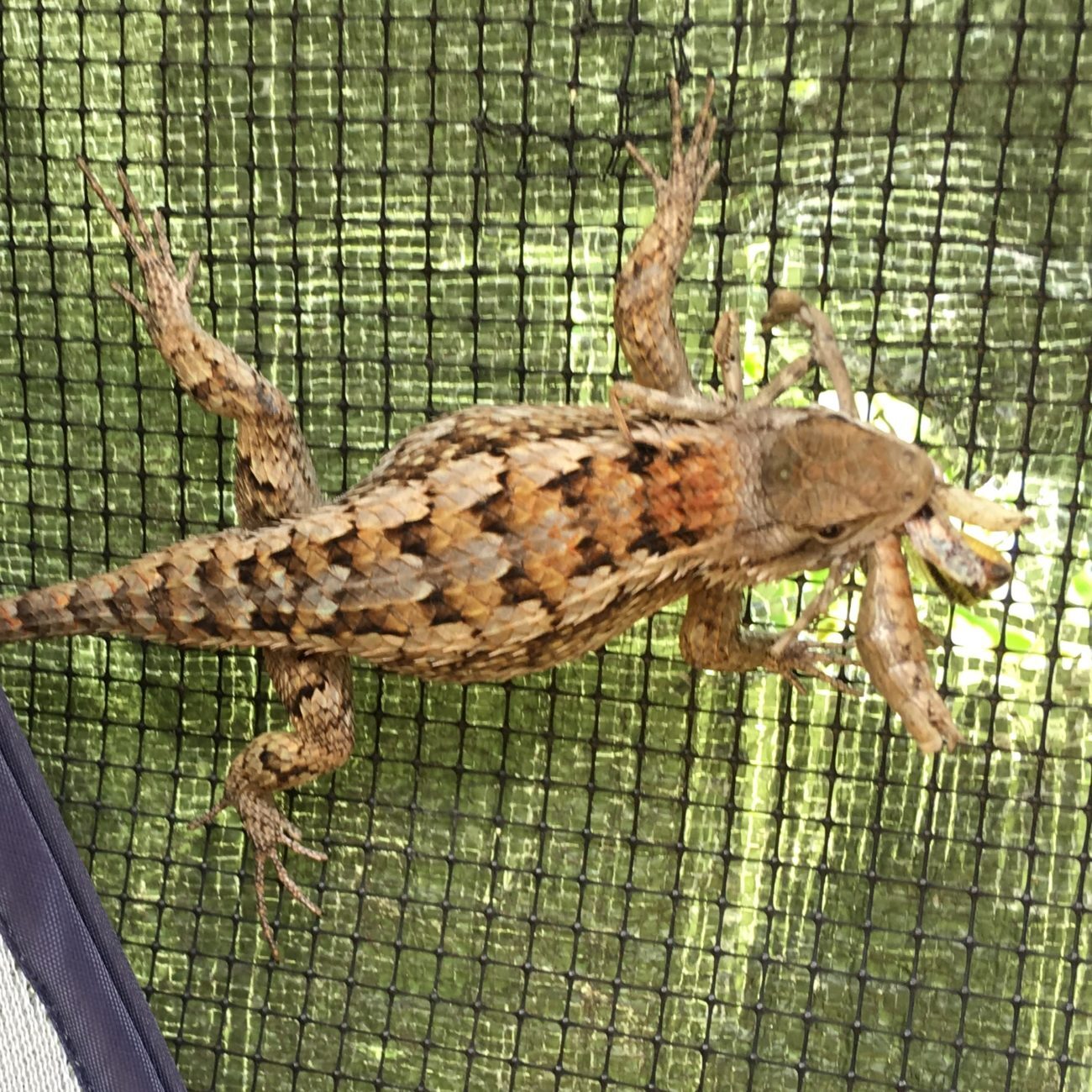
Texas spiny lizard with praying mantis
Texas spiny lizard with praying mantis after a long, 10-second struggle.
Bee Box Moths

The Bee Box Moths

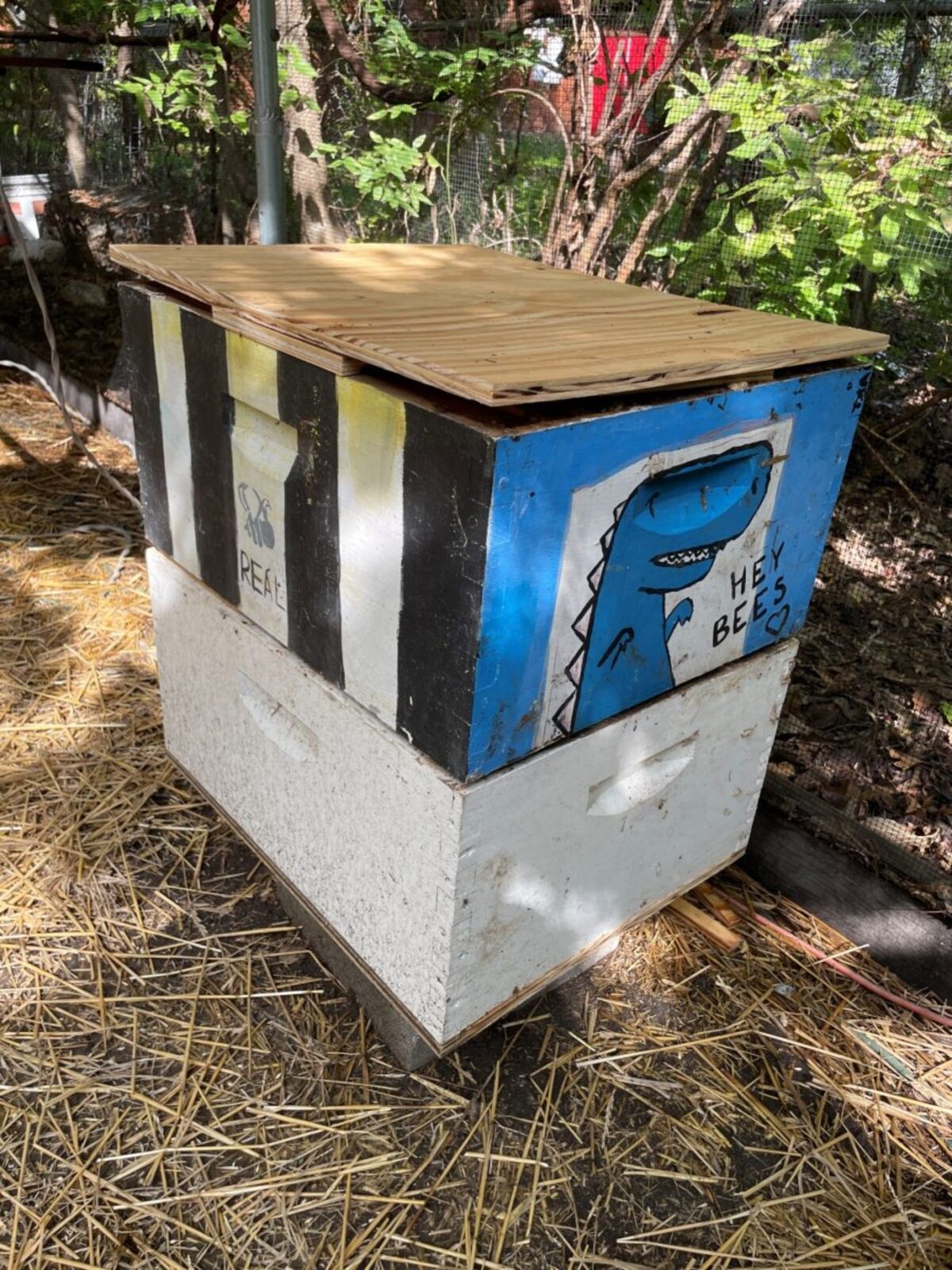
Bee boxes donated to Austin Bat Refuge become moth boxes. Once the bees have left, wax moths move in – their larvae pupate inside, etching the wood for their cocoons. These emerge as perfect hunting targets for bats learning to fly again.

Bee boxes at Austin Bat Refuge
These bee boxes
Bee boxes now moth boxes
are now moth boxes!
Once the bees have left
Once the bees have left…
Moth larvae pupate in bee box
The larvae pupate here
Moths living in bee boxes
moths are happy to live in them
Wood etched by moth cocoons
They etch the wood for their cocoons
Plant Lists

What We Grow

Two decades of trial, freeze, and regrowth have shaped this plant list. Native Plant Society of Texas plant sales are the best source – plants are ethical, well-adapted, and come with expert knowledge.

Greensleeves Nursery Favorites

Giant mistflower • Gregg’s mistflower • Abutilon • Mexican honeysuckle • Berlandier’s trumpets • Datura (Moonflower) • Shrimp plant • Boneset • Rock rose • Western ironweed • Flame acanthus • Night-blooming jasmine • Star jasmine

Native Plant Society of Texas Plant Sale

Frostweed • Salvia greggii • Mealy blue sage • Bee balm • Purple coneflower • Gold acanthus • Narrow-leaf milkweed • Coral honeysuckle • Golden dalea • Columbine • Fall aster • Orange Zexmenia • Texas sage • Lantana • Esperanza • Flame acanthus • Chile pequin • American beautyberry • Coralberry • Redbud

Native Plant Society of Texas Fall Plant Sale

Annual fall sale – the best opportunity to source native plants adapted to your specific area. Follow their calendar for spring and fall events.

Visit NPSOT →
US Bats That Pollinate

The Bats That Feed on Flowers

Most of Austin’s bats are insectivores – but Texas is also home to nectar-feeding bats that play a critical role in pollinating agave, cacti, and other plants. These species depend directly on the plant communities we create and protect.

Mexican Long-nosed Bat

Leptonycteris nivalis

Follows blooming agave north from Mexico each spring, spending June through August in Big Bend. Feeds on nectar and pollen from 21 plant species. Century plants and this bat co-evolved and need each other for survival.

Mexican Long-tongued Bat

Choeronycteris mexicana

Important pollinator of columnar cacti and 60 agave species. One was found hanging above the steps of the Dripping Springs Post Office in early 2000s – far outside its typical range, following the bloom.

Pallid Bat

Antrozous pallidus

A gleaner bat that recently was discovered to pollinate prickly pear cactus. Since it also eats cactus pears, it has become Texas’ only fruit bat – the only other fruit bat in the US is the Jamaican fruit bat in the Florida Keys.

Lesser Long-nosed Bat

Leptonycteris yerbabueanae

Known as the “tequila bat” – a major pollinator of the blue agave used to make tequila. De-listed from the US endangered species list in 2018 thanks to conservation work. A success story worth celebrating with agave in your garden.

Support the Bat Refuge

Our education table at Congress Avenue Bridge is staffed entirely through donations. Help us keep the wonder alive.

Donate to Austin Bat Refuge →
Found a Bat? 512-695-4116 Donate →