Tri-colored sonogram / sounds of silence
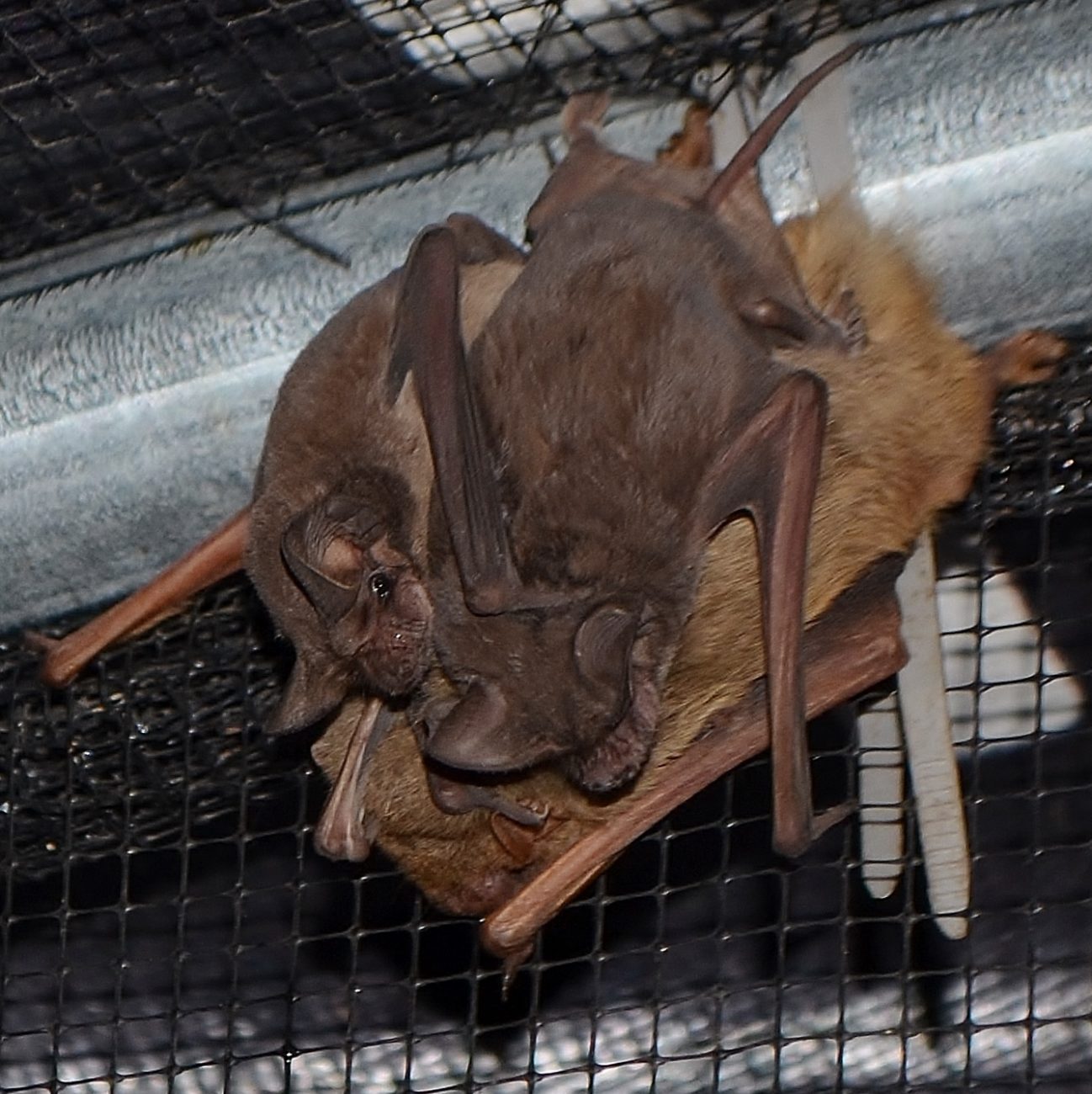
So our tri-colored bat checks out clean under the black light, no orange fluorescence, no spotting in normal light, we think she’s clean for Pd, no White-nose Syndrome.
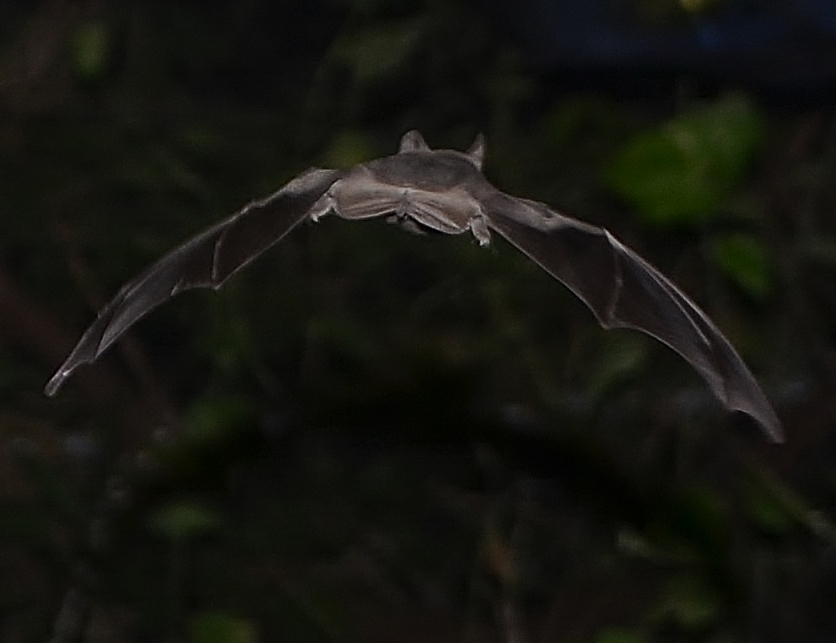
She’s not sustaining flight however. She flew the length of the flight cage once but landed and has only taken short flights since then. It is said that they are sporadic flyers with a short elliptical flight patterns, so this may be normal. But she did not fly away when she had the opportunity as we were collecting her, so we’ll need to check her out some more to make sure she has the strength a bat needs to survive in the wild.
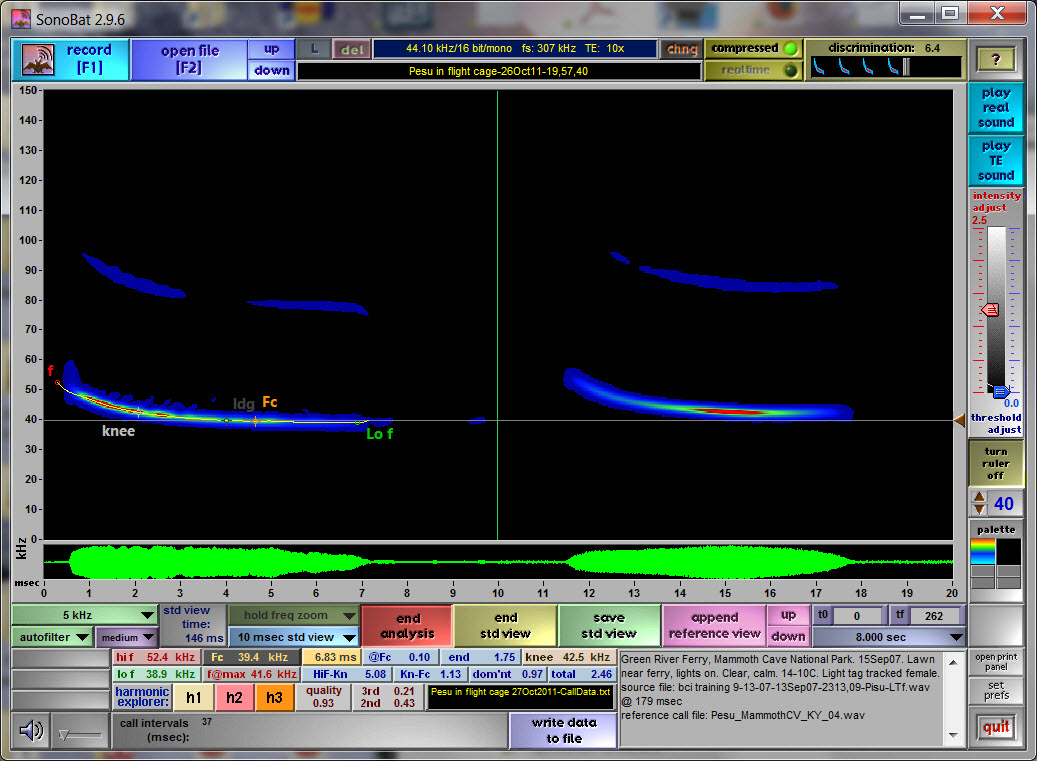
On the left is the recording of her call as she made that one flight down the length of the flight cage. On the right is a call from the reference library of a tri-colored bat in Mammoth Cave State Park in Kentucky from back in 2007. Tragically, tri-colored bats in that area have been decimated by White-nose Syndrome, numbers have plummeted 80% since it’s arrival in 2013 and that song is likely not heard very often in that area nowadays. How sad to think of all the bats that have perished from this terrible disease. And awful to think we’ll likely be dealing with it ourselves in a year or two.
She weighs 8 grams! So surprising that a tiny bat would weigh so much. She looks about the same size as our evening bat Zonker, not way smaller as we would have expected.
Tri-colored bat – North Austin
This tri-colored bat was hanging in an apartment building 2nd story hallway in North Austin for the past few days.
She hadn’t left to forage and was soon to attract attention from the maintenance staff, so our good friend Ed Sones brought her in. She showed just how quick a tri-colored bat can be when Ed was collecting her, but did not fly away, so we’ll need to check for wing damage once she gets more accustomed to us.
Almost all our tri-colored bats come from apartment building hallways on the upper levels. They must think these open ended hallways are just another cave and perfectly suitable for them; and they would be if it weren’t for all those pesky humans!
Her orange forearms, tiny size, pointy nose, and longer ears all indicate Perimyotis subflavus, formerly Pipistrellus subflavus, commonly known as Tri-colored bat, formerly Eastern Pipistrelle. Whew, they sure do make it complicated!
Check out her range and species info on our webpage https://austinbatrefuge.org/tri-colored-bat/
Shoal Creek Conservancy Bat Walk
We had a great time last night conducting a Bat Walk to mark the third anniversary of the founding of Shoal Creek Conservancy, here in Austin.
Bat fans showed up on the second night of cool weather to see if bats would fly from under the 9th St. Bridge in Duncan Park.
Though the cool weather felt great to us after a long extended hot summer, the bats were snug in their expansion-joint crevices under the bridge and did not want to drop out into the cool night. The temperature had dropped to 43 degrees F the previous night and that night’s dew point of 47 F promised another cool night ahead. Since fewer insects fly below 50 F, they must have decided to conserve their energy budget and stay snug in the roost. Here’s a thermal imaging snapshot of the crevice we inspected.
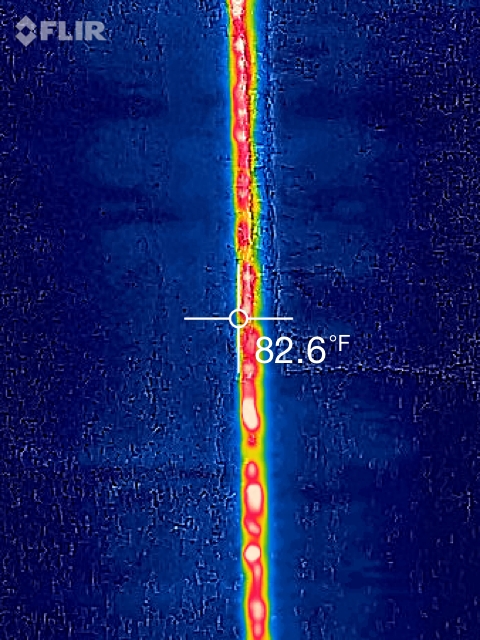
Those are bat bodies showing white and their reading was about 88 deg F on the outside of their fur. Their body heat kept the crevice nice and warm, 82.6 deg F here next to the bats in this snapshot, 15 degrees warmer than the blue-colored bridge outside the crevice. It would take a lot of snuggling to re-create all that warmth, so perhaps they just hunkered down to wait out the cooler nights. Low temps will be back in the 60s for the next two weeks, so I think they made the right call.
Great group of people at Shoal Creek Conservancy; we’re so happy there is a unified voice to speak up on behalf of beautiful Shoal Creek!
Thanks to all who came out to hear our talk and watch our radar images of Central Texas bat activity. Next year we’ll unveil the new SonoBat Live and if we get a warmer night, we’ll all be able to see real time sonograms of the echolocation calls of flying bats.
Checkin in
You doin ok in your log Zonker? Just checkin, good bat.
Seabreeze & North Front
Great night for Central Texas bats as a strong seabreeze pushes moths toward the Hill Country while a North front brings reverse migrating moths back from the northland, making a smorgasborg for Mexican free-tailed bats fattening up for their own migration south at the end of the month. This year’s pups are packing on the grams preparing for their first big journey. Their is a lot going on in this video as the Hill Country roosts are perfectly situated to take full advantage of both fronts.
Here’s the Congress Avenue Bridge bats that same night going with the seabreeze to the NW, to feed on moths pushed along on the leading edge of the front.
Little Brown Bat Rock Art
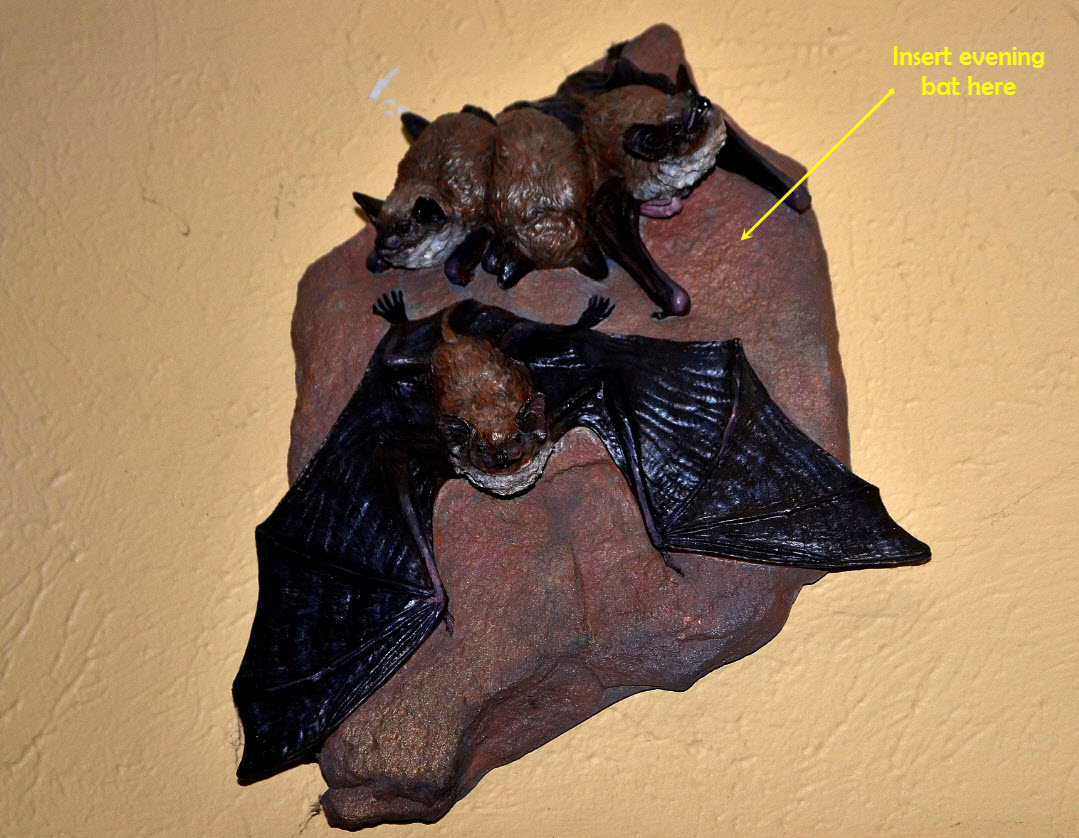
Last year I purchased an art piece for my friends at Austin Bat Refuge, Lee and Dianne; the art work is by Kitty Cantrell. It is her rock art ” Little Brown Bats” It is several little browns on a rock wall and it’s very life like. A few weekends ago Lee and Dianne had a Evening Bat come in for rescue. Evening Bats look a lot like Little Browns except they are smaller and darker color. Sometimes the bats that come in are tested in smaller places to see how well they can fly after necessary rehabilitation has been given. The little bat was enjoying a flight around the front room. Little Evening Bats can fly very swiftly and can crawl on the ground even faster. Its like chasing a cock roach. They can land very suddenly and tuck themselves away in the smallest of places. They are crevice bats after all. Flying around she decided to take a quick stop so fast she almost wasn’t seen. Dianne noticed she had landed and tucked herself right up against one of the Little Brown Bats on the rock art. The little bat was probably wondering why her new found family members weren’t putting off any body heat and why they weren’t clicking to her to greet her. Never the less, she knew she was safe with her new family. She was so happy she even fell asleep all snuggled up to them. Some people mistakenly think that bats can’t see well! That is a myth! They see quite fine day or night. As for Kitty’s art it has been Little Bat tested and Little Bat approved! And to me that is how life-like her art is! I truly Love and believe in Lee, Dianne and Kitty’s missions to make life better and beautiful in the appreciation of Bats and other wildlife. Thanks for reading! Marsha
Cold Front!
Cold front – Snuggle Up! Free-tails don’t have any problem snuggling up to big ol’ yellow bats. Even when pups, we sometimes find single freebies right in the middle of a clump of yellow siblings.
Serious Visitor
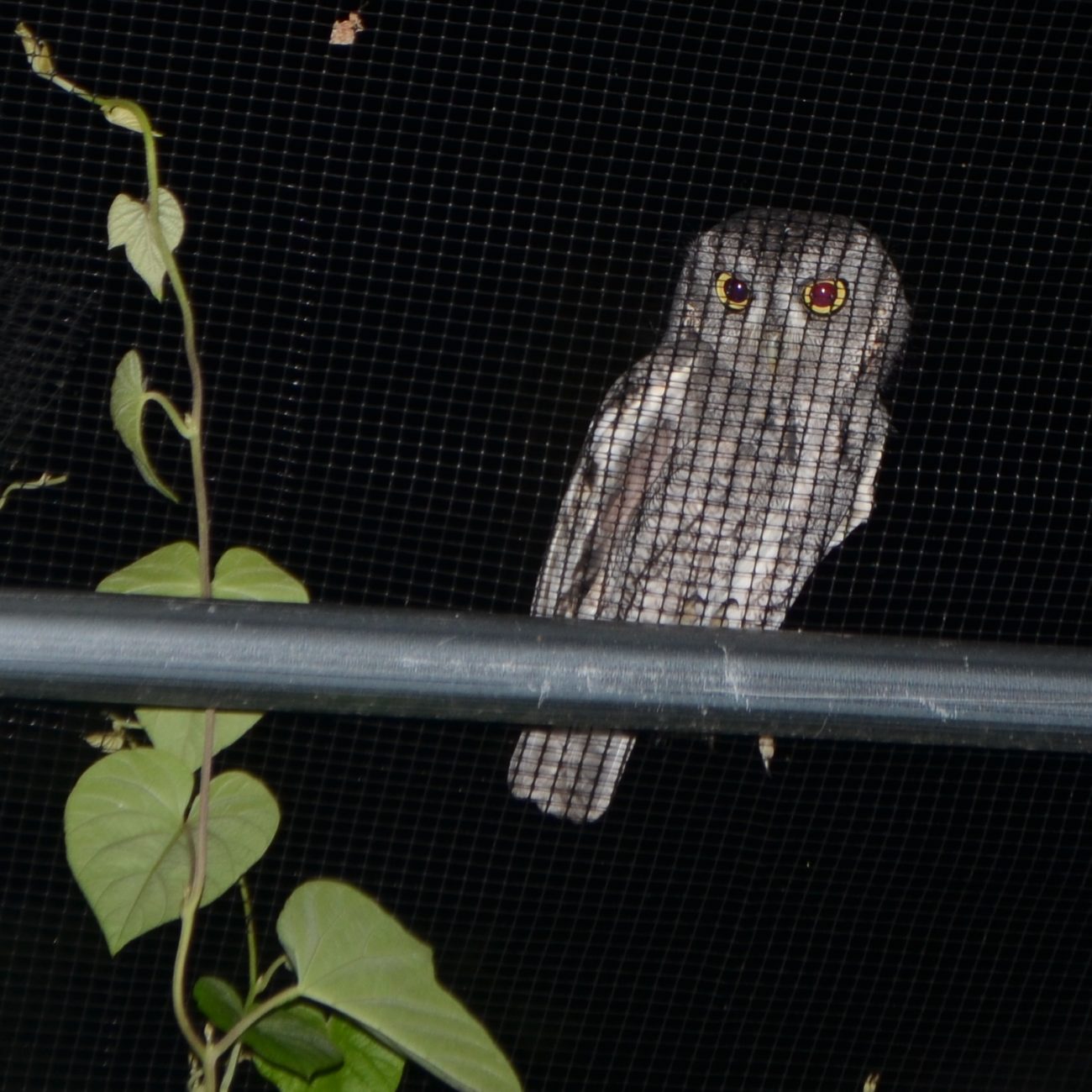
This eastern screech was so focused on our bats, that he allowed us to approach to within 6 feet before finally flying off! The rehabilitating bats are working on their flight skills and for that reason, they attract even more attention from local owls.
Our Mexican free-tail Bernie has a permanently injured wrist but was roaming the flight cage last night. But for the netting, he would have been scooped up in an instant by this owl.
Happy free-tail
This free-tail is so happy to be flying again and catching moths around the blacklight!
Soon to be back in the wild skies.
Just look at that smile!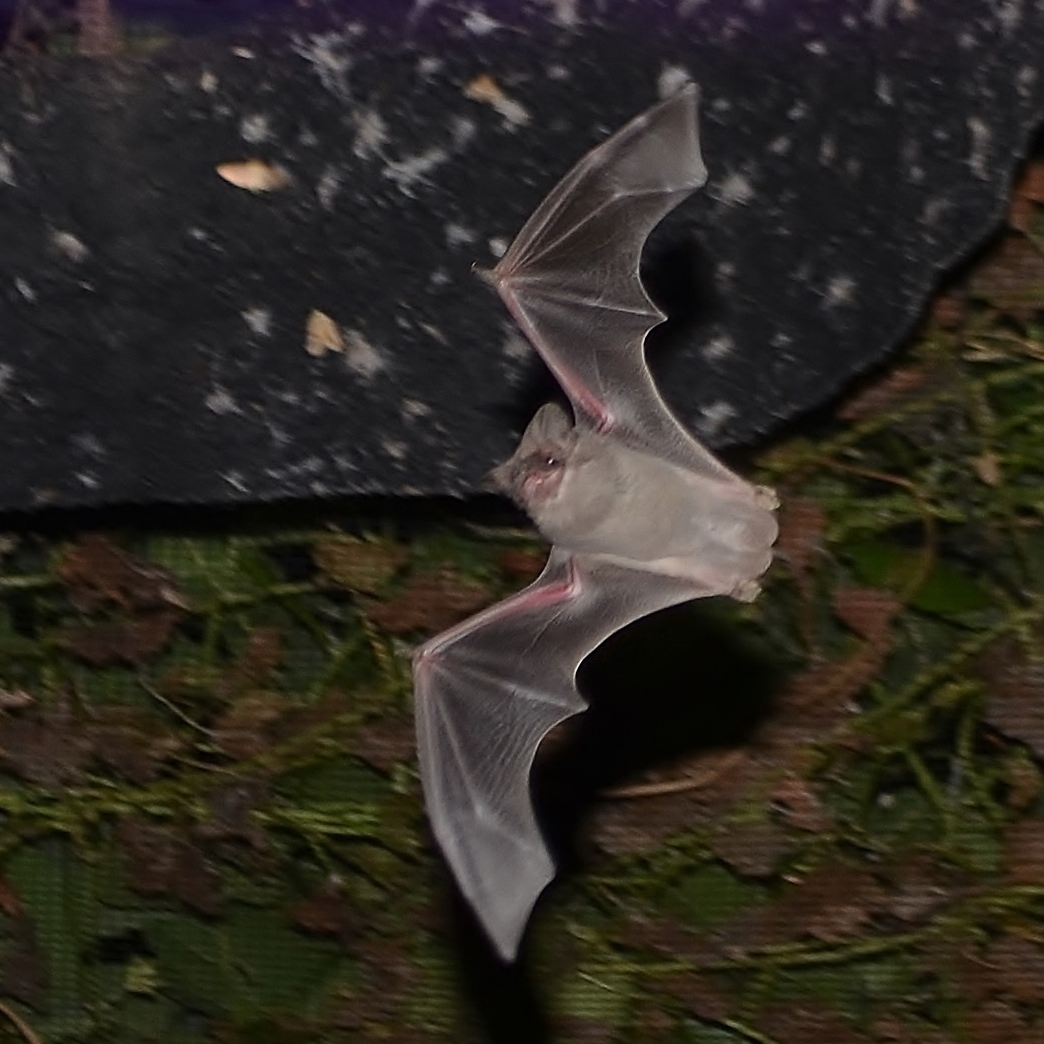
Toe whiskers
Here’s an angle rarely seen of a Mexican free-tailed bat. If you look closely you can see the long “whisker” hairs sticking out between the toes. “Kind of like you honey” a bridge visitor said to his girlfriend this summer, right before she hit him, hard.