Zach Dodson is an Austin-born writer, artist, and illustrator and author of Bats of the Republic, a wonderful out-of-the-box creation. Here is his list of books that influenced his love of bats.
Bats are frequently misunderstood creatures. Though often portrayed negatively as creepy or disease-ridden, they actually perform vital ecological roles — from pollinating crops to consuming massive quantities of insects that would otherwise require pesticide use.
Dodson’s novel Bats of the Republic is set in 1840s Texas when it was an independent nation. The protagonist is a naturalist documenting bat species through detailed drawings. The author emphasizes the urgency of bat conservation, noting that White Nose Syndrome has devastated North American bat populations since 2006, killing over 6 million bats and representing “the most precipitous decline of wildlife in a century.”
10 Recommended Books
- “In Praise of Bats” essay in The Moon by Whale Light by Diane Ackerman — A lyrical introduction featuring bat conservationist Merlin Tuttle and an exploration of Bracken Cave near San Antonio.
- Dark Banquet: Blood and the Curious Lives of Blood-Feeding Creatures by Bill Schutt — Examines all blood-feeding creatures, including the only three vampire bat species out of over 1,200 total bat species worldwide.
- Stellaluna by Janell Cannon — A beloved children’s book about a separated fruit bat learning that “it’s OK to be strange and different.”
- Bat Bomb: World War II’s Other Secret Weapon by Jack Couffer — Documents a WWII military project to attach incendiary devices to bats for deployment over Japan (ultimately shelved).
- Weetzie Bat by Francesca Lia Block — A quirky 1980s Los Angeles story featuring the beloved character Weetzie.
- Bat Ecology by Thomas H. Kunz and M. Brock Fenton — A comprehensive scientific reference covering pollination, echolocation, behavior, and aerodynamics.
- Dune by Frank Herbert — Science fiction epic featuring bats as message carriers; influenced Dodson’s own desert-themed narrative.
- Batman: The Dark Knight Returns by Frank Miller and Klaus Janson — Landmark graphic novel that elevated superhero storytelling and visual narrative.
- Bats at the Library by Brian Lies — Children’s picture book celebrating bats’ practical benefits, including protecting Portuguese libraries from destructive moths.
- The Bat-Poet by Randall Jarrell — A children’s story functioning as metaphor for the isolated writing life, featuring Maurice Sendak illustrations.
First pups of 2017! Two weeks earlier than ever!
Evening bat mum munches a mealworm while her pup nuzzles her.
She sustained wing injuries that grounded her and they suffered ant bites before being rescued.
No small thing to rescue a ball of angry bats covered in ants! You’re a hero Jordan!
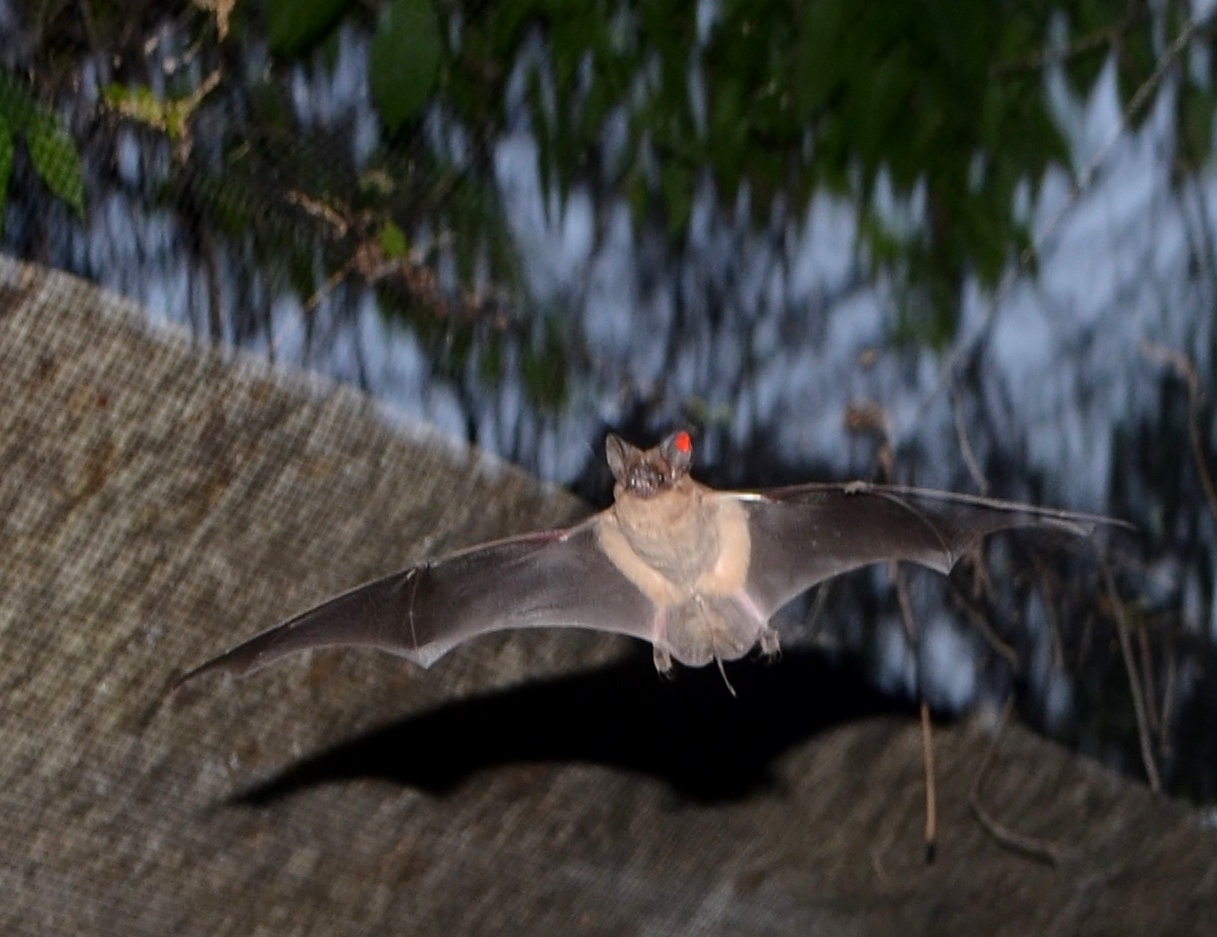
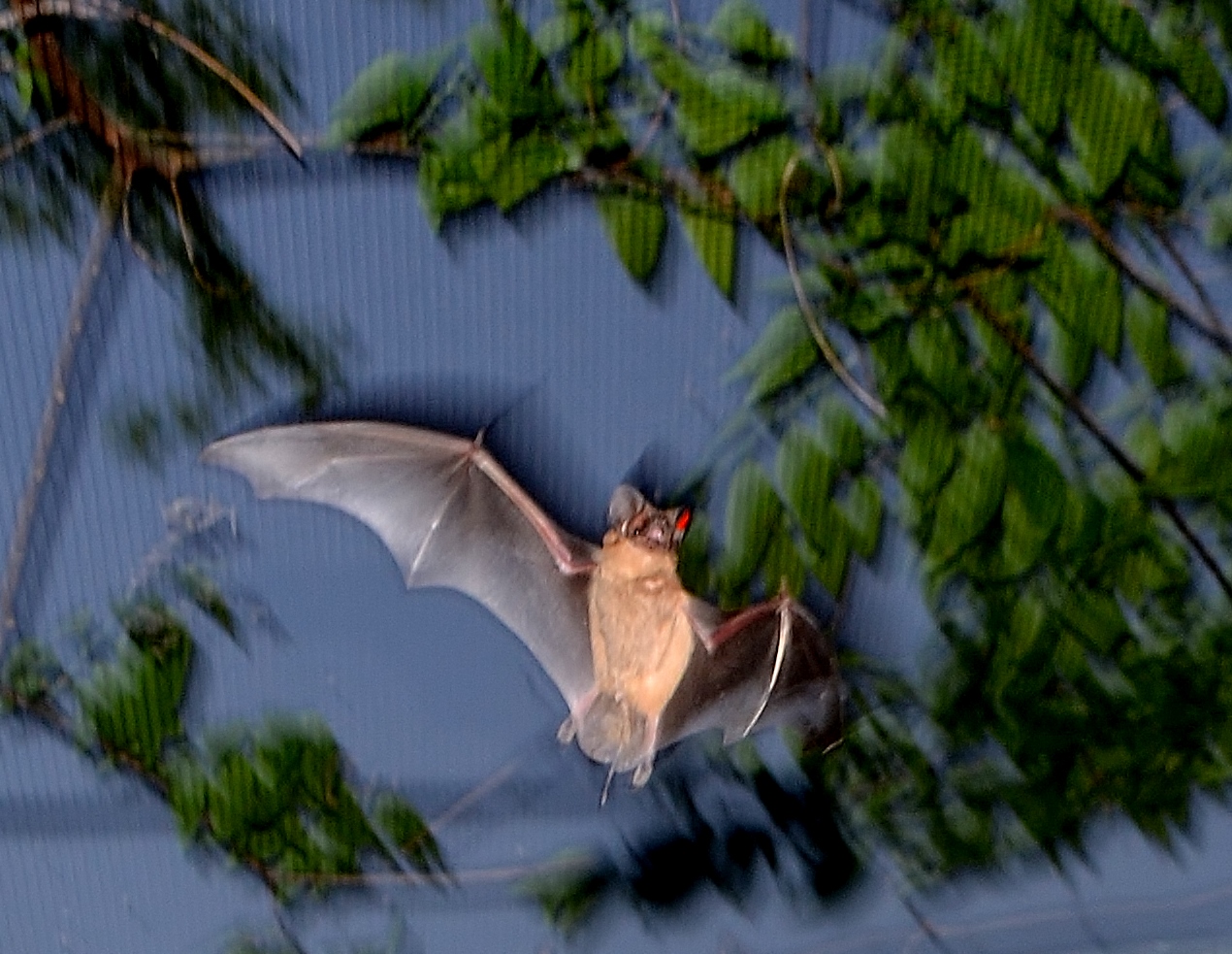
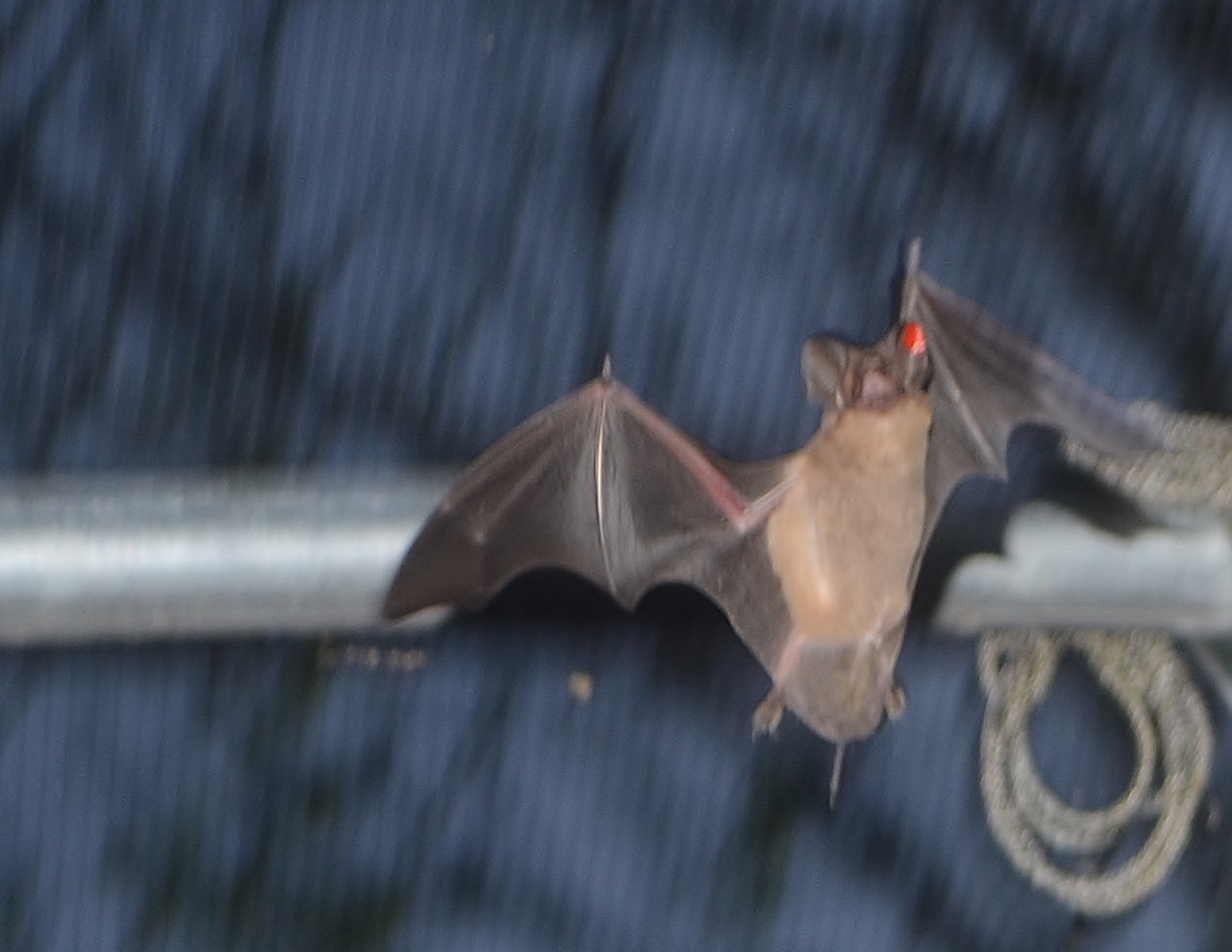
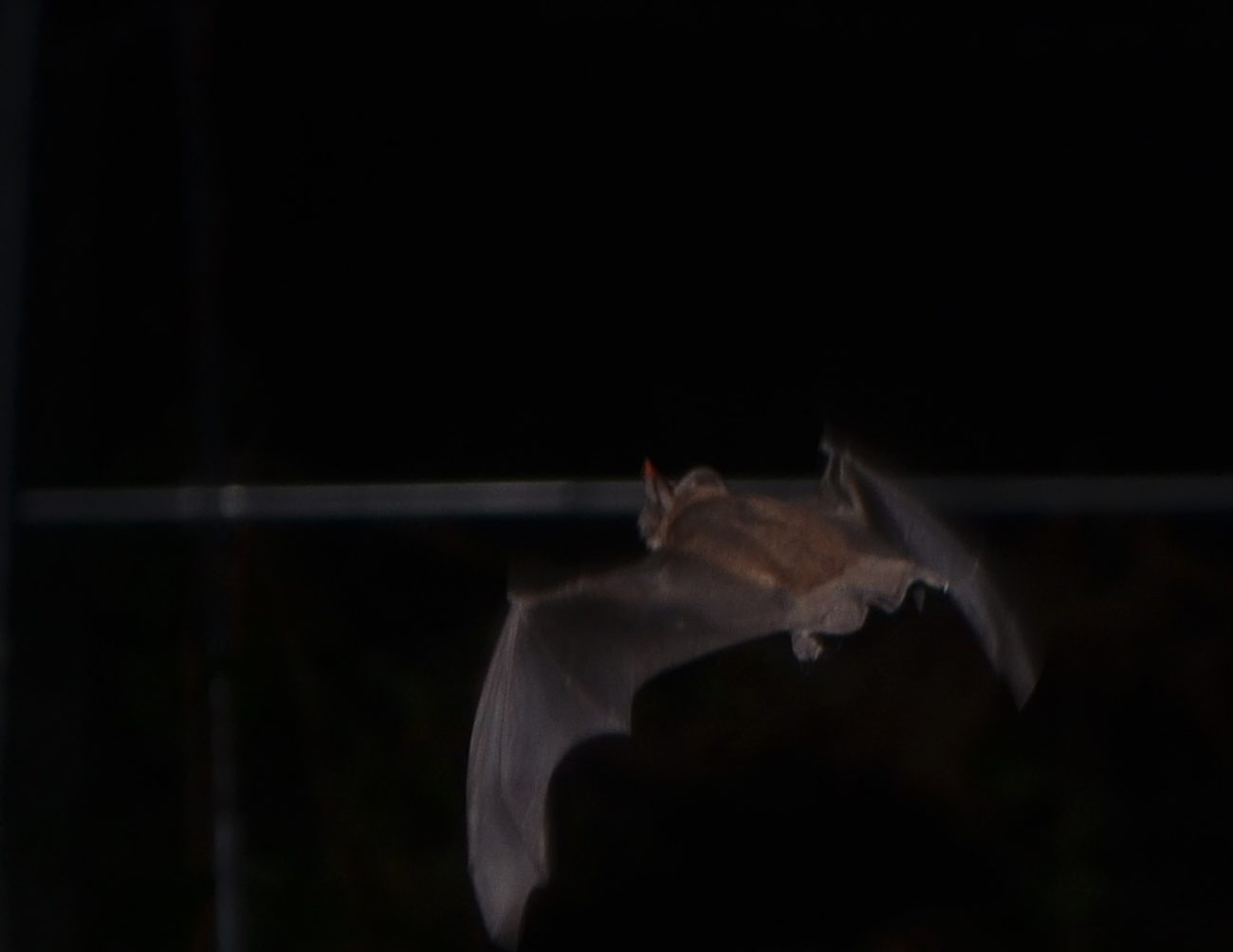
The red light is used to minimize stress.
https://youtu.be/sB9nsVbXm_o
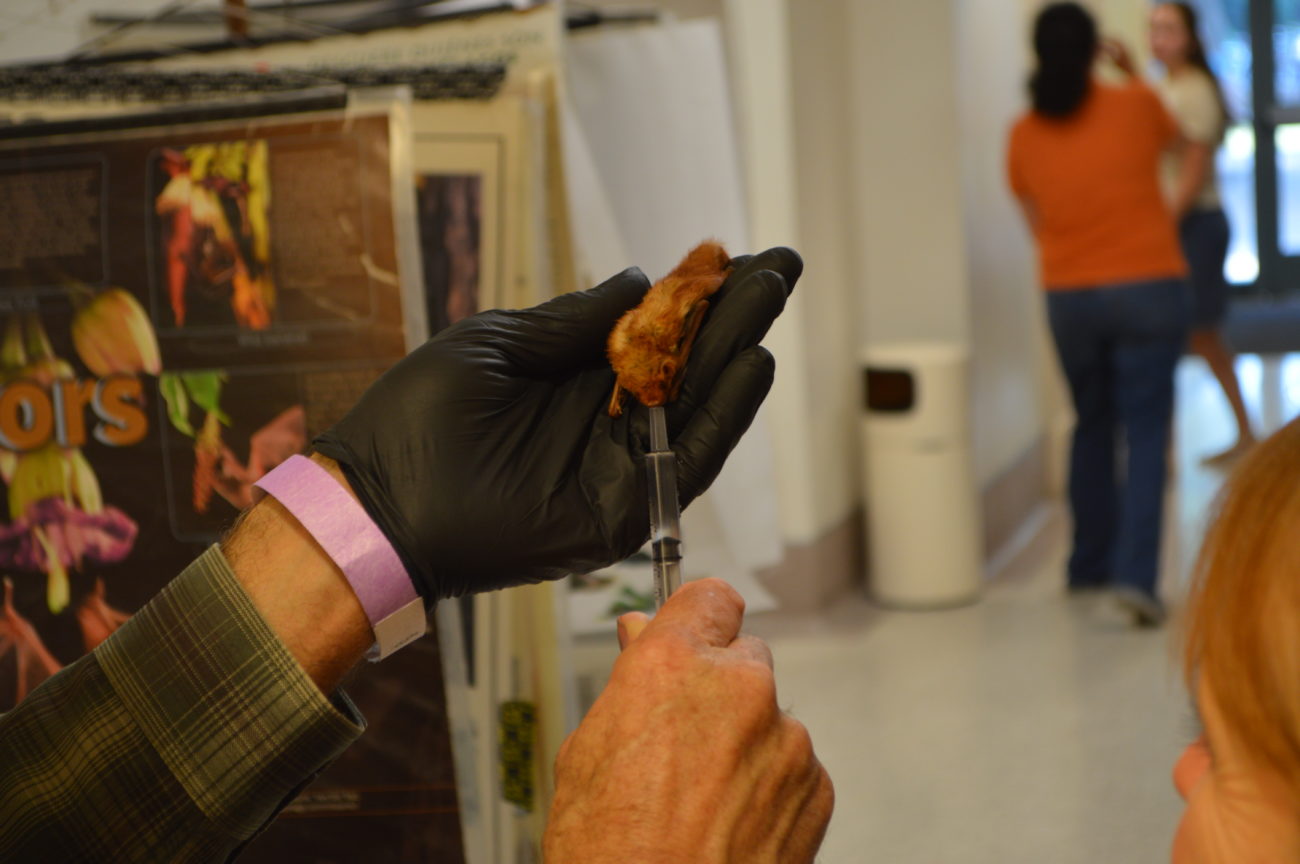
Our Gabe enlightened many students (and even some bigwigs) about bats’ role as pollinators, at the Univ. of Texas Community Science Fair last weekend. The Science Fair preceded a wonderful talk titled “The Buzz About Bees” by Dr. Shalene Jha. Look for a recording of the webcast under “Talk Archives” at http://www.hotsciencecooltalks.org/
Even though eastern red bats are not pollinators, he captured hearts and minds of the crowd and got shout-outs from the speaker and the head of the Environmental Science Institute!
According to DIDEY MONTOYA, Outreach Coordinator, Hot Science – Cool Talks | The University of Texas at Austin | Environmental Science Institute | www.esi.utexas.edu
“We had over 400 attendees, 11 organizations and over 30 volunteers who helped us make our last event of the spring a success. The Environmental Science Institute couldn’t have offered such a great event without the involvement of groups and organizations such as yours. Thank you for helping inspire, engage and excite K-12 students, teachers, parents and the community in general in Science, Technology, Engineering and Math. The recording of the webcast is now available under the “Talk Archives” section at www.hotsciencecooltalks.org.
We will return next fall with an exciting lineup of STEM professionals ready to share their latest research. If you are not already part of the Hot Science – Cool Talks mailing list and wish to be added, let me know. Thanks again for your help!”
Went batting last night in East Austin. Picked up mostly Tabr (Mexican free-tailed bats) around Mueller Lake Park. Walking through an adjoining neighborhood with streets overhung with elm trees we picked up a beautiful call sequence from a tri-colored bat (Perymyotis subflavus), loud and clear.
We’ve released quite a few over the last year, one earlier this spring. Wonder if that’s her?
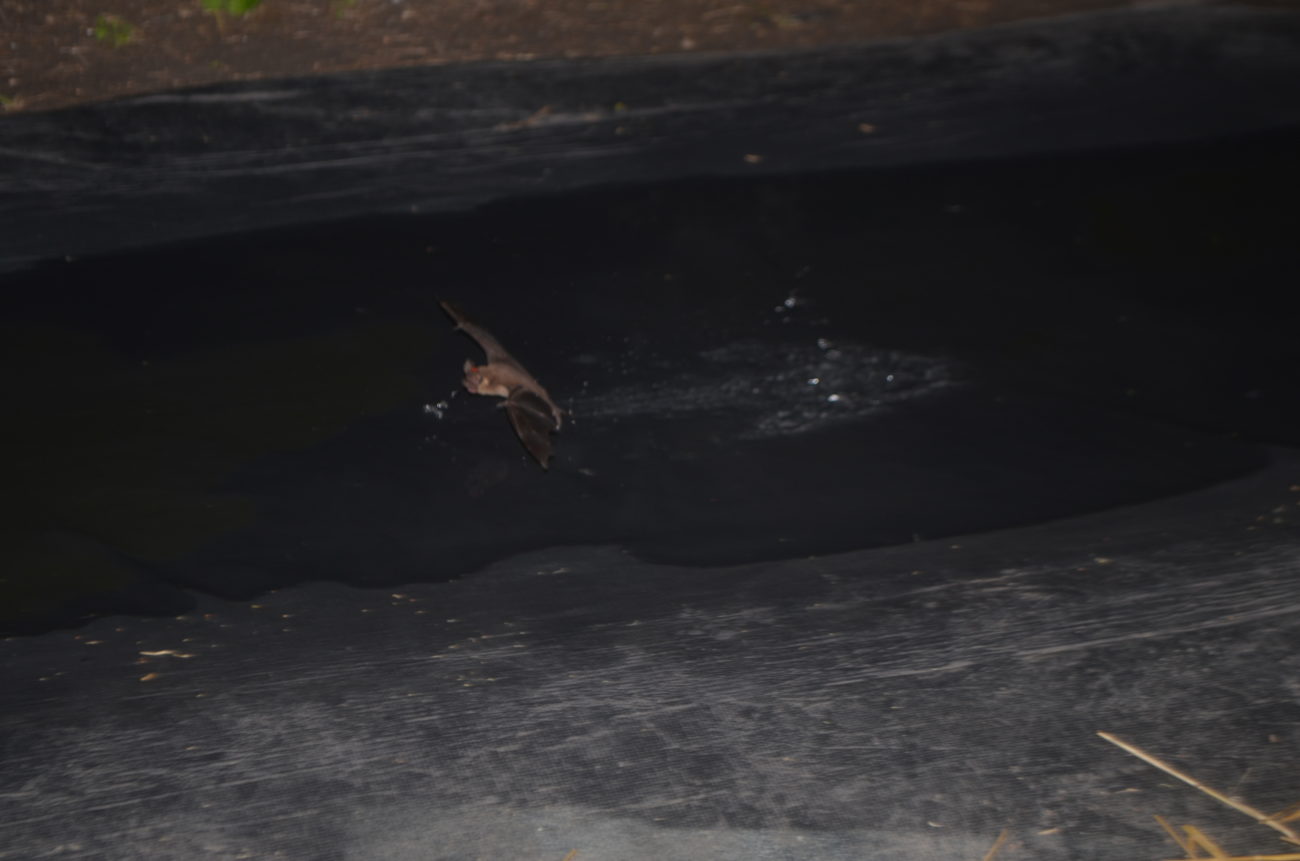
Yes, we had the nets set out last night, but they were high in the sky and our targets were night-flying insects, not fish.
We got a very generous invite from John Westbrook of the USDA’s Agricultural Research Service to join him and his field tech, the intrepid Mike O’Neil, along with Jason Lim from Rothamsted Research, United Kingdom, for a night of sky fishing in Central Texas.
John is one of the pioneers of radar entomology and the study of the interaction of insects and bats in the aerosphere. His early work with Merlin Tuttle, Tom Kunz, and Gary McCracken was crucial in understanding the role of bats in integrated pest management and their role in the balance of nature. Here is a link to his current study: Monitoring Pest Insect Migration With a Vertical-Looking Entomological Radar https://www.ars.usda.gov/research/project/?accnNo=426761
Jason Lim, of the Radar Entomology Unit at Rothamsted Research, has become the lead builder and software developer for the Vertical Looking Radar (VLR), deployed in only four locations around the world (one in Seguin, TX), to study insect migrations. http://www.rothamsted.ac.uk/radar-entomology-unit/. Jason has taken the reigns from Jason Chapman, now that Jason C. has moved on from Rothamsted Research to Exeter University.
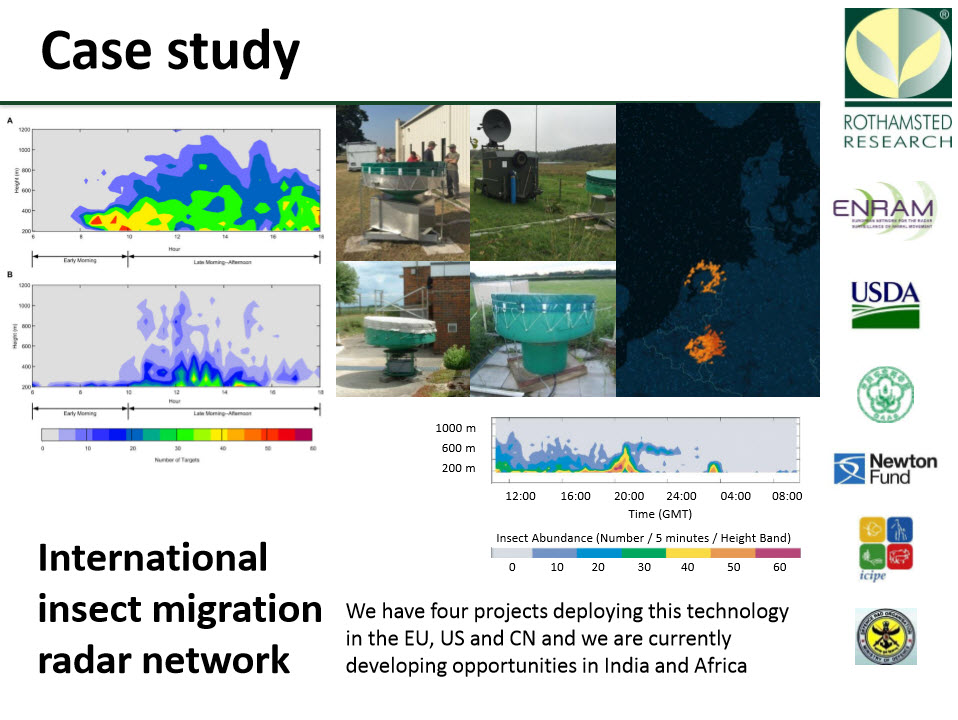
Below is a look at a VLR installation and some insect migration tracking data.
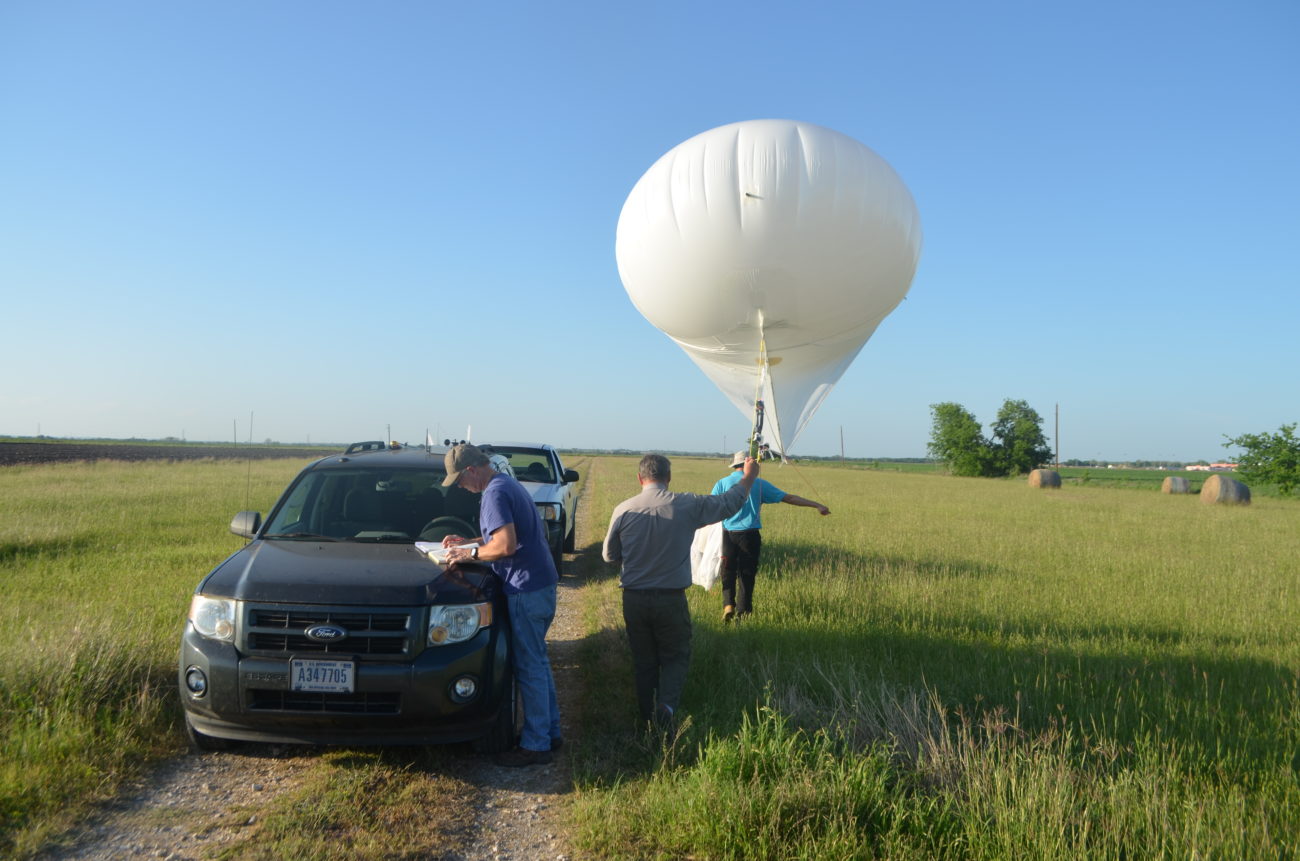
We observed (and stayed out of the way) as they (John, Jason, and Mike) deployed a 3.3 meter diameter HeliKite to tow a 1 meter diameter collection net up to 200 meters altitude to sample insects riding the lower jet, as they migrated north with the season.
The VLR (installed a few miles away) tracks migrating insects by quantifying the density, displacement speed and direction, and flight heading of insects at distinct heights.
Our catch will help calibrate the radar data, classifying the insects by their body mass, body shape, and wingbeat frequency, into functional groups of insects, so we know what kind of insects are flying where and when.
Here John notes conditions in his field journal while Mike and Jason start to deploy the kite. |
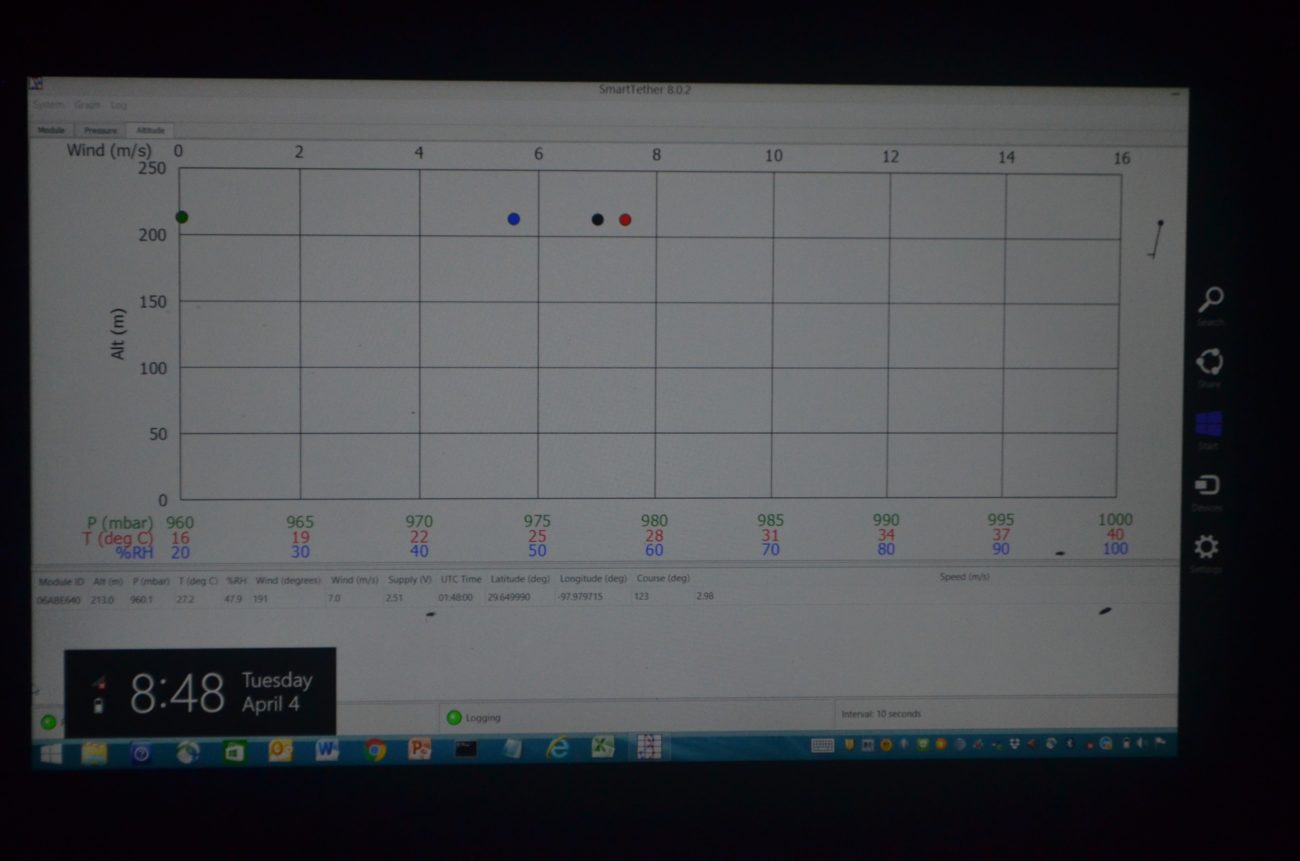
John attaches the tether sond, which sends atmospheric data back to his laptop. It also tells them when winds are approaching dangerous speeds and must be monitored closely so as not to snap the cable and lose the kite.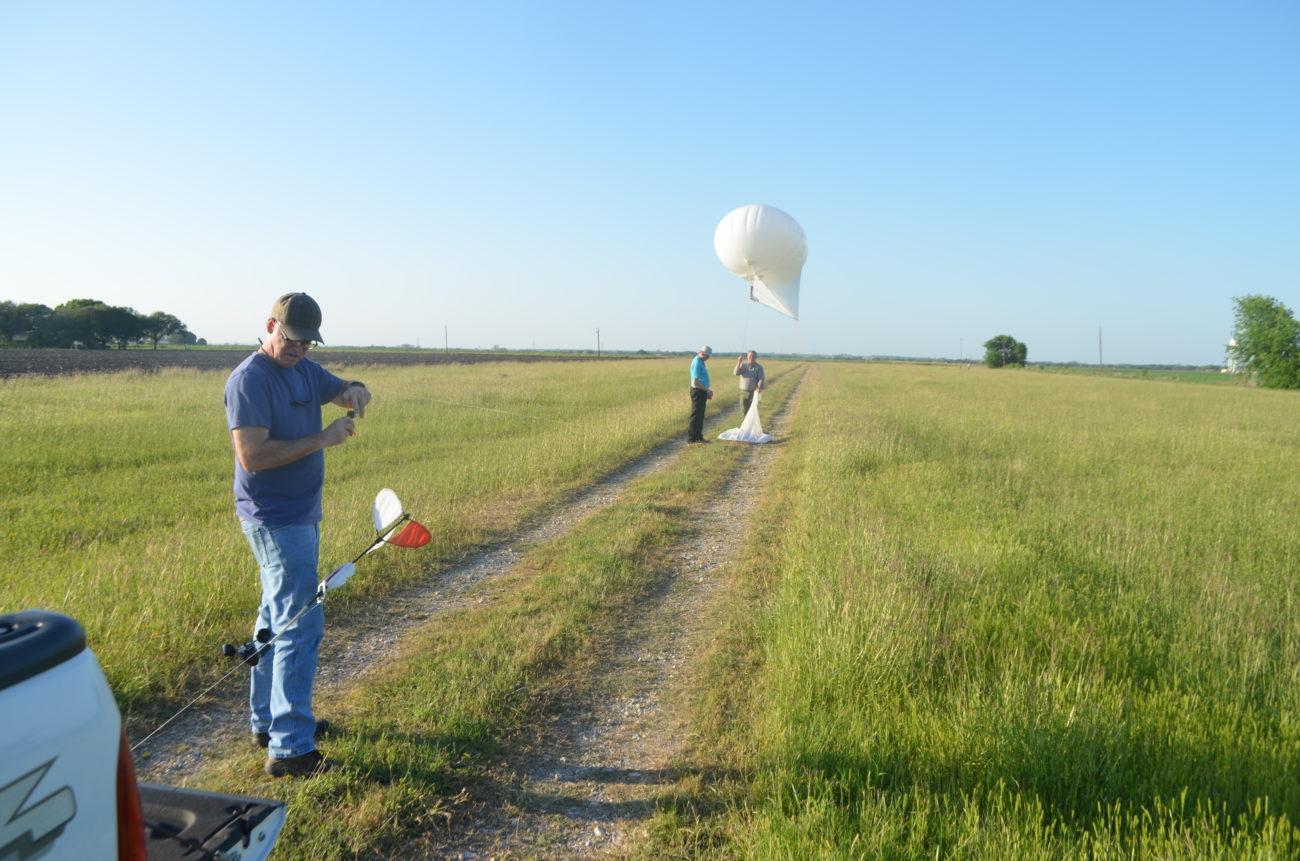
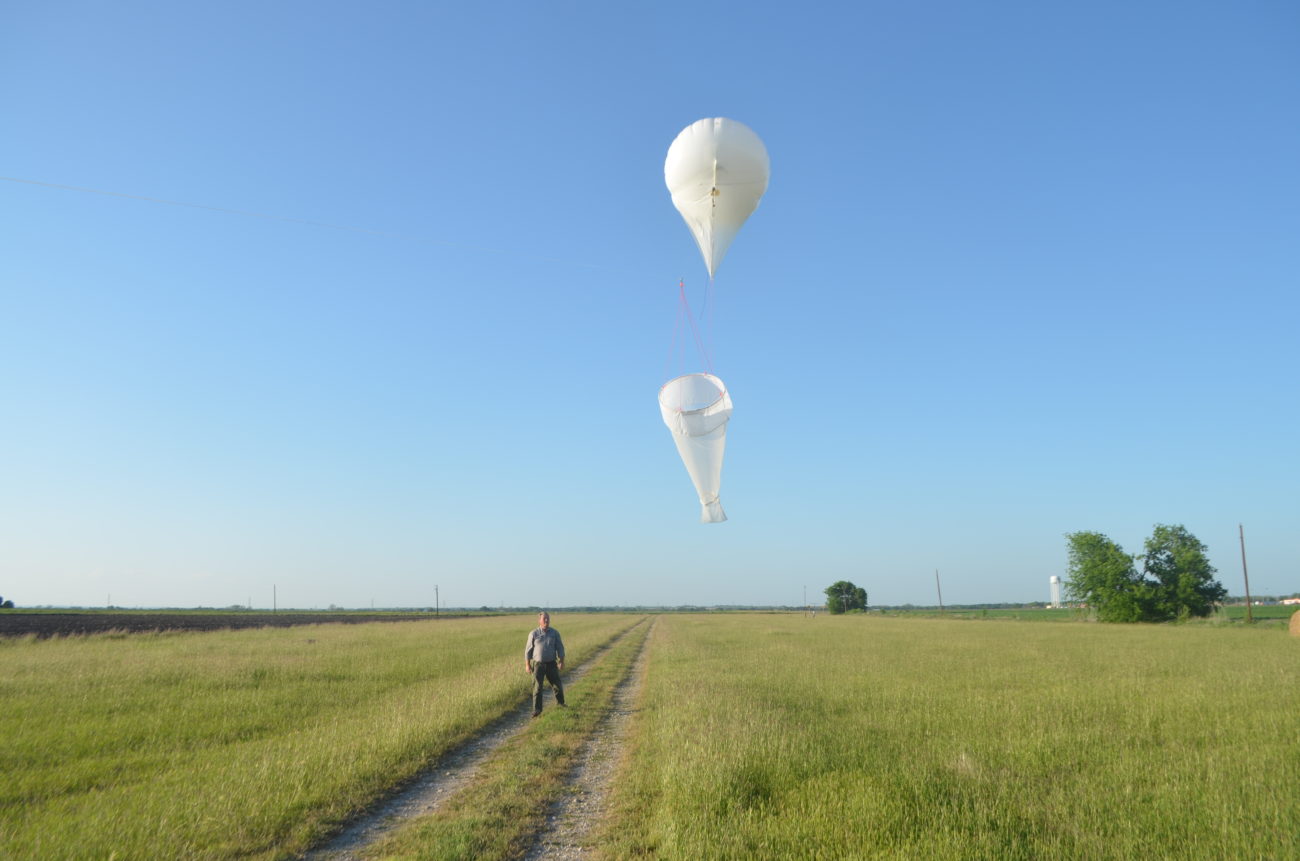
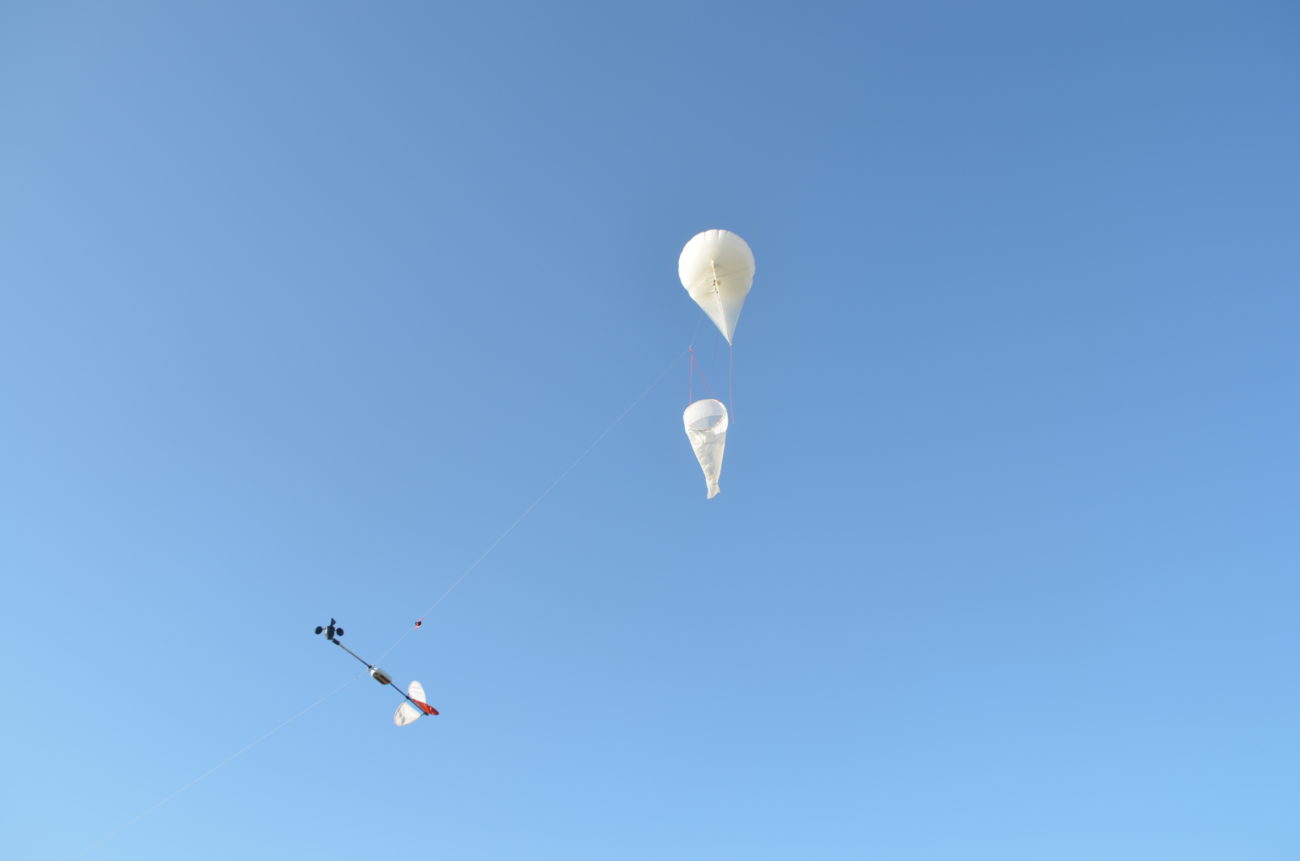
The kite is deployed with the catch net 7.5 meters below. The net will stay at 200 meters above ground level for four hours.
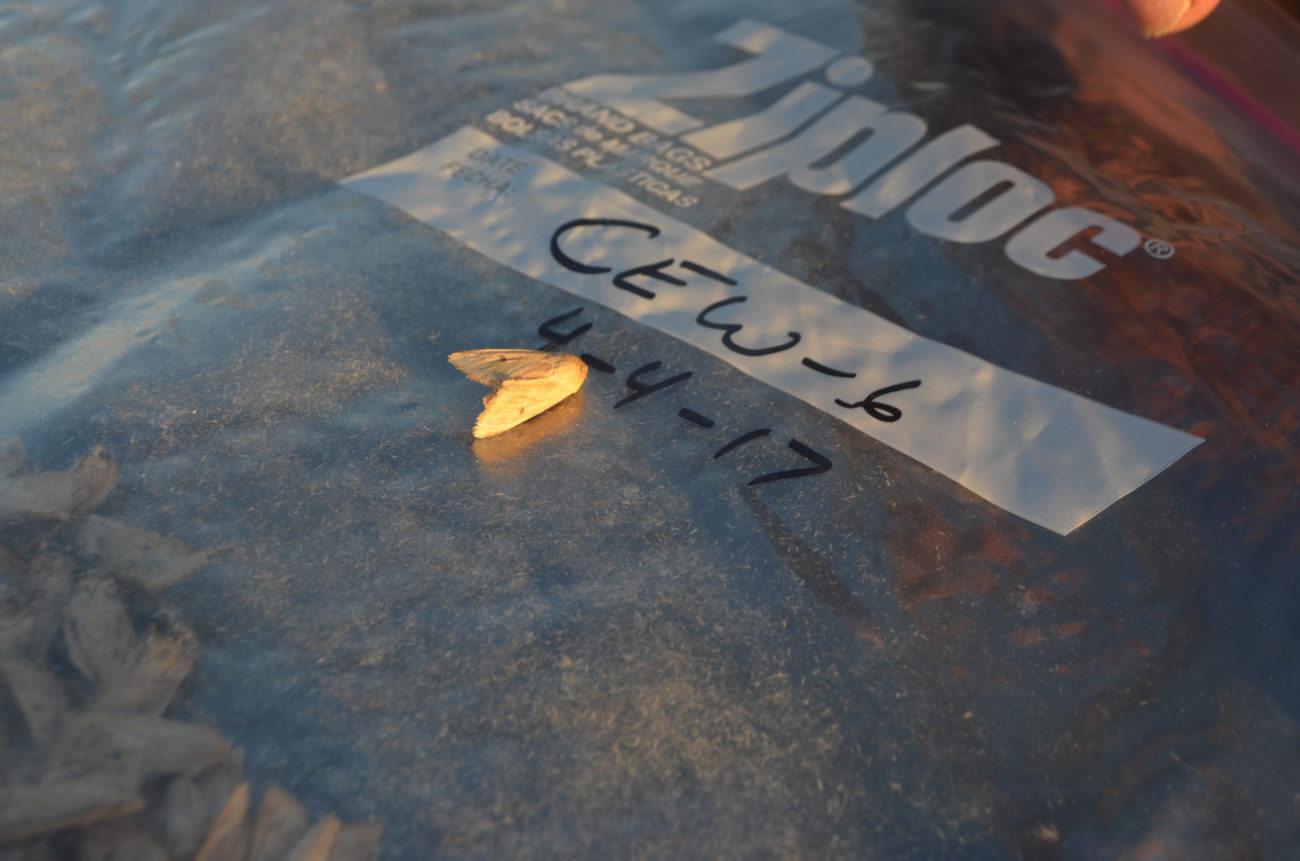
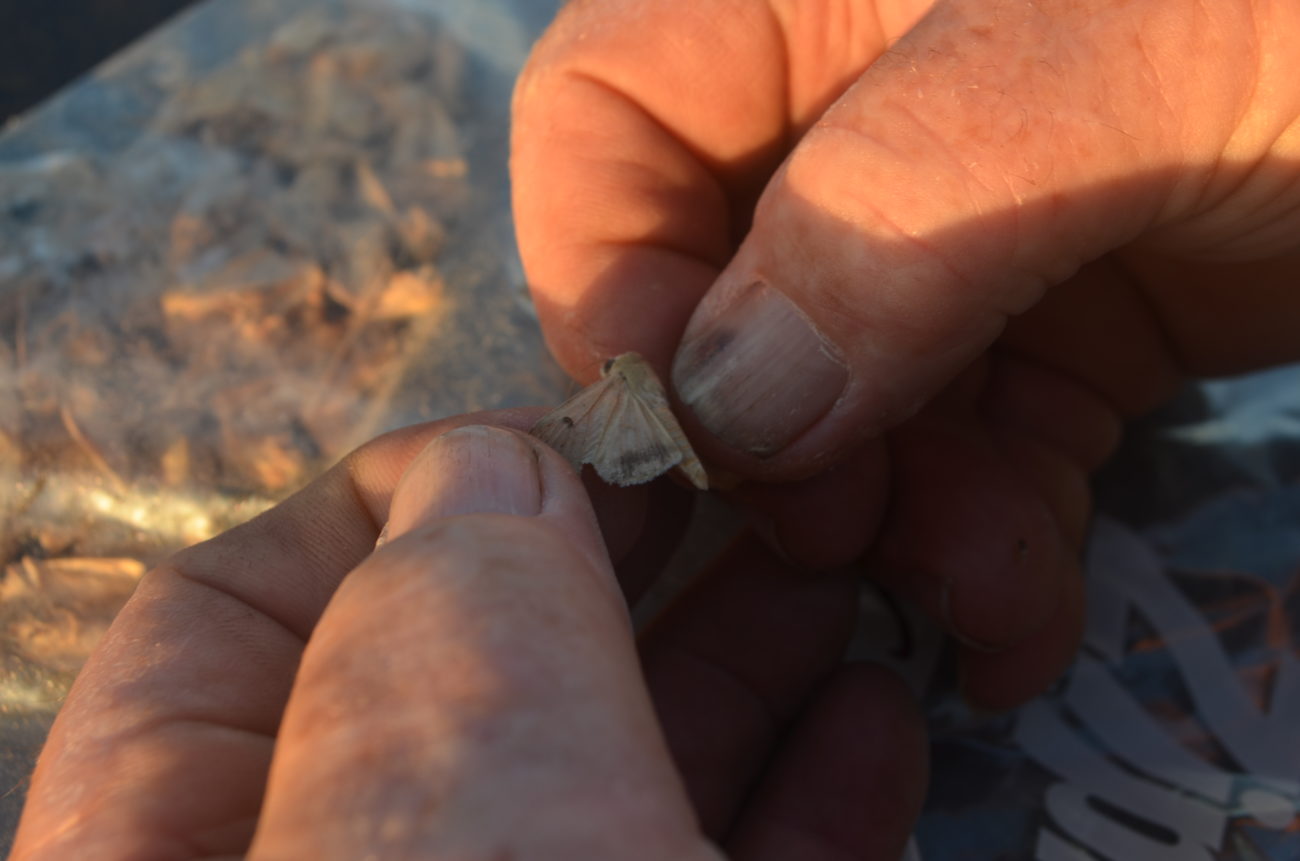
Pheromone traps told them which species were present in the local fields. Here is a Corn Earworm Moth. Note the dot on each outer wing and the smudge on the inner wing.
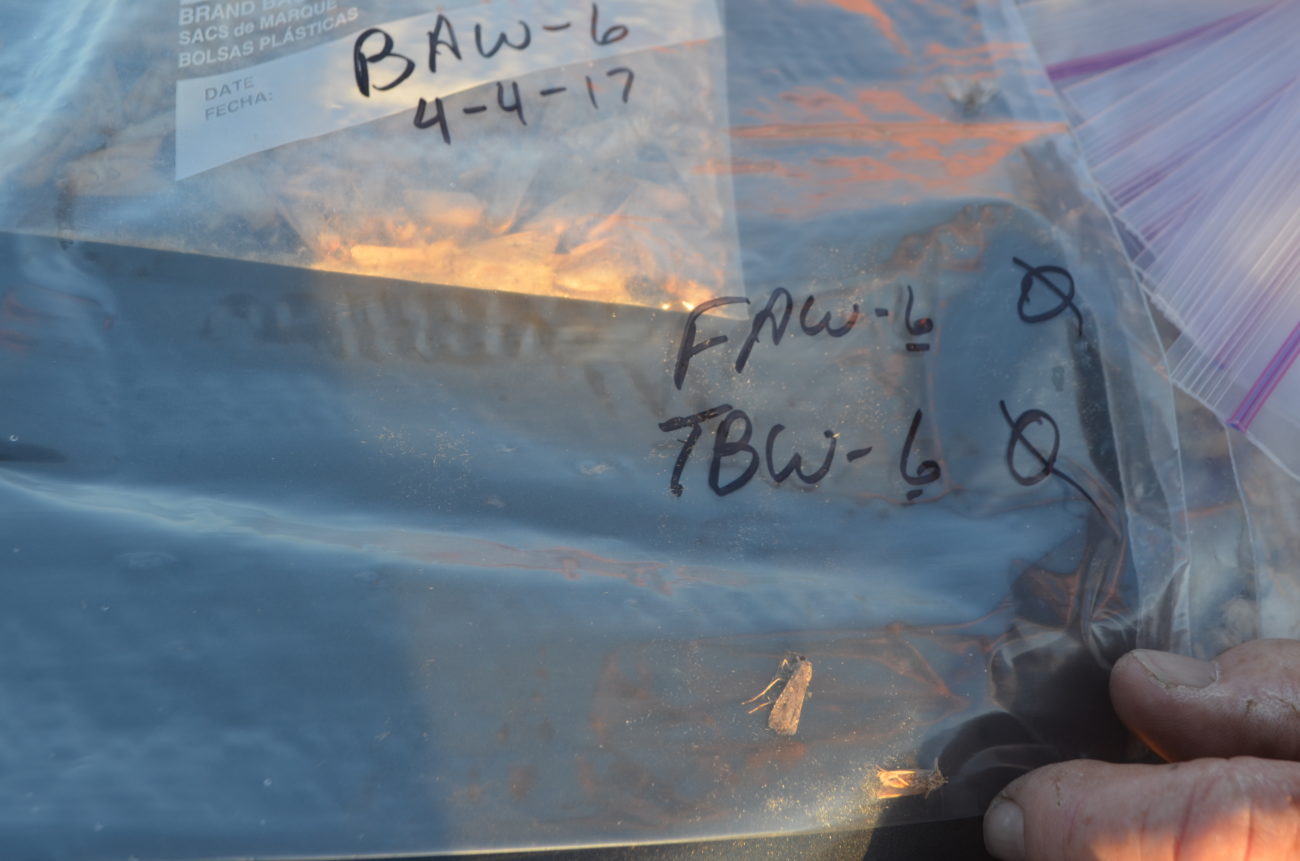
Below are Fall Army Worm moths, much smaller than the CEW moth shown for comparison.
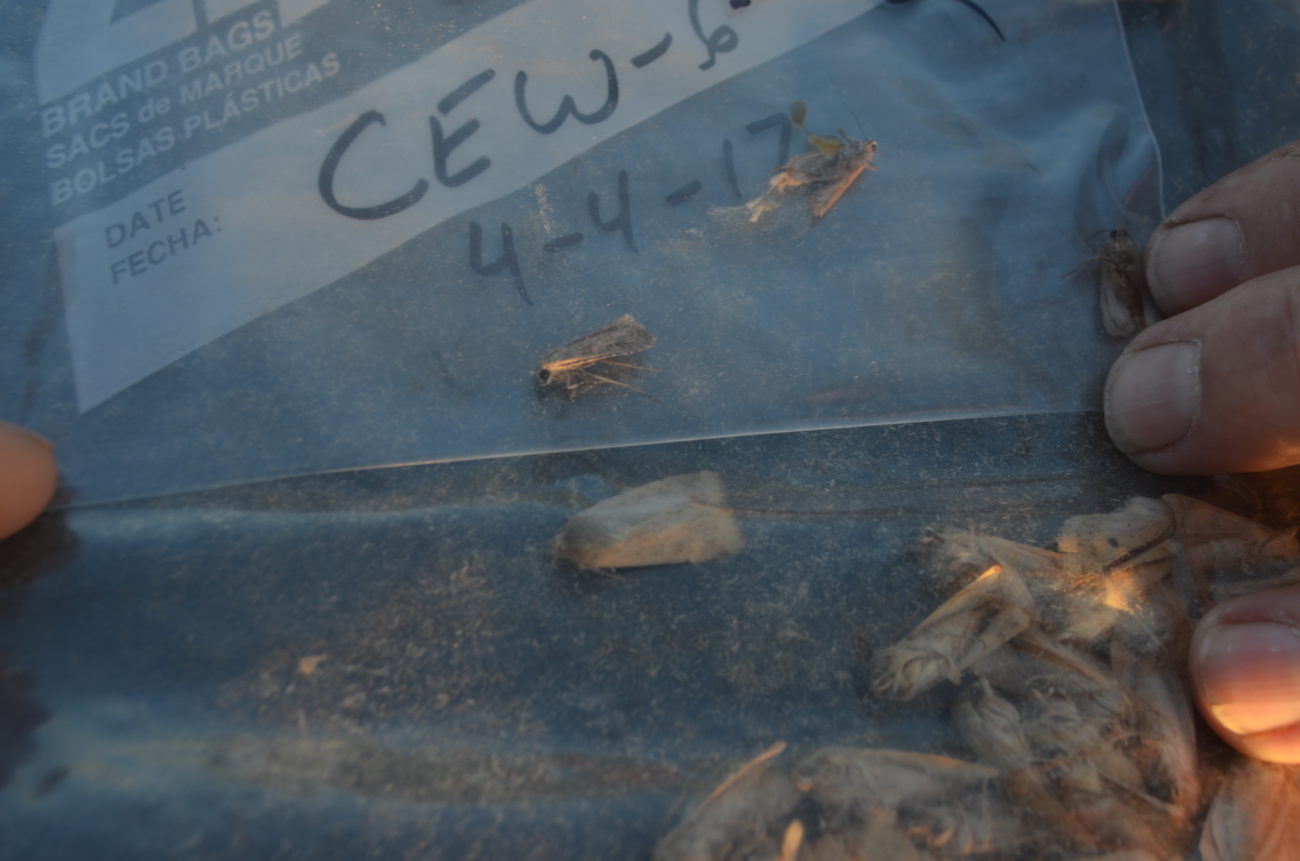
And below we have a Tobacco Bud Worm moth. Wavy lines on the wings help ID it.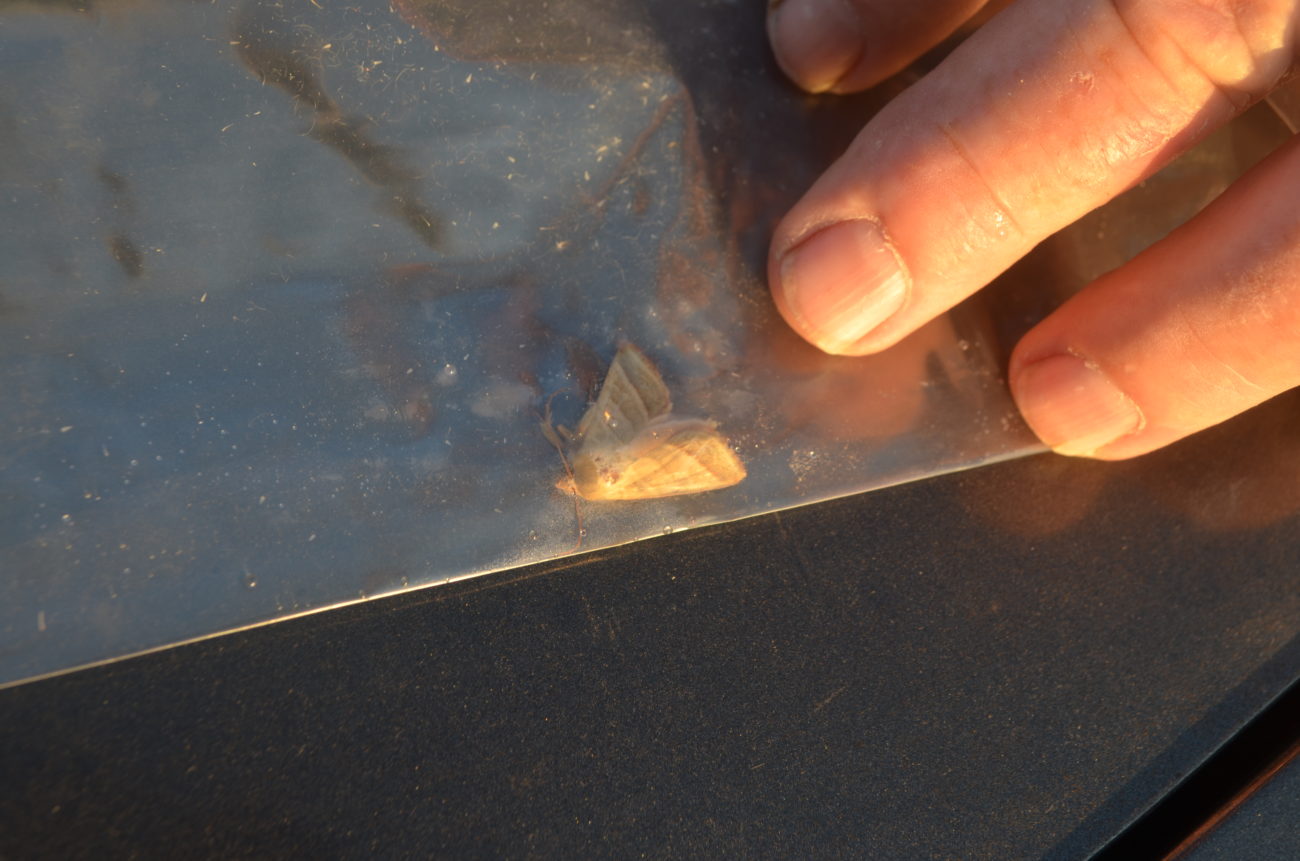
Jason Lin tends the line as the net and kite soar high in the sky.
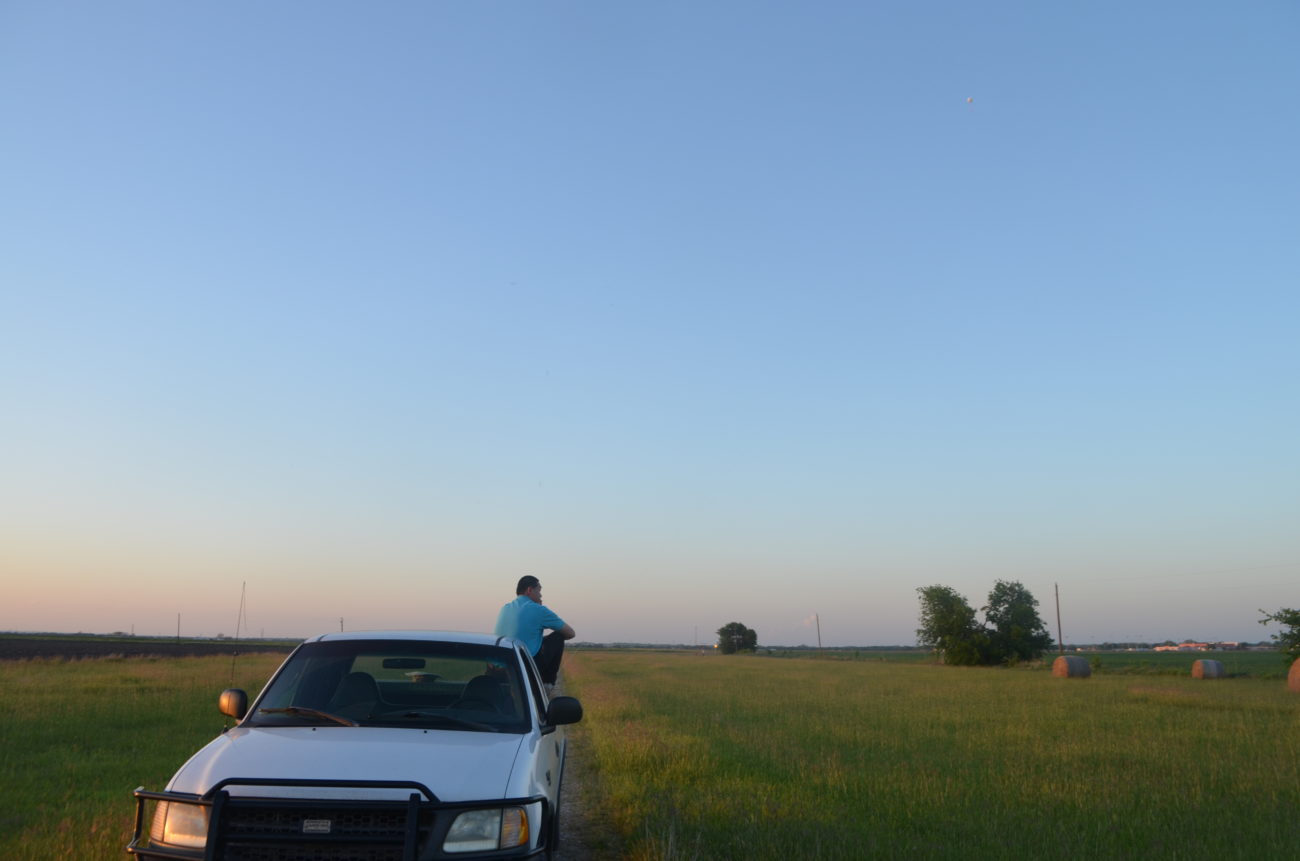
Monitoring conditions: The wind speed increased substantially later from this 6.5 meters per second to around 12 mps, giving the crew some heartburn as it reached the threshold of the line strength. The temperature was quite warm at 175 meters agl, and as the ground cooled with radiative cooling a temperature inversion occurred, allowing conditions for a slipstream of faster wind at 200 meters agl that insects used to their advantage in migration. Their flight speed of 5 mps added to the 12 mps (or 20 mps at times) allows them to cover lots of ground in a night (38-55 mph).
The helium balloon kite, collection net, and tether sond return to ground with the catch, around midnight.
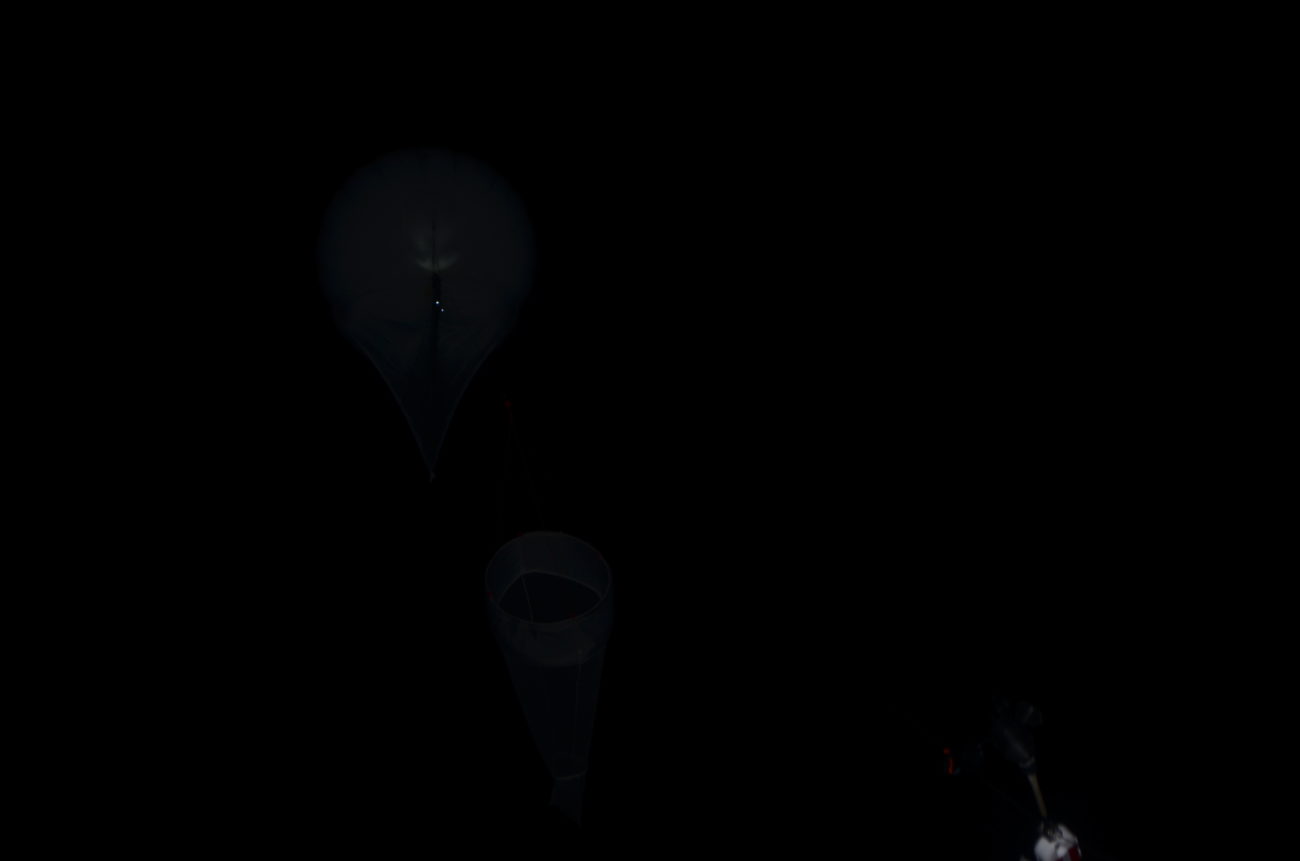
Quite a rig!
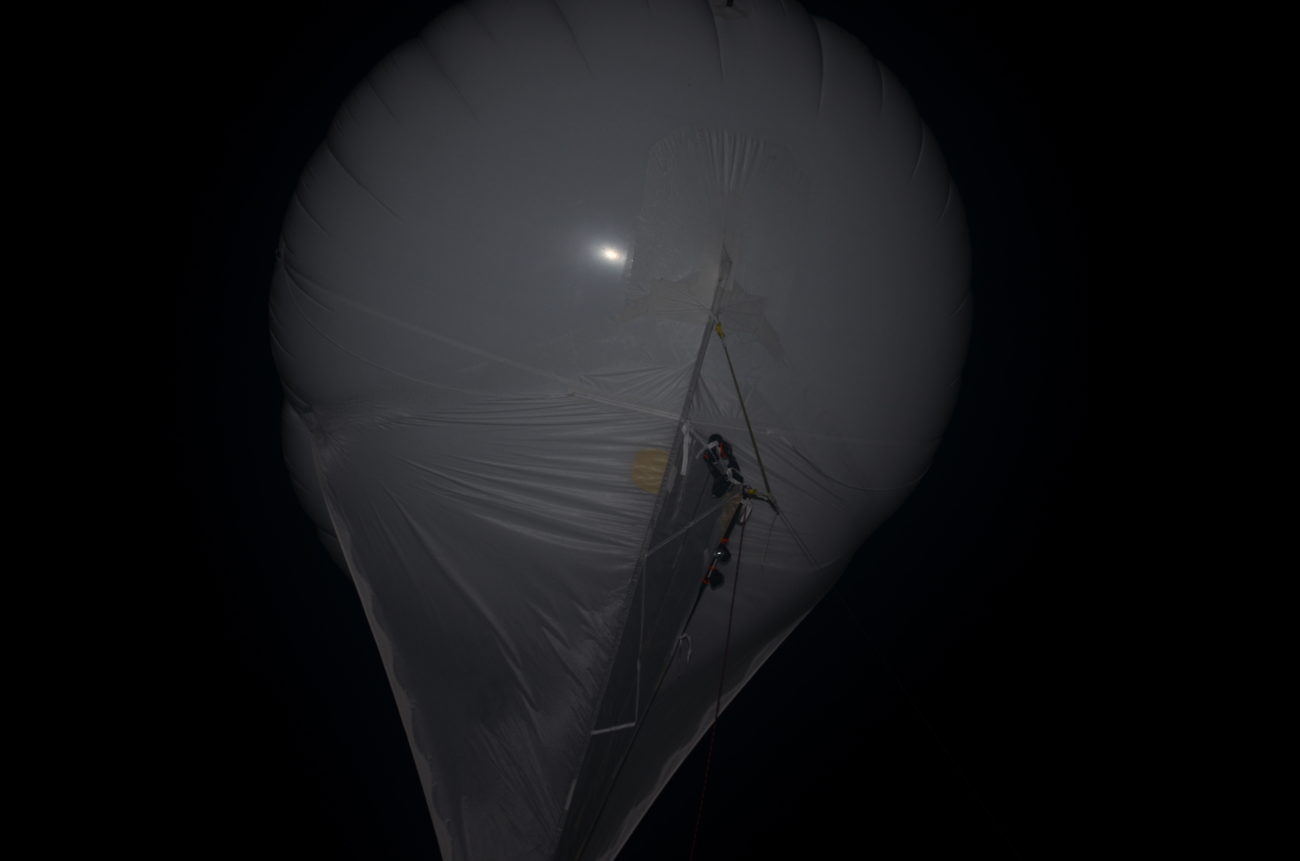
What an honor to be allowed to observe John, Mike, and Jason’s last night of fieldwork. Thanks so much to everyone for the generosity!
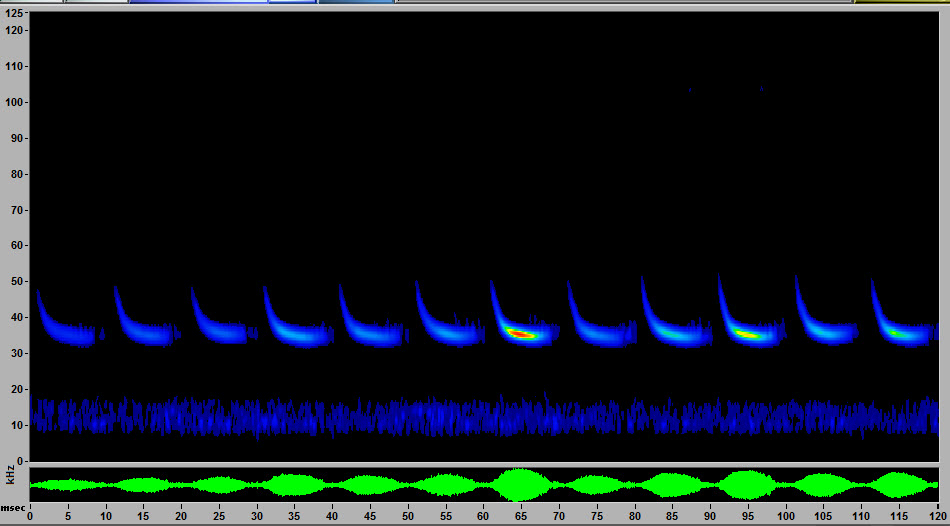
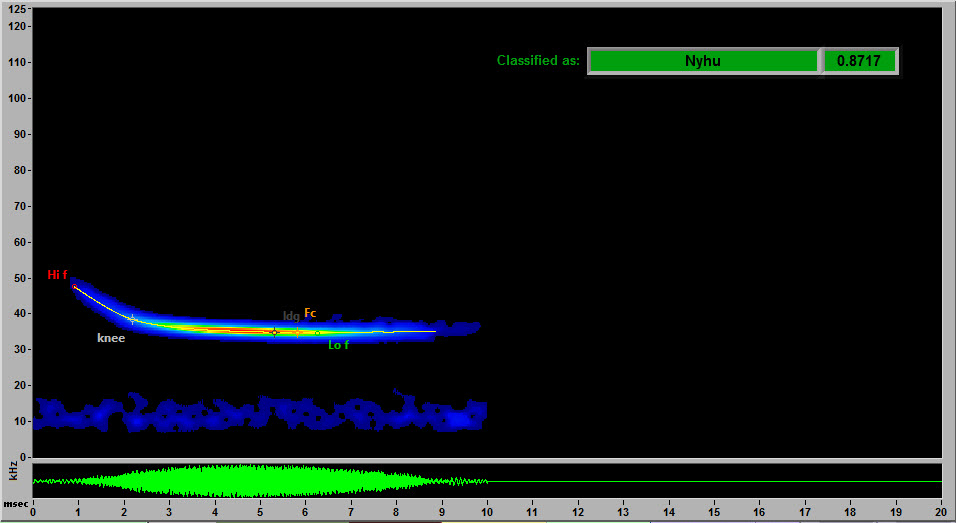
Here is an evening bat call collected one meter above ground level as the kite was flying. Next time we hope to convince them to take an echolocation recording device along for the ride (pipe dream!). Gary McCracken and Jennifer Krauel have done studies of the variation in echolocation calls of bats at altitude and will be returning this coming June as part of a study designed to correlate the VLR data with NEXRAD radar.
Research Project: Monitoring Pest Insect Migration With a Vertical-Looking Entomological Radar
Location: Insect Control and Cotton Disease Research
Project Number: 3091-22000-033-13-S
Project Type: Non-Assistance Cooperative Agreement
Start Date: Aug 1, 2014
End Date: Sep 30, 2017
Objective:
The project will quantify seasonal flight patterns and behaviors of migratory pest insects in the lowest 2,000 m of the atmospheric boundary layer. Specific objectives are to: (1) identify the relative abundance of various classes of insects based on radar-derived parameters of body size, body shape, flight speed and flight heading; (2) relate profiles of insect density, flight behavior, and atmospheric parameters; and (3) relate radar parameterizations of insect flight activity using a Vertical Looking Radar (VLR) and a National Weather Service Doppler radar (NEXRAD).
Approach:
Rothamsted Research has developed a VLR that is capable of detecting insects within the lowest 2,000 m of the atmosphere. The VLR is capable of quantifying the density, displacement speed and direction, and flight heading of insects at distinct ranges, and classifying the detected insects by their body mass, body shape, and wingbeat frequency. The automated VLR will continually record measurements of daytime and nighttime insect flight activity in the atmospheric boundary layer. The VLR will be shipped to Texas in late September 2015. Additionally, the cooperator and two colleagues will travel to Texas to install the VLR approximately 20 km east of the National Weather Service Doppler radar (NEXRAD) at New Braunfels in late September 2015 and conduct intensive insect migration field studies in early October 2015. Cooperator will also travel to Texas to conduct intensive insect migration field studies in late March 2016 and late June 2016. ARS scientists will join the UK scientists during the intensive insect migration field studies at the VLR site and will be responsible for checking insect traps, surveying insect infestations in crops, and measuring insect flight activity using aerial insect nets and imaging systems. Local NEXRAD measurements of radar reflectivity and Doppler velocity will be analyzed relative to the VLR data and entomological field observations. ARS scientists will inspect the VLR system operation and download VLR data weekly. The experimental radar deployment will be continued until October 2016.
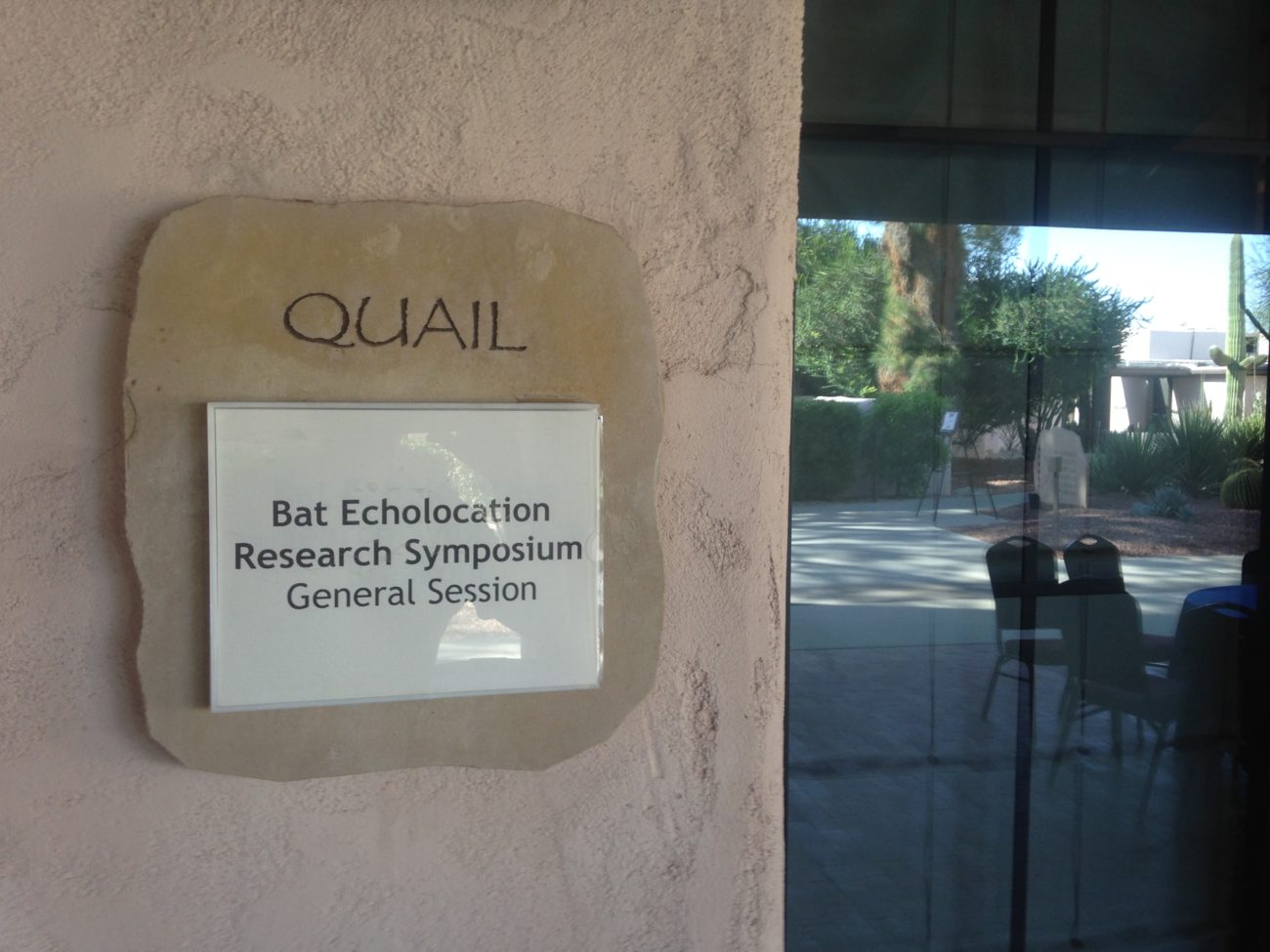
What a great week this has been out in Tucson, Arizona! We got to participate in the first bat echolocation symposium that has taken place for 15 years, as experts from around the world discussed their life-long research on bat neurophysiology, bat behavioral ecology, and bat conservation science.
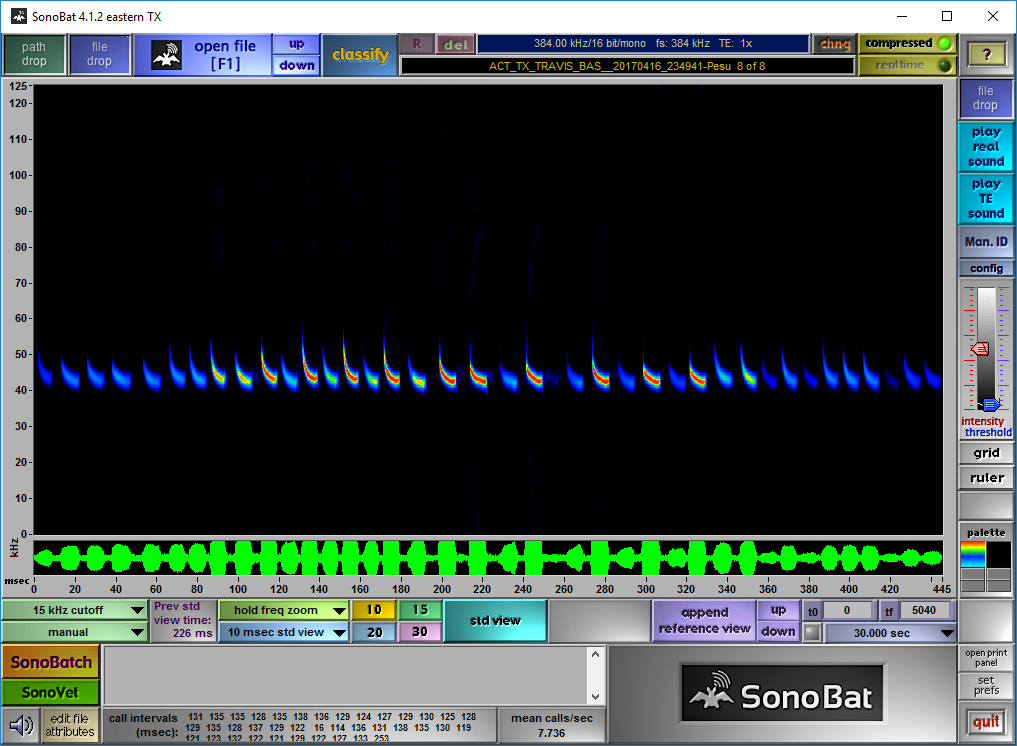
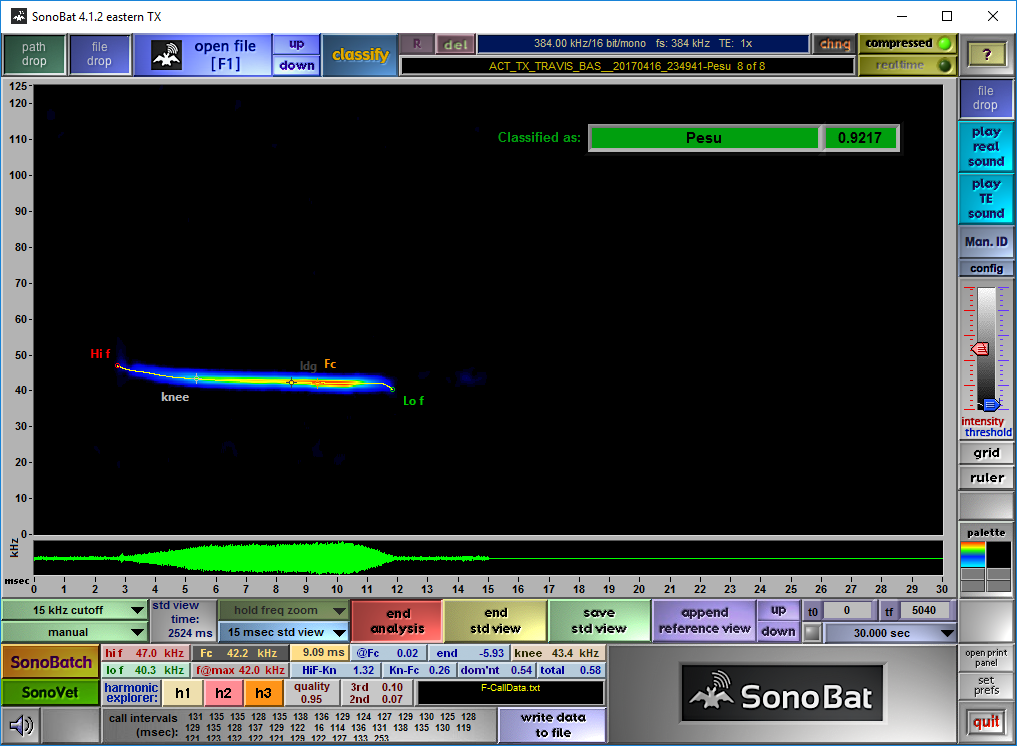
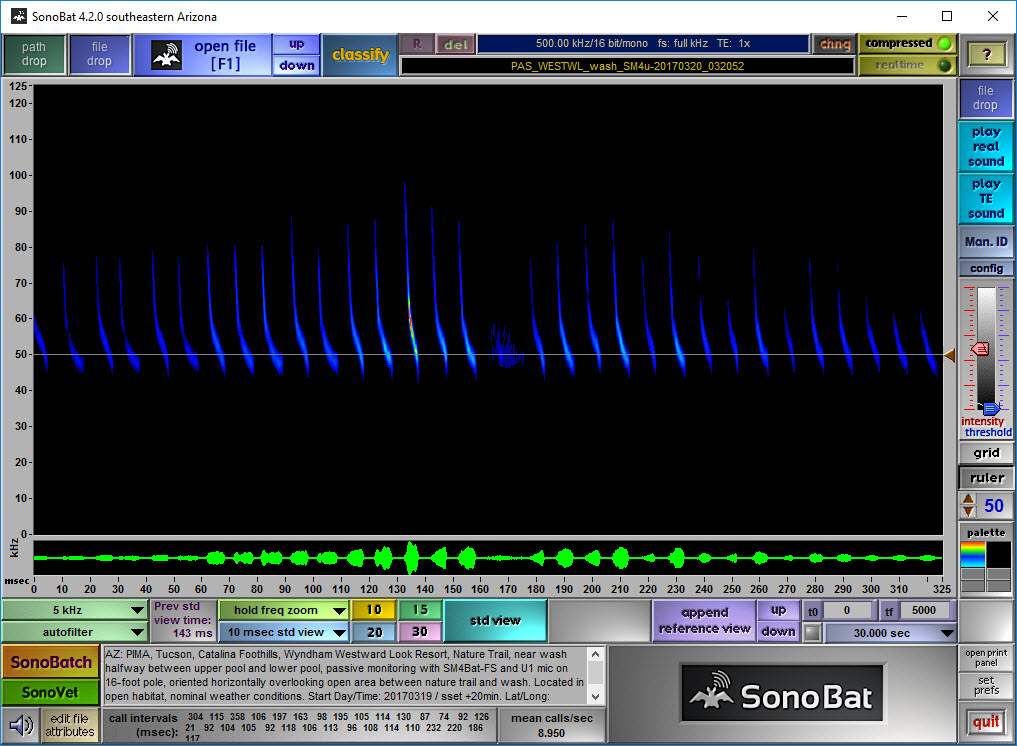
Below left: A call sequence from a Myotis yumanensis (Yuma myotis) recorded during the Symposium.
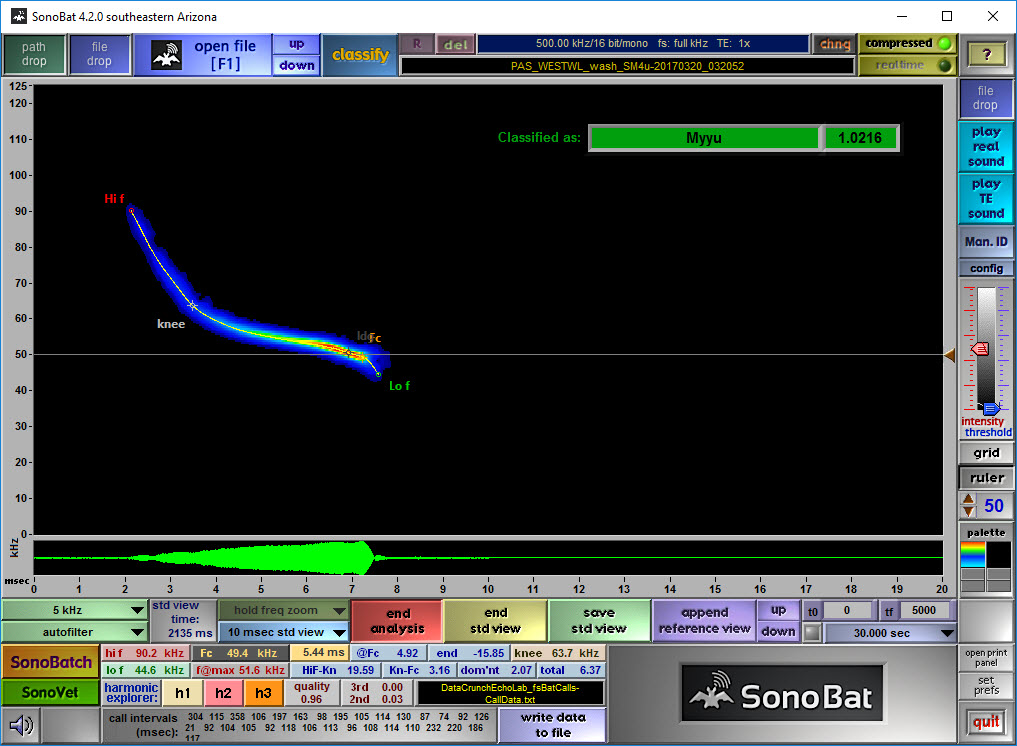
Below right: An analysed call taken from that sequence.
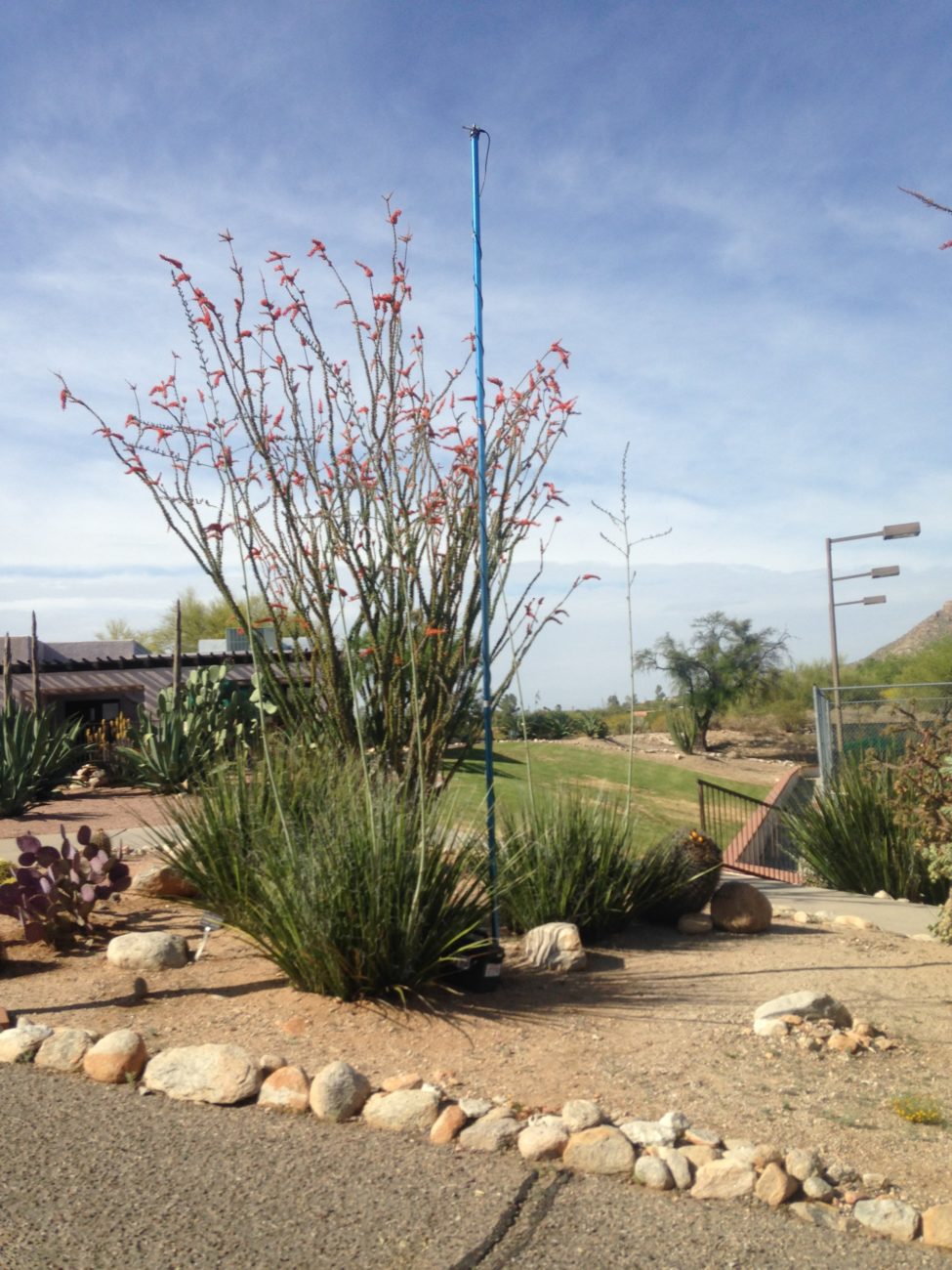
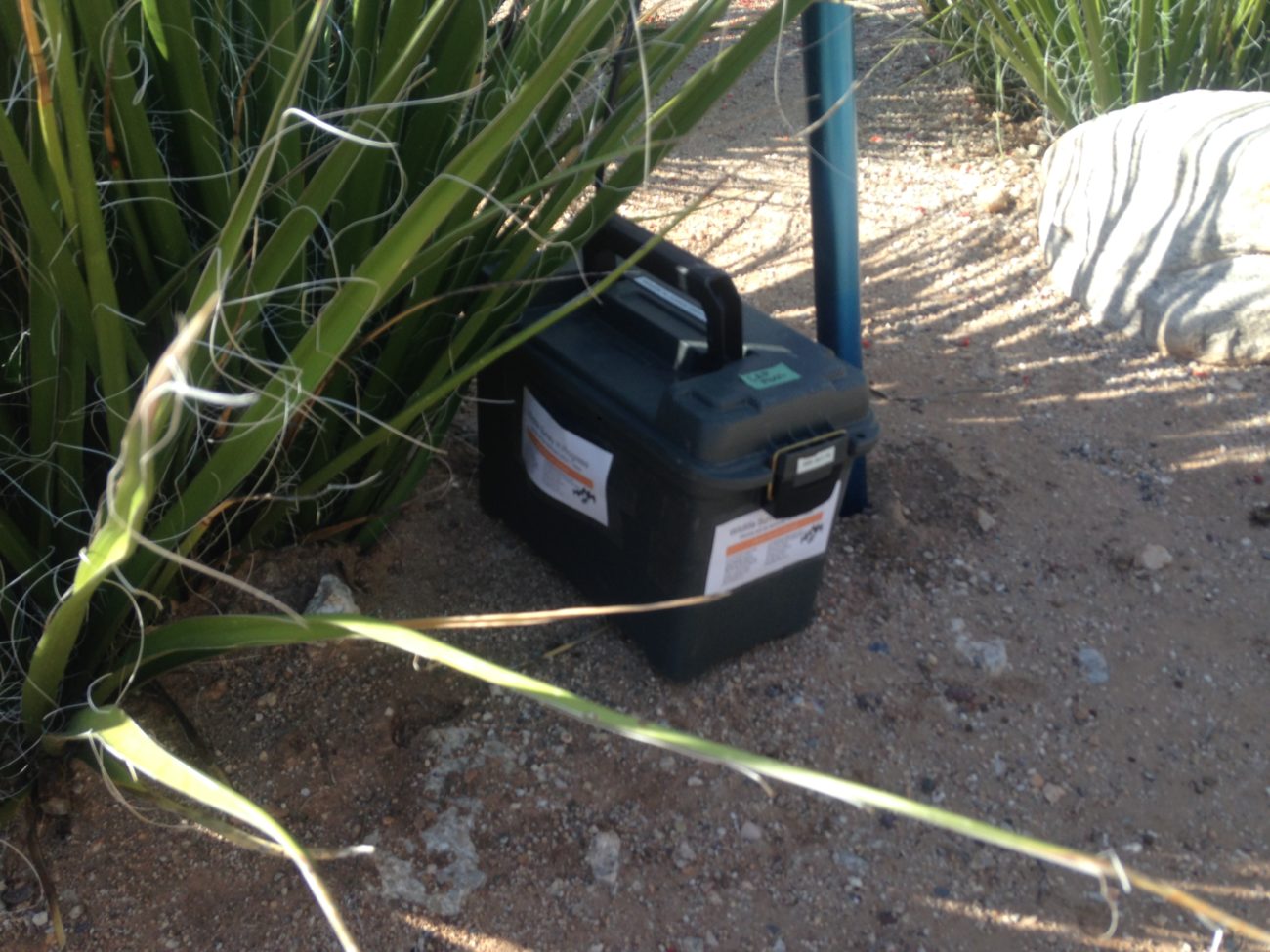
Below: Passive monitoring during the Symposium. The Sonoran Desert had sprung to life that week. The ocotillo was blooming everywhere.
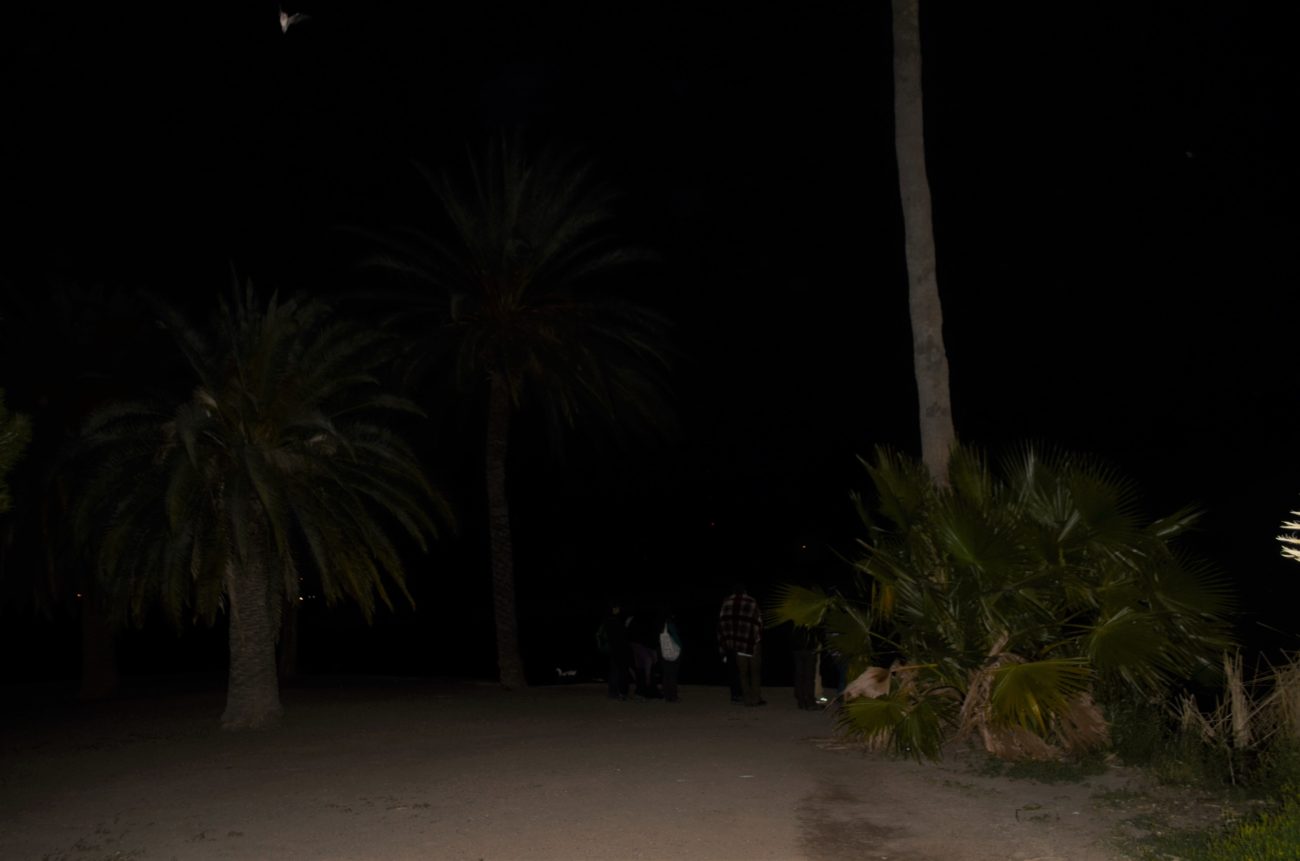
Below: Active monitoring under the palms at a Tucson park. Western yellows and velifers were common.
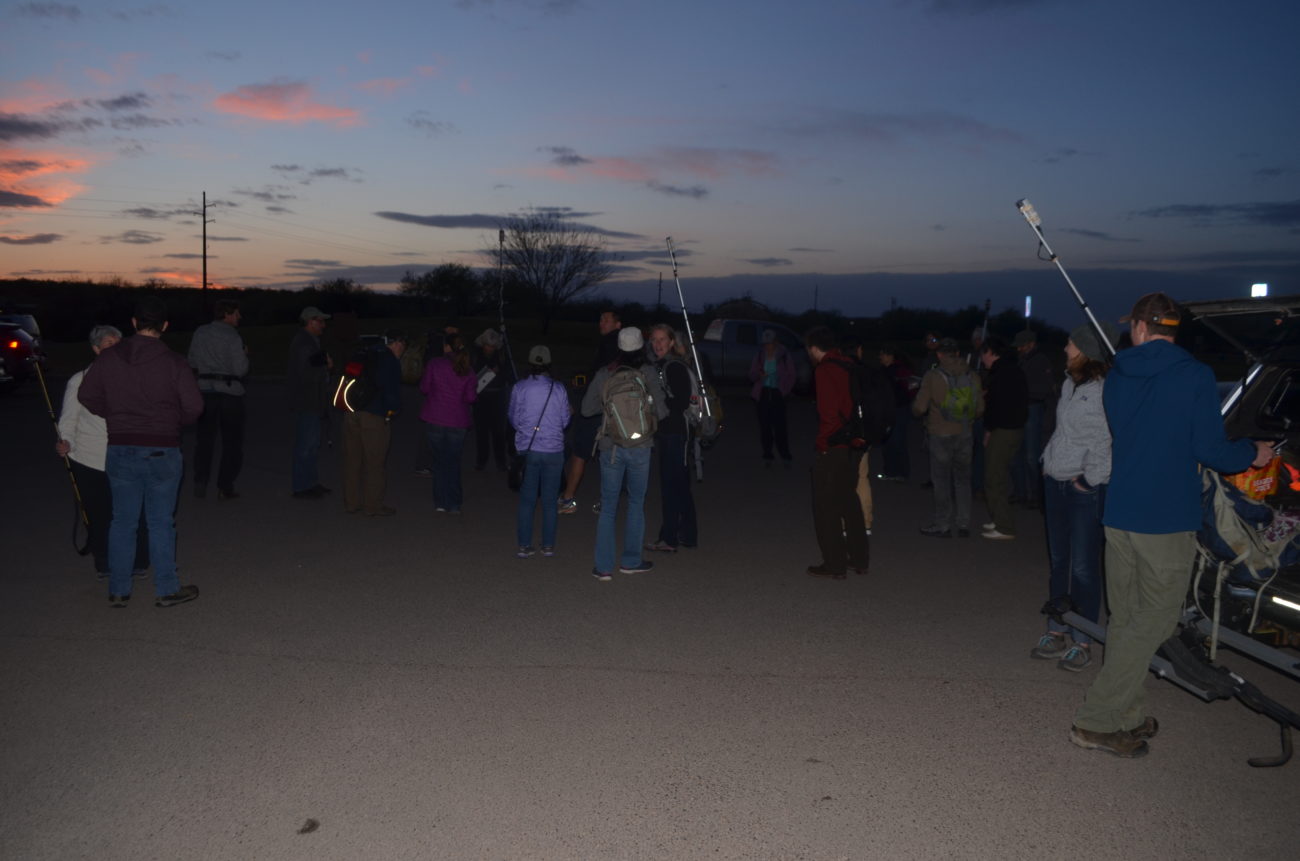
Below: The group gathers at dusk, cementing new friendships over a last night of batting.
Chris Corben creator of Anabat, and Joe Szewczak creator of SonoBat, shared their expertise.
Below: How wonderful to see these bat experts, know to us previously only by their research, out in the field celebrating the joy of batting. There some bat big shots in this walkabout and they all retain the sense of wonder that drew them to the field.
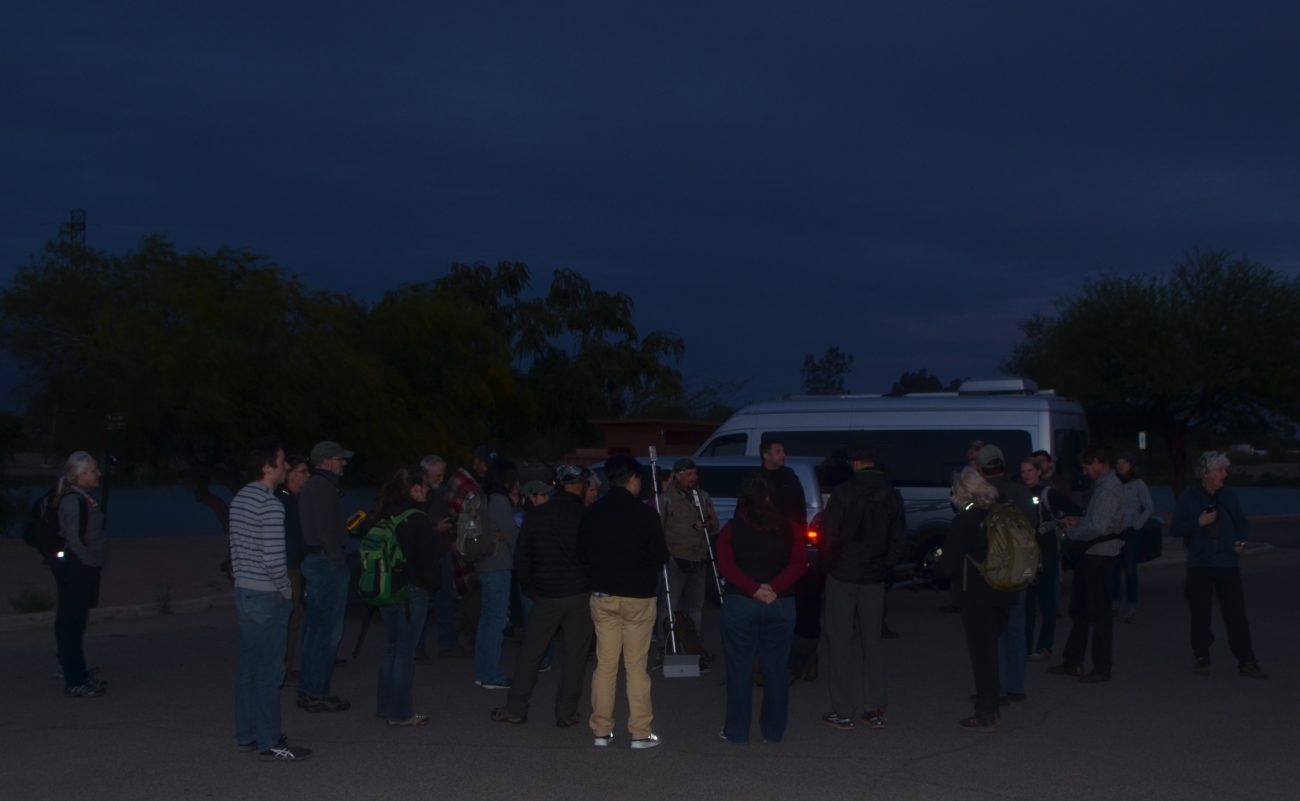
Joe Szewczak (left) shares with Martyn, Toby, Alice, Katherine, and Brian.
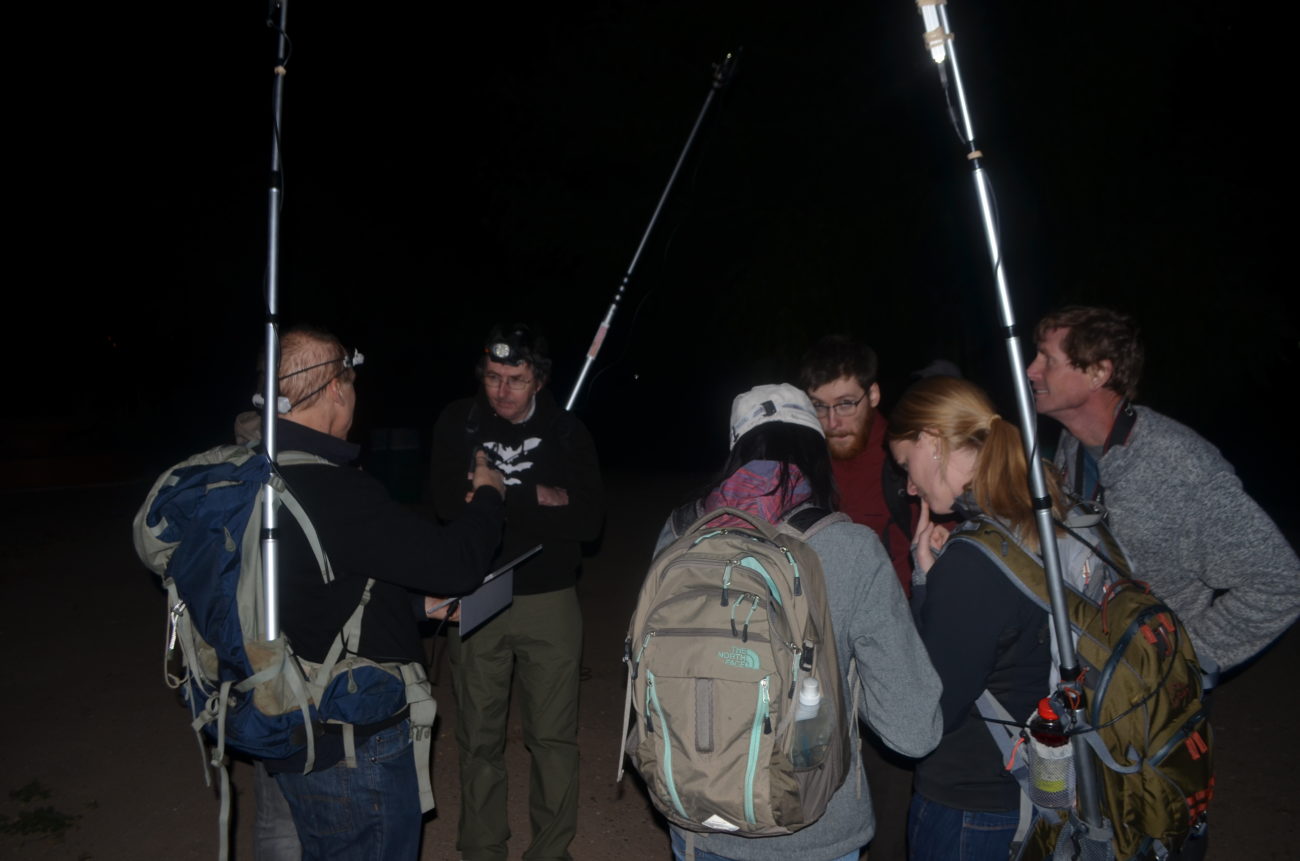
Thanks so much everyone for freely sharing your knowledge and vision all for the greater good of bat conservation.
We dearly hope it will lead to a lifetime of collaboration and friendships.
We’re obviously devastated by the news that the fungus that causes WNS has arrived in Texas. We, like everyone else here, had hoped for a little more time, but we knew it was coming. Although this is just the fungus, not yet the disease, we are nonetheless tweaking our rehabilitation protocols and stand ready to collaborate with state and federal agencies, and other Texas bat rehabilitators in monitoring and providing supportive care for Texas bats.
https://tpwd.texas.gov/newsmedia/releases/?req=20170323c&nrtype=all&nrspan=2017&nrsearch=
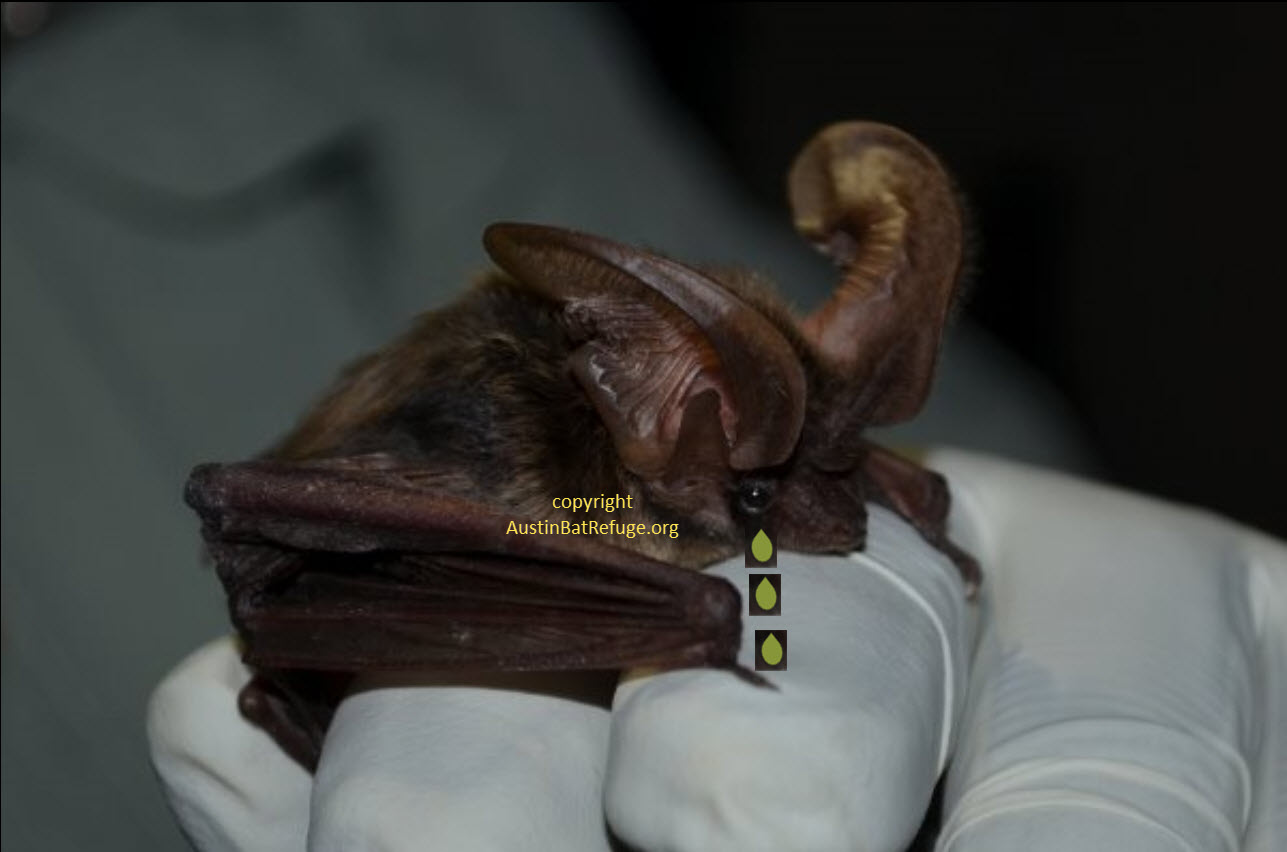
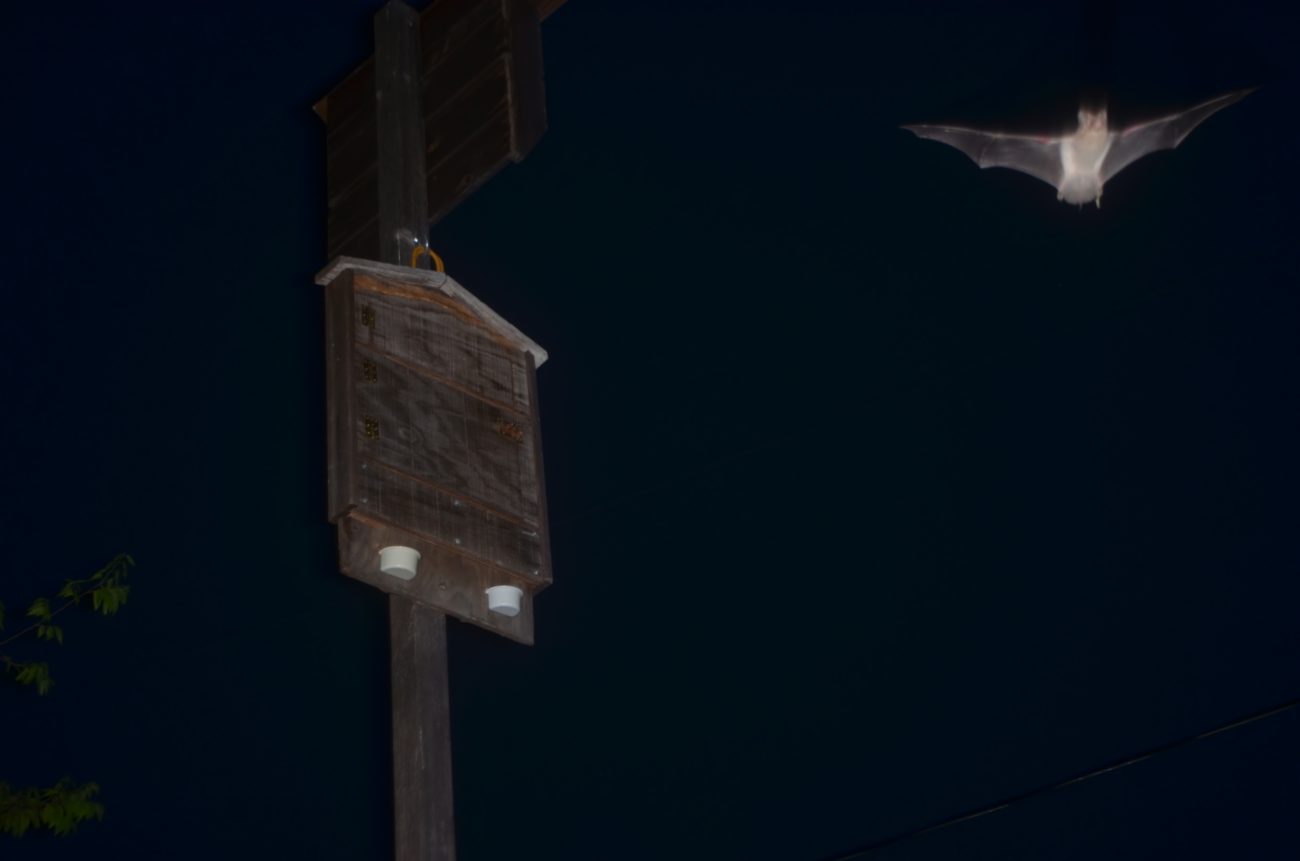
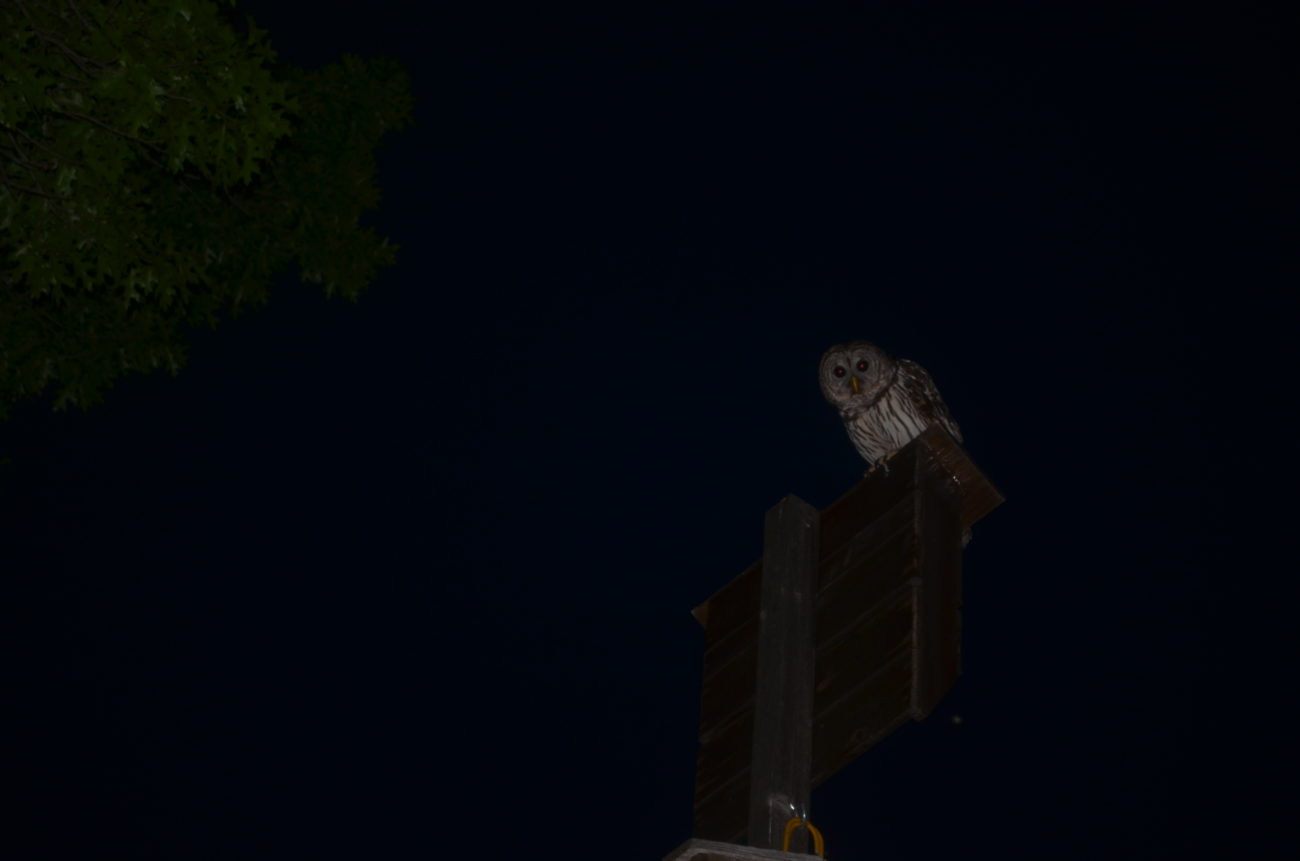
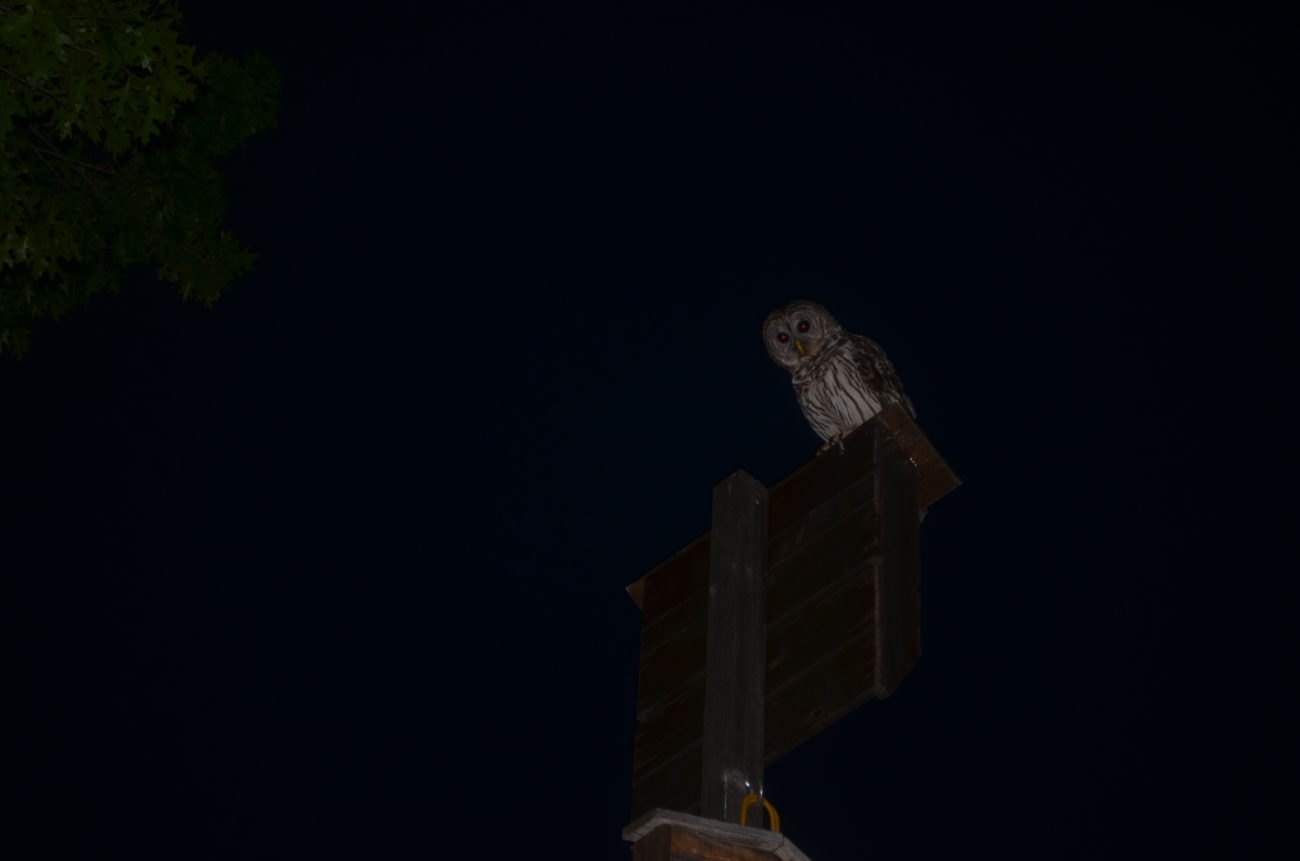
So we have bats in our bat box! But all that activity caught the attention of a serious customer.
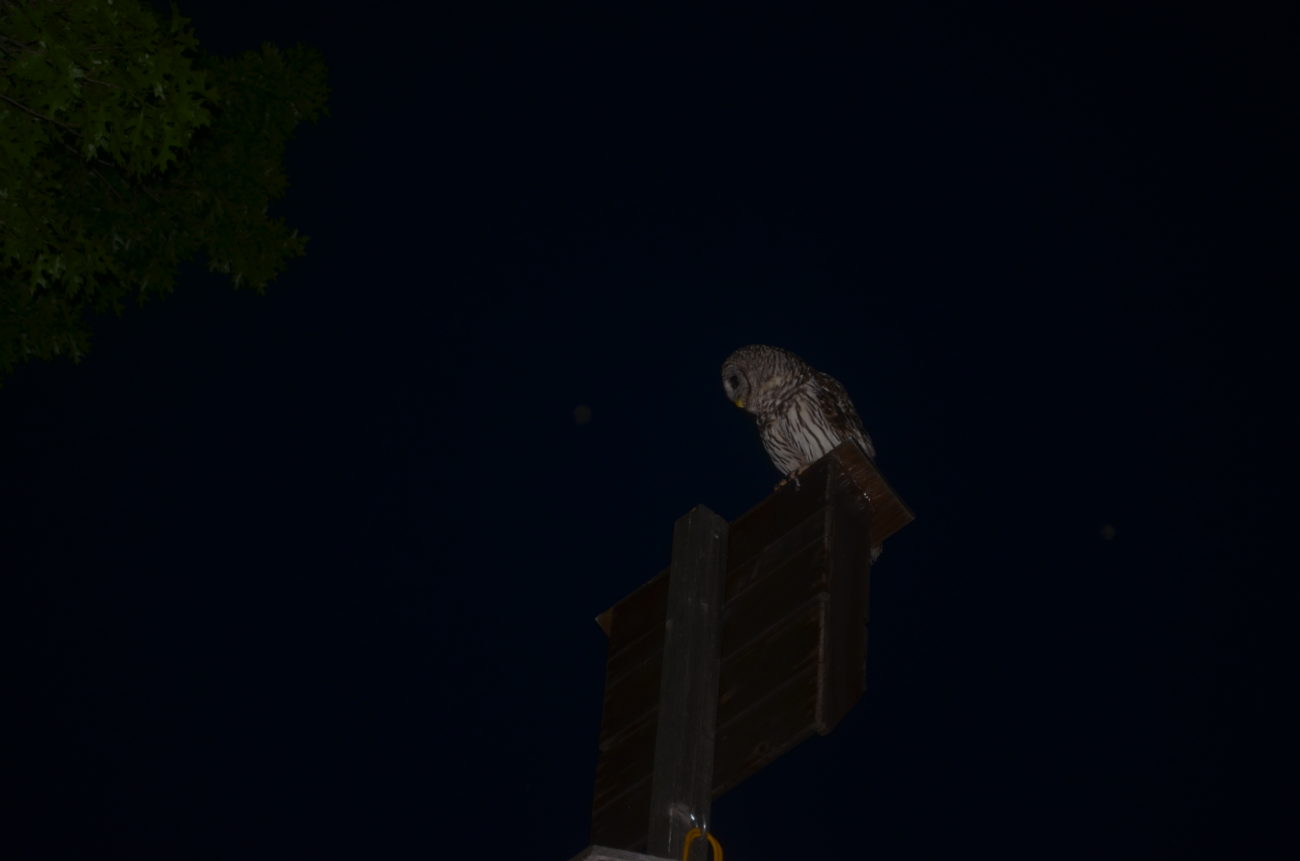
The local Barred Owl flew up and landed on top of the upper, uninhabited box.
I have a feeling our bats will be moving on to safer digs.
We had a blast at the Texas Night Sky Festival on Saturday March 18th.
We met so many people and introduced them all to Buffy, Gabe, Freida, and Nikita.
It was so much fun to see all those smiling faces.
Thanks Kyndal Irwin for spending the last day of SXSW with us out in Dripping Springs!
You were so great with all those kids! We’re proud to know you!