Great day at the Museum on Saturday!
We had a big crowd at our table all day and it was a blast!
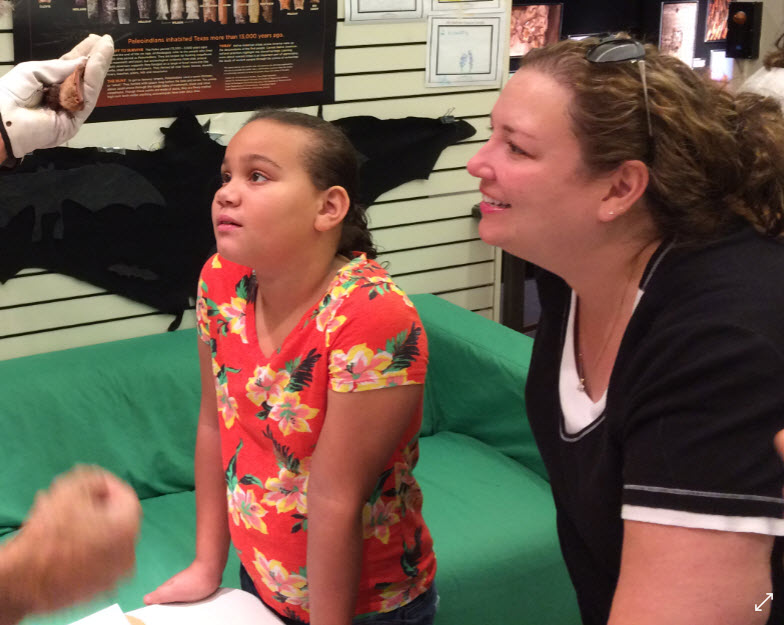
And what a privilege to share these bats with wonderful animal-loving children and adults.
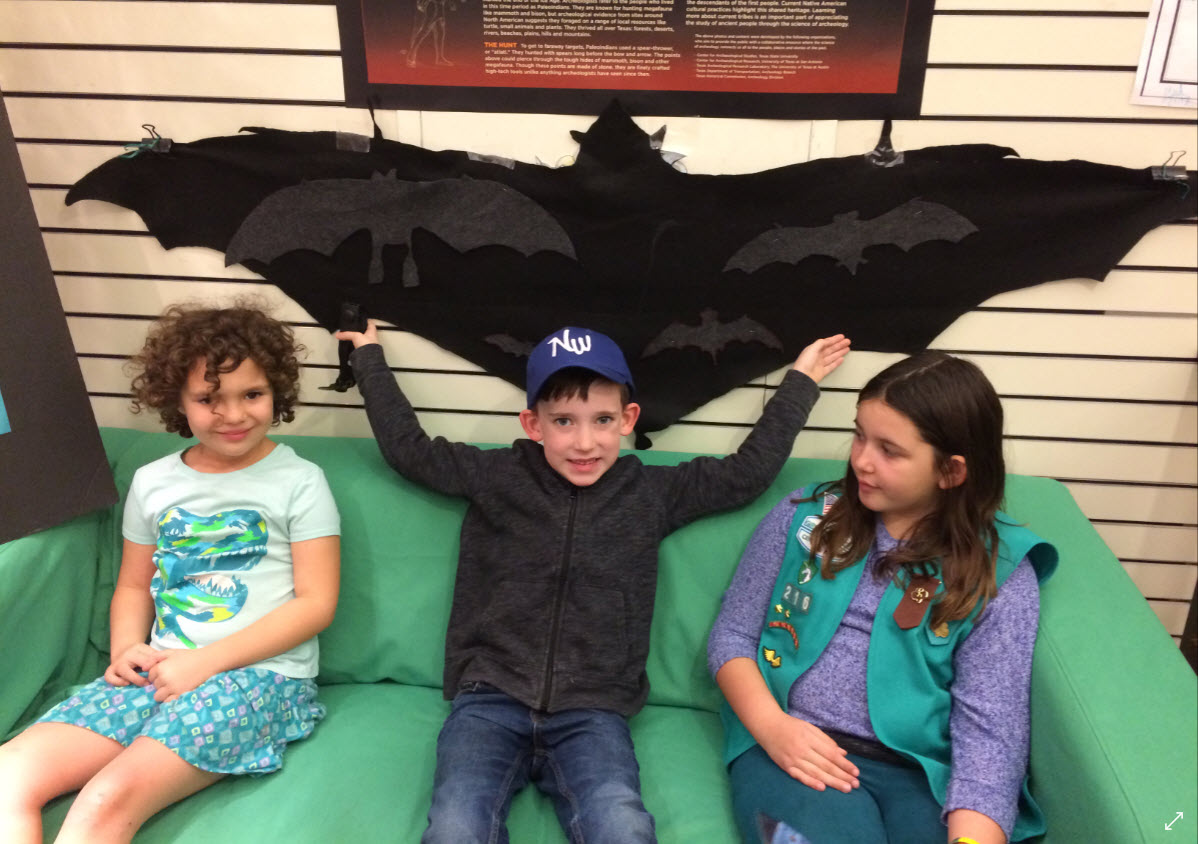
How do you measure up to the worlds largest bat?
Great day at the Museum on Saturday!
We had a big crowd at our table all day and it was a blast!
And what a privilege to share these bats with wonderful animal-loving children and adults.
How do you measure up to the worlds largest bat?
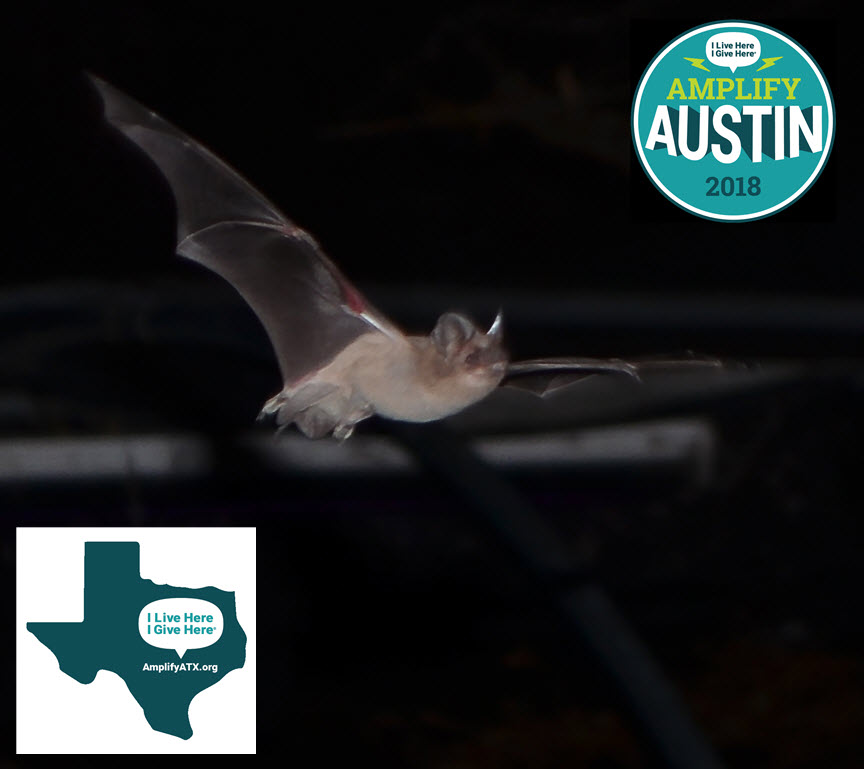
This Mexican free-tailed girl was found, a few weeks back, at Penn Field by Sara Fern of iHeart Media
She was super dehydrated from being stuck in a building for many days and was super lucky Sara found her.
After two weeks of good food and smart water, she flew beautifully last night, and is ready for release!
She says “I Live Here, I Give Here”
Thanks for giving her a second chance Sara!
Save the date!
Greetings bat lovers,
This is my second foreign correspondence while I am doing research in Costa Rica (you can find my first blog post further back on this site). To refresh your memories, I am conducting acoustic surveys across Costa Rica using two Wildlife Acoustics SM4BAT Full-spectrum passive recorders to look into the impacts of land use on bat activity and species assemblage. My project is part of a larger NSF funded project led by Drs. Beck and Wasserman looking at the impacts of land-use on primates. My fellow interns are researching antibiotic resistance and hormone levels in primates (these guys get to follow monkeys around and collect fecal samples), water quality of streams entering/inside/leaving forest fragments, fig trees, air quality, and the social implications of eco-tourism. I am the bat lady. We arrived here January 2nd, and after about a week of gathering our equipment and setting up, we started data collection.
What have I learned in my first two weeks here?
1. The weather is the ruler of the quality of your data. Even though it is the ‘dry season’ here in the rainforest, it rains almost every day. Hopefully it will ease up soon because a lot of my recordings are static. Currently, we are at La Selva Biological Research Station. Fortunately, they have a list of over 70 confirmed bat species found in this reserve alone. I plan to compare the findings from the recordings to the list they have to see if we find anything interesting! I have not spent much time analyzing my data yet, as we spend most of our days in the field. While my data collects itself, I am a part of a team and I help the other members collect theirs.
2. Sleep and food are paramount. Field work is no joke and even though I work hard to get 8 hours of sleep a night, I always want more. Those of you comfy in your beds with no assigned time to wake up, I am jealous until mid-March. All of us have already lost weight and our pants are getting baggy even though we eat rice and beans almost every meal! I hope to be super fit by the time I get back to the US.
3. It is very important to get along with your teammates. We are going to be together for 10 weeks, every single day. I love my team and we are making amazing memories here in the jungle. I am excited to get to spend a few days off in Manuel Antonio, hanging out and laughing on the beach with a coconut in my hand! If we did not get along, this would be a very different experience.
4. I am very lucky to have such supportive friends, family, and colleagues. The constant encouragement from everyone makes being away from home very easy. That being said, this is a marathon, not a sprint! I have 8 weeks left and I know at some point all of us will need some TLC and a shoulder to cry on when we are just missing that comfort of home. But I love traveling and know I am fortunate to have such an amazing opportunity to conduct funded research in such a beautiful country on such awesome animals. We’ve done some really cool things: walked across Costa Rica’s second-longest bridge in Tirimbina, climbed a 46 meter high tower overlooking the forest canopy where I got to watch Howler monkeys and White-faced Capuchins flit through the trees just 50 feet away, gone on night hikes and seen Eyelash Vipers and Red-eyed tree frogs, and watched rivers double in depth overnight.
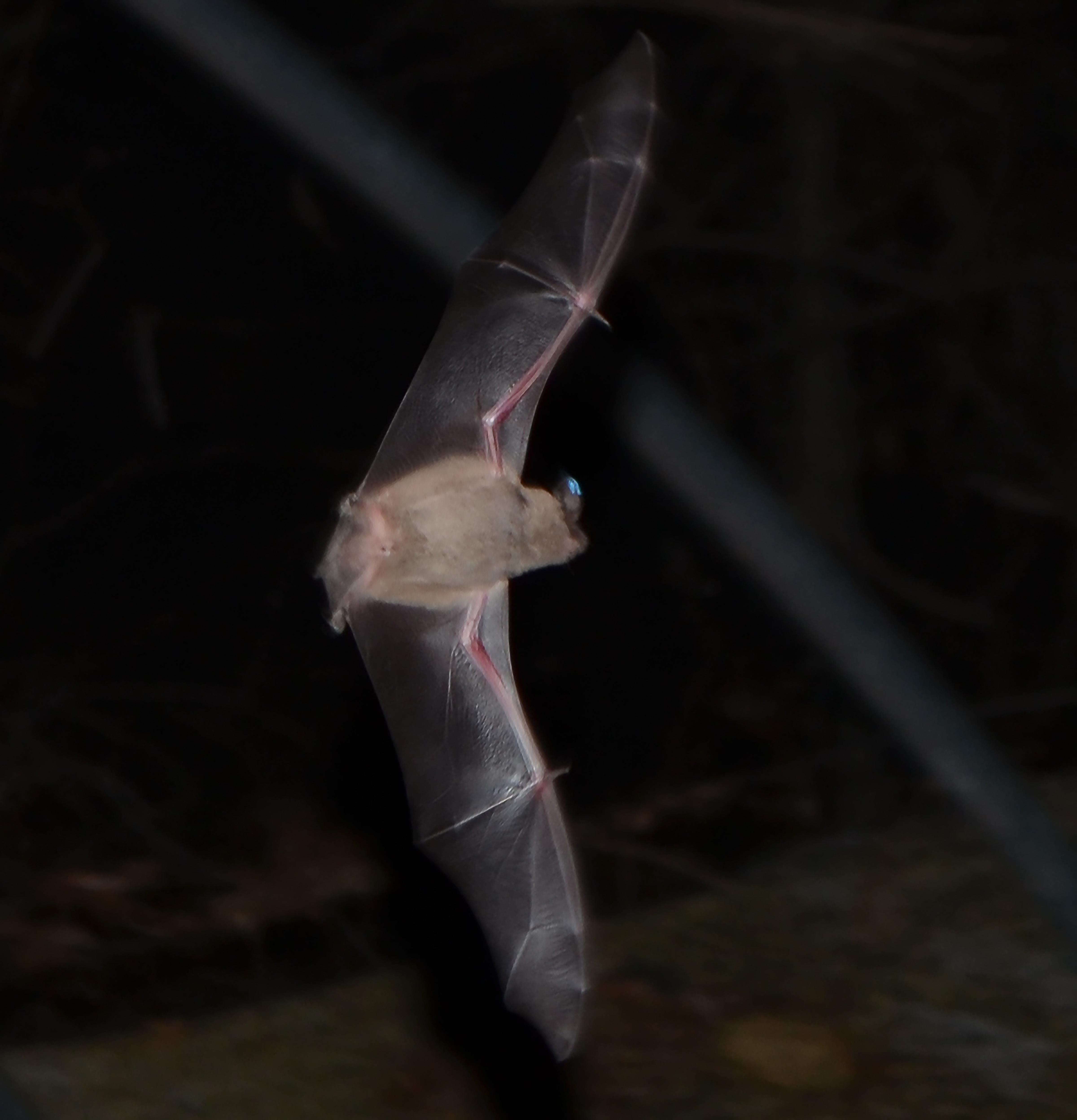
5. It’s all worth it for the bats! So far, I’ve seen Proboscis bats and Greater White-lined bats every day when I walk out of my cabin. I’m sure I will see more species as time goes on. But getting to see their little faces and watching them leave every night to feed is such a rewarding experience. Everyone I talk to is eager to learn all of the fun facts I can throw at them. Many people are surprised to find out not all bats are vampiric (actually less than 1% of the approximate 1200 species drink blood). Anything I can do to improve the understanding, empathy, and appreciation for these bats, I will!
In a couple of weeks the group and I will be leaving for Quepos/Manuel Antonio where we will be doing our research in the National Park and surrounding land. This is a neat tourist town where we will certainly encounter many people who may or may not be familiar with eco-tourism. While my research is going steadily and everyone I talk to is very, very interested in it, I have received disheartening news from the girl doing the social research. She is conducting surveys with as many people as she can, and she has found that many of her subjects have very negative views of bats. Hopefully I, you, and everyone who comes into contact with the Austin Bat Refuge can help change the stigma associated with bats over time to where they can be loved and appreciated for their insane evolutionary history, ecosystem services they provide, and their wonderful personalities.
As always, feel free to email me for any questions or comments ([email protected])
Tata for now
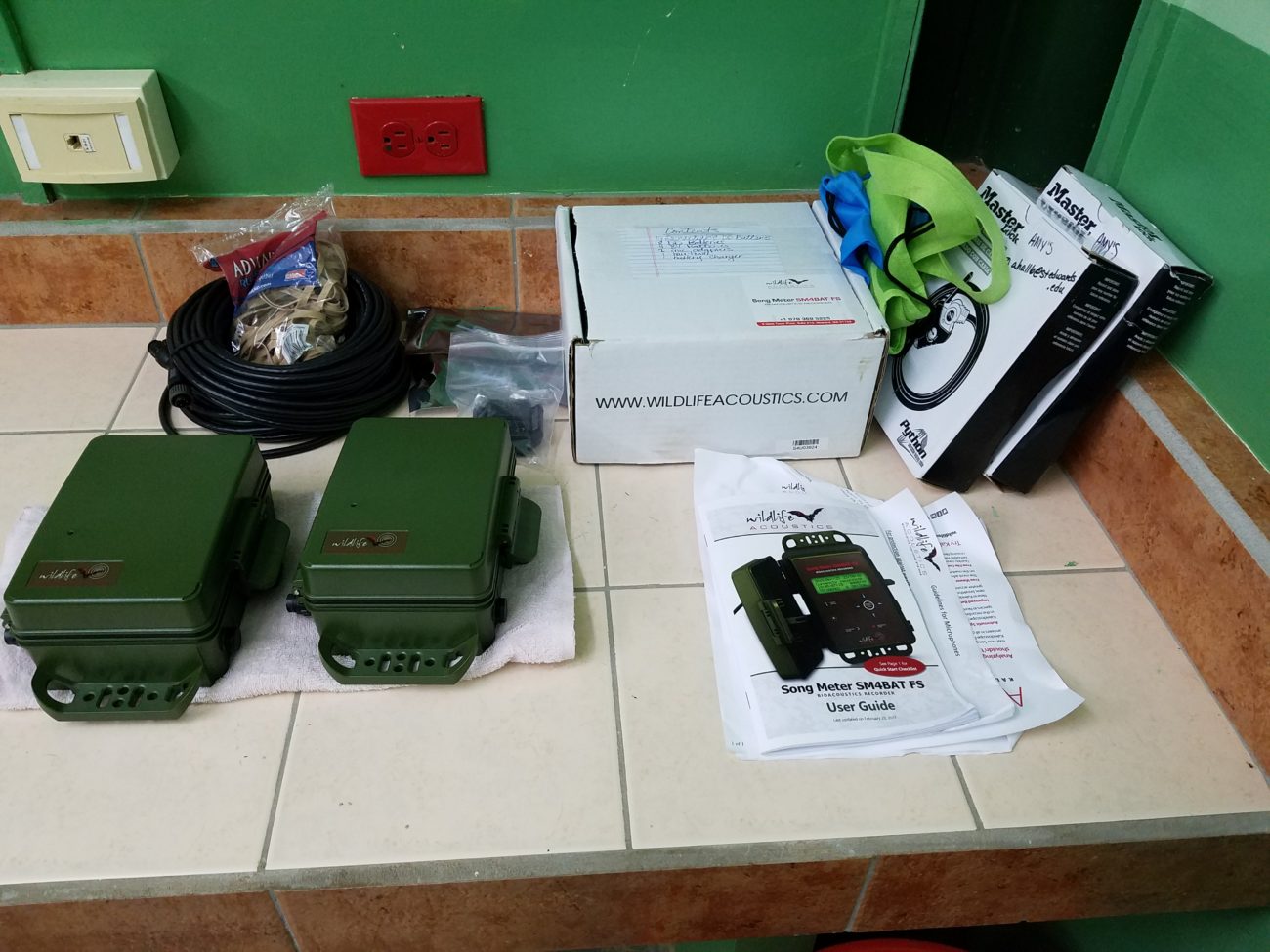
My Gear – Wildlife Acoustics SM4BAT Full-spectrum passive recorders
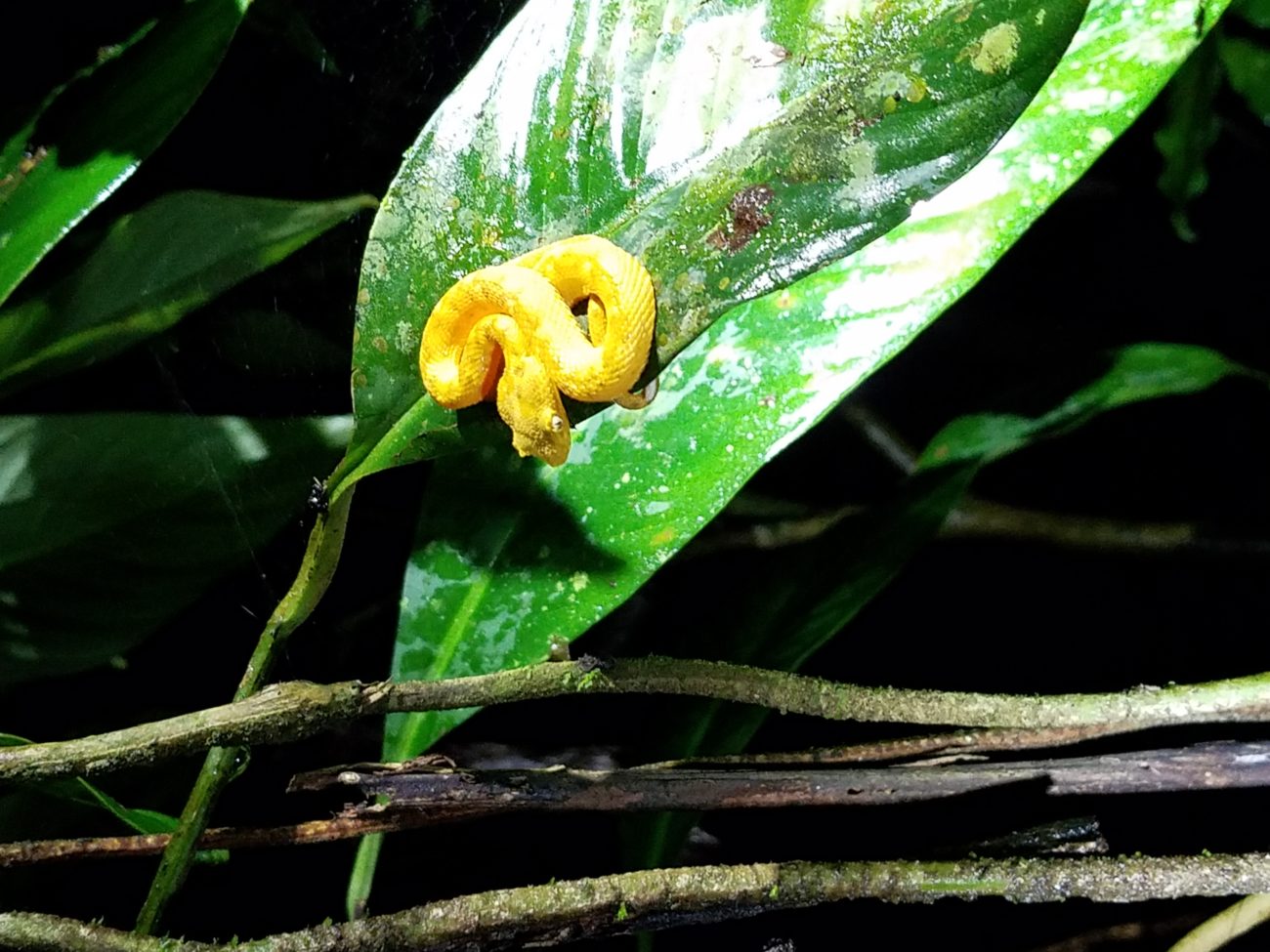
Eyelash Viper
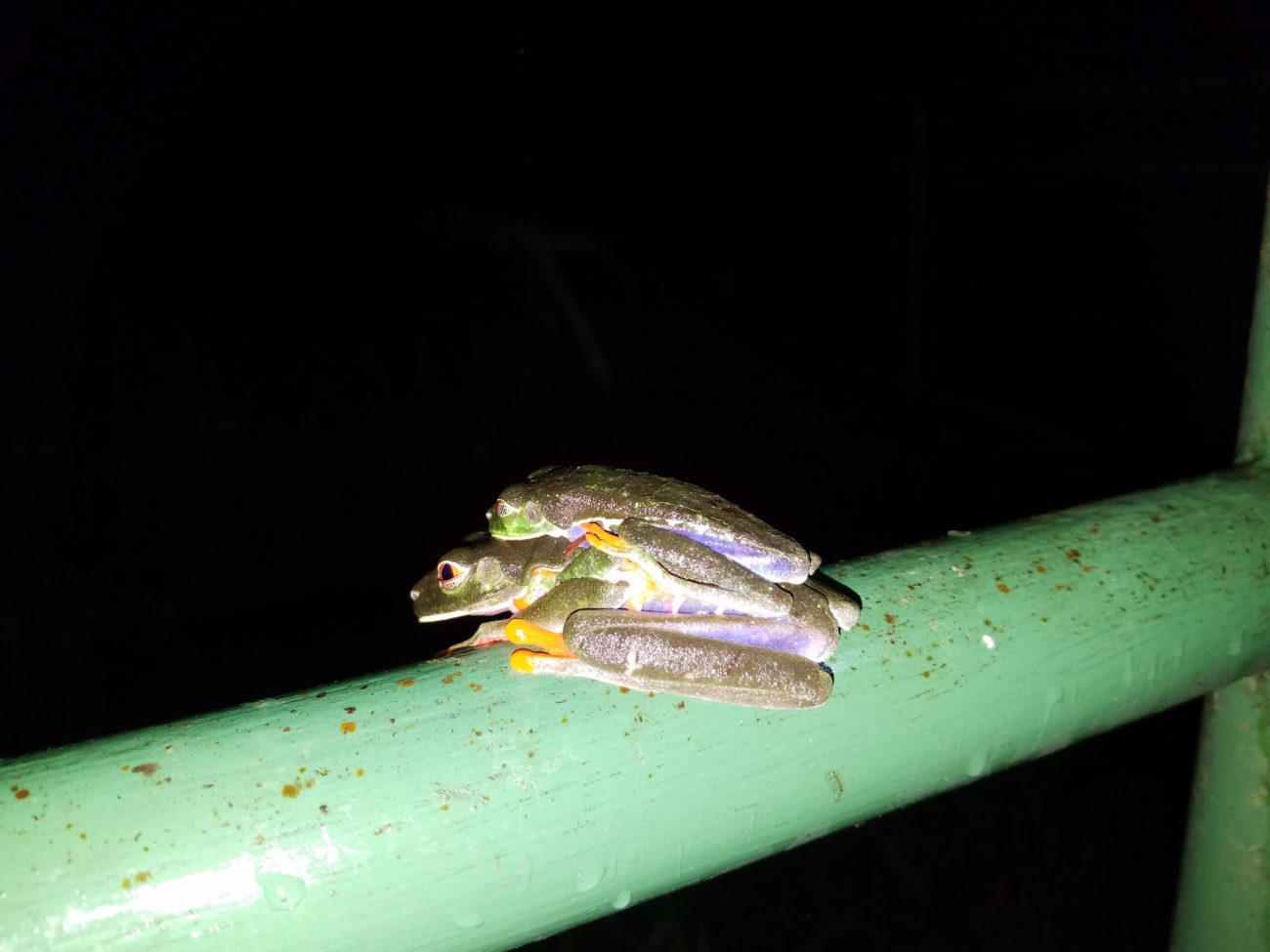
Red-eyed tree frogs

Canopy Life
The Fall-Out Kids passed their flight checks 2 nights ago so they got released last night. Here’s a few shots of them tearing up the aviary.
One of the girls had blue lip gloss (Thanks Kat Von D!) on left ear, one on the right, and the male blue on forehead.
We recovered them the next evening for release at their roost on a night when lots of bats were flying in Central Texas. They were a little freaked out by the whole thing, but we’re sure they’re thrilled to be home!
Thanks for saving them Erika & Ray!
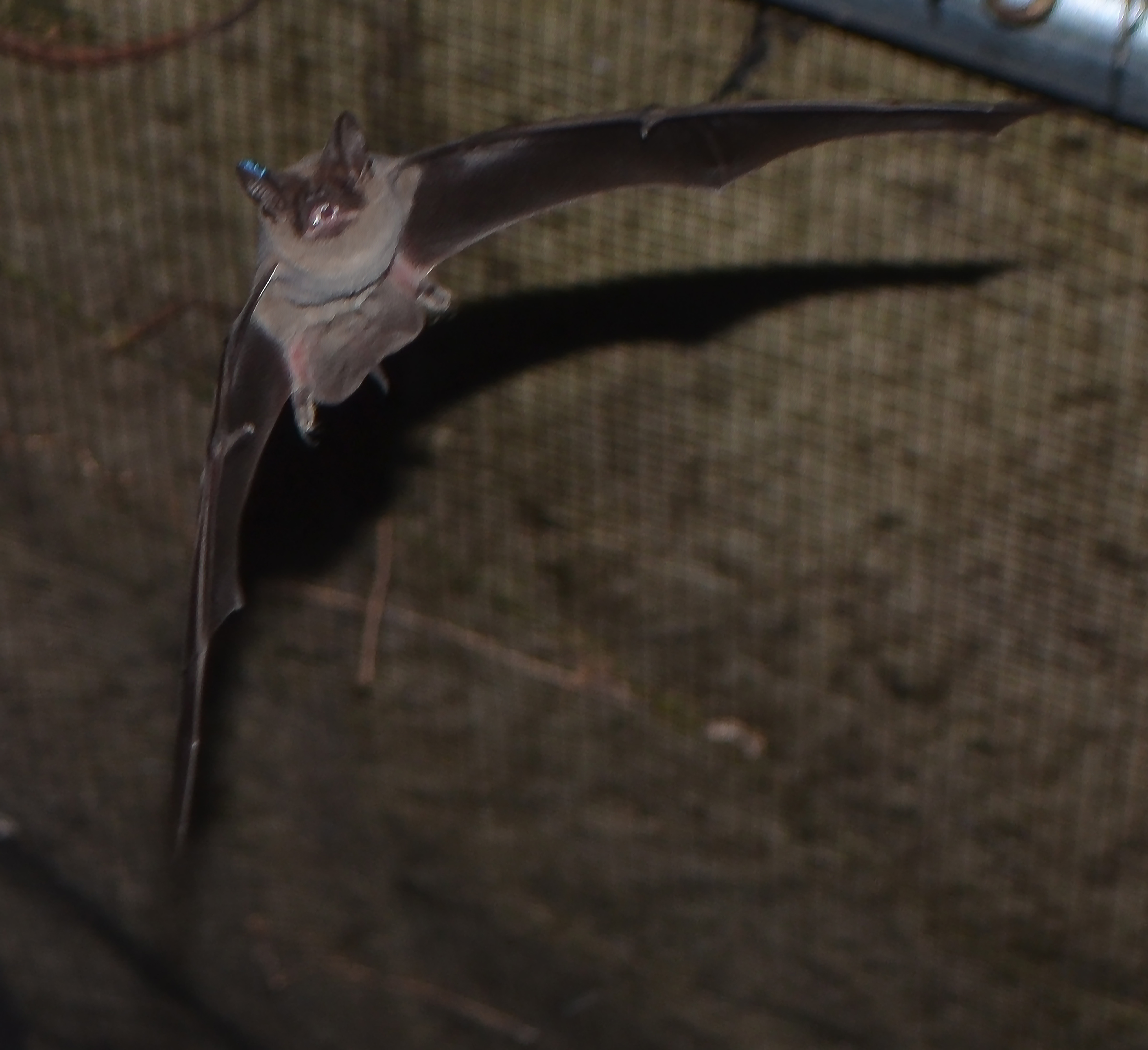
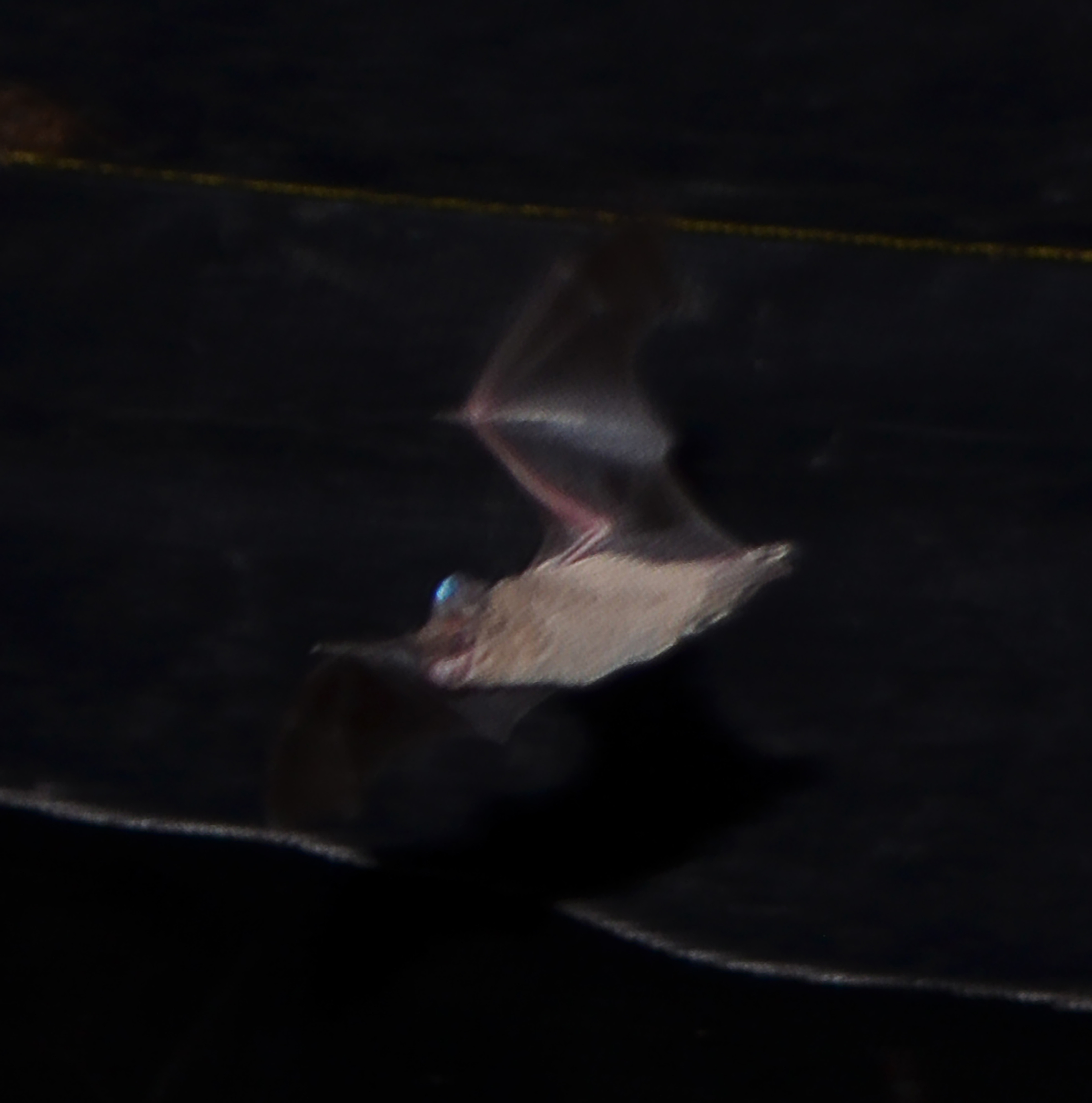
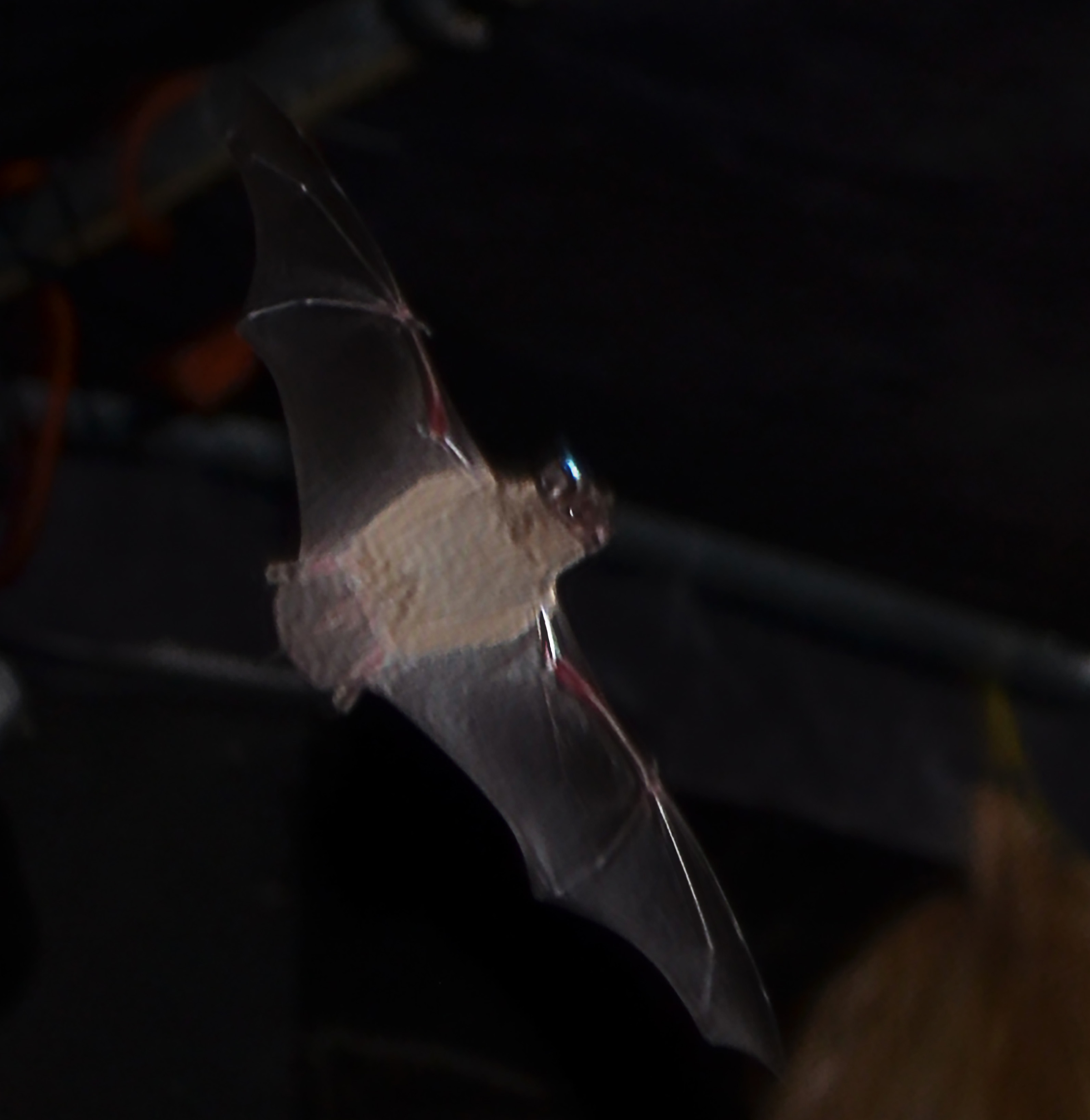
On a brutally cold evening, these free-tails fell from the Bee Cave Park bridge. Saved by Erika & Ray, they’ll ride out the cold weather here at The Refuge. Thanks for caring you two!
The bottom bat is a male, the top two are first year females. They look a little bewildered by all of this, but happy to be warm!
Is this how our bats feel when they fall out of the bridges in torpor, only to find themselves at Austin Bat Refuge?
What’s This?
Fall-out Boy’s cover of The Nightmare Before Christmas –
This little free-tailed bat was found on the ground by young Savannah, in the pasture in front of her house in Brenham, TX. She has a big heart and wanted to help the little guy, but knew not to pick him up with her bare hands. She got her mum and they used two sticks to put him in a box, then waited till night and placed him in a tree. He only stretched one wing, not the other, then fell out of the tree, so they recovered him and brought the little bat to us up in Austin.
When we examined him, we saw why he fell. He has a painful bruise on his left elbow! It does not appear to be fractured, however, so we think he’ll be just fine with plenty of rest and good food.
Great save Savannah! And thanks to your mum Ester and younger sister Kylie for bringing the bat to us for some TLC.
This was our 201st bat of 2017 so we call him 17-201, but Kylie says his name is Batman!
Greetings earthlings,
My name is Amy Hall and I have been a volunteer with Austin Bat Refuge for almost a year now. I’ve fallen in love with their little faces and personalities. But the time has come for me to leave the country temporarily. As part of my Professional of Science Master’s in Environmental Management and Sustainability program, my last semester is a project-based internship of our choosing. A series of opportunities has led me to my project. Like Lee and Dianne said in their introductory post, I will be spending 10 weeks trekking across Costa Rica creating acoustic profiles of bats in areas of different land-use. I will be deploying full-spectrum Wildlife Acoustics Song Meter SM4 Recorders and using Kaleidoscope Pro to hopefully collect as much high quality data as possible, parse through it, and see what species or frequency guilds they can detect.
I will be with 4 or 5 other interns who are working on their own projects; from social research to water quality to primate behavior. All of our research is funded by the National Science Foundation.
I will be uploading blog post and picture updates probably once every week or two, depending on how busy I am and how good the internet connection is. Feel free to email me with questions ([email protected]). While I am there I will not have any service except for Wifi when I am at the stations. So responses will likely lag.
I’m excited to share my experiences with you guys!
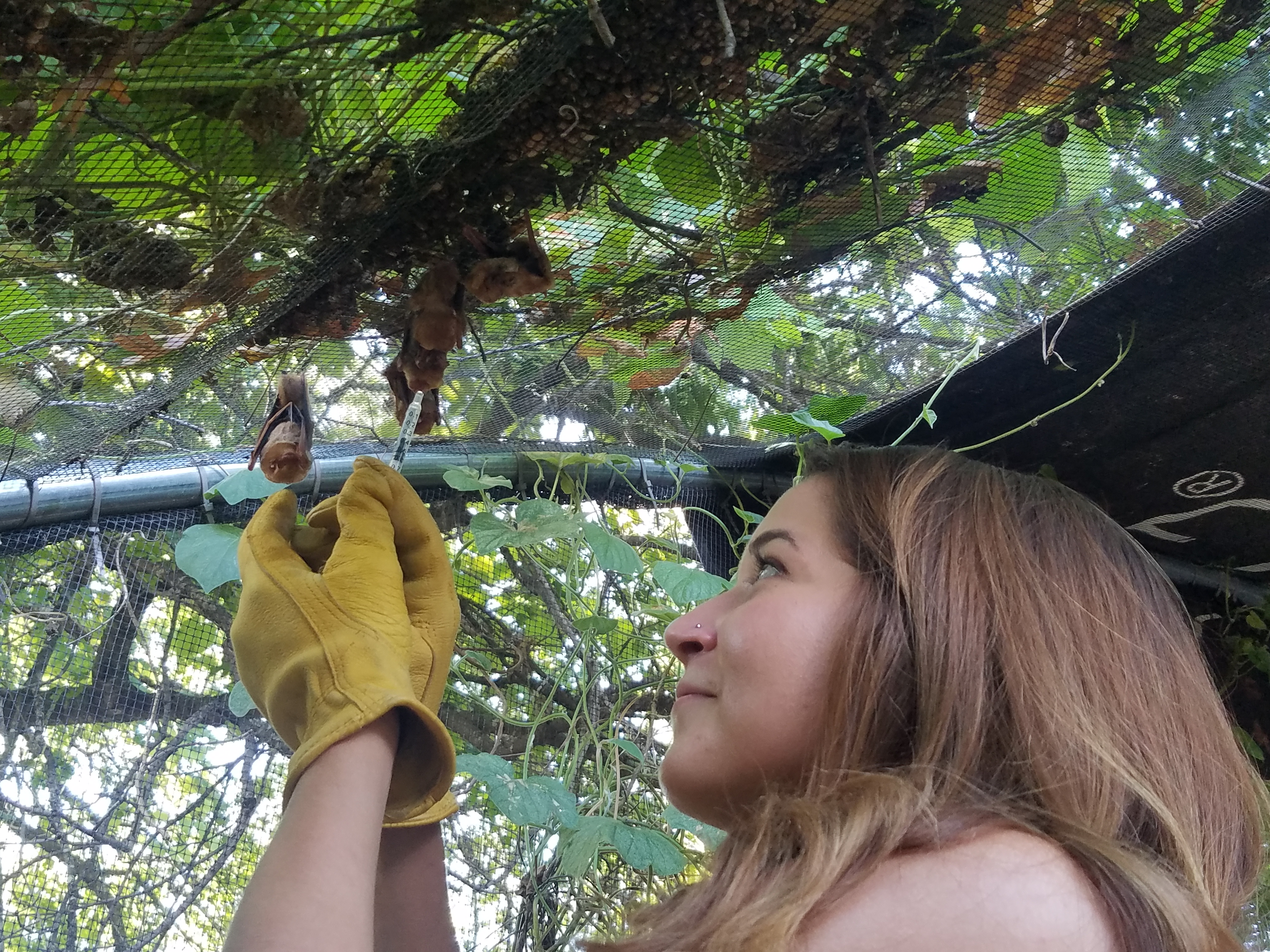
Our wonderful friend/intern/volunteer Amy Hall, is heading off to Costa Rica for three months of bat research!
She is working with Dr. Peter Beck from St. Edward’s University and Dr. Michael Wasserman from Indiana University, and her project will use acoustic sampling to determine presence/absence of bat species in various types of habitats around the country.
She will deploy Wildlife Acoustics SM4 (Song Meter) bat detectors and analyze the data using Kaleidoscope tropical acoustic call libraries.
We are so excited for her!
Please join us in wishing Amy all the best and follow her updates when internet connections become available.
No Congress flight on Wed night 13Dec2017, despite warmer temps than previous evening when ~65k flew out of Congress.
Could this mean that the last hangers-on (~400k) finally moved south?
They had moved back up to Huber then came back to IH35 corridor. Maybe a full week of low temps in the upper 30sF finally convinced them?
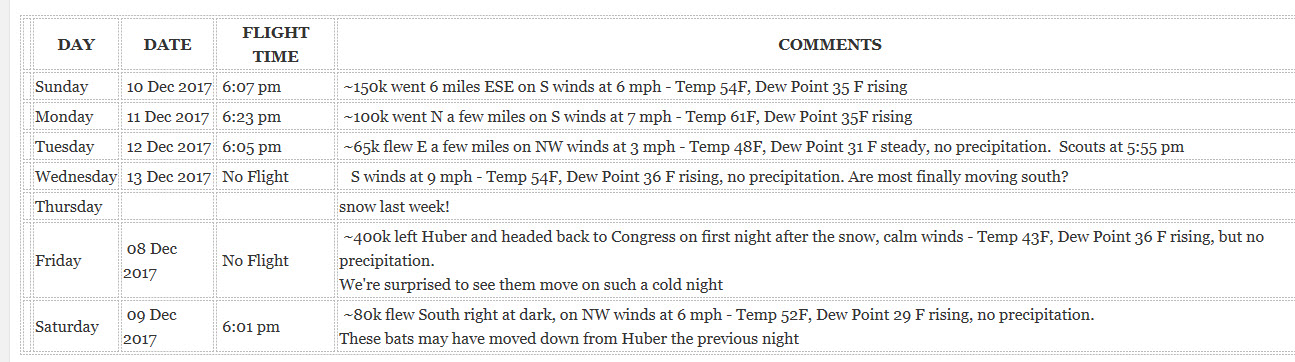
About 400k free-tailed bats left Huber Limestone Mine and headed back to Congress and McNeil on the first night after the SNOW! Calm winds – Temp 43F, Dew Point 36 F rising, but no precipitation.
We’re surprised to see them move on such a cold night. They must know there will be little food in the Hill Country after that freeze and that their best shot at finding insects will be in the Blackland Prairie and IH35 corridor. Will they majority finally migrate now? Or will they try to overwinter? We’ll see!